

Commentary
Andrey Pertsev
{
  "authors": [
    "Andrey Pertsev"
  ],
  "type": "commentary",
  "blog": "Carnegie Politika",
  "centerAffiliationAll": "",
  "centers": [
    "Carnegie Endowment for International Peace",
    "Carnegie Russia Eurasia Center"
  ],
  "englishNewsletterAll": "",
  "nonEnglishNewsletterAll": "",
  "primaryCenter": "Carnegie Russia Eurasia Center",
  "programAffiliation": "",
  "regions": [
    "Russia"
  ],
  "topics": [
    "Domestic Politics",
    "Political Reform"
  ]
}
Source: Getty
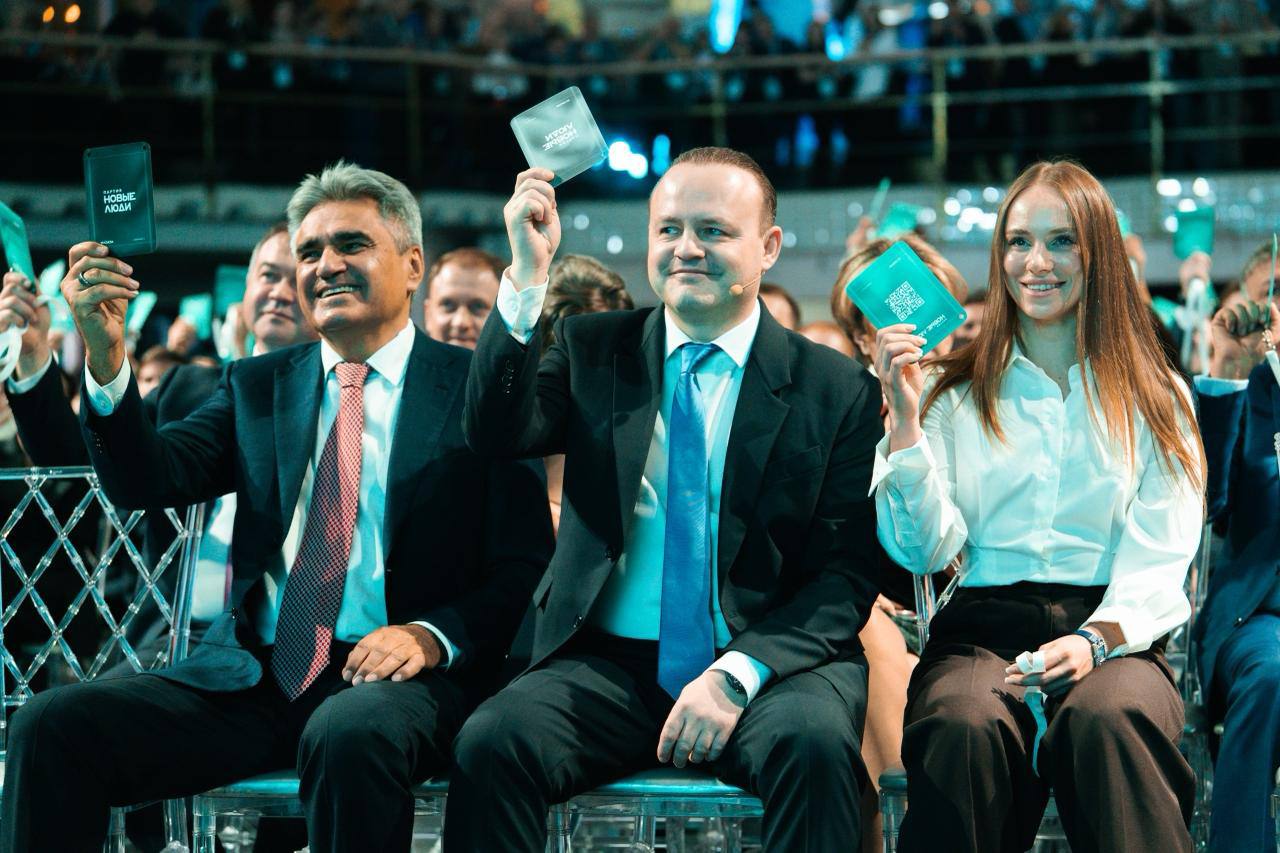
Anger over online restrictions has led to a surge in support for the New People party, which has replaced the Communists as Russia’s second most popular political party.
Russia’s in-system opposition—which criticizes the government while ultimately remaining loyal to President Vladimir Putin—has been largely forgotten amid the war in Ukraine. But it’s currently undergoing an unexpected transformation. For decades, the Kremlin tried and failed to create a viable “liberal” party. But now its latest such project—New People—seems to have become the country’s most popular in-system opposition party.
Polling by the state-owned VTsIOM agency shows that New People is second in popularity only to the ruling United Russia party, and has overtaken the more well-established parties, the nationalist Liberal Democratic Party of Russia (LDPR) and the Communist Party. In the last year, New People’s support has risen from 6.6 percent to 13.4 percent. United Russia is currently backed by 27.7 percent of Russians.
The reason for the shift is dwindling popular support for the regime over online restrictions and economic problems. With the unofficial backing of the Kremlin’s political managers, led by deputy chief of staff Sergei Kiriyenko, New People has opposed internet shutdowns and the blocking of messaging apps and social media platforms—while avoiding direct attacks on the country’s leaders and the security forces. This has allowed the party to channel discontent without breaking any of the rules by which the in-system opposition must abide.
Kiriyenko has long wanted to knock the difficult-to-manage Communists off their spot as the country’s second most popular party. But his success in achieving this raises another question: Is it time for an overhaul of Russia’s entire party system?
Of course, polling data in wartime Russia must be treated with caution. But the dynamics of New People’s rising popularity suggest the shift is a real one. There are also objective reasons as to why this is taking place. According to a survey by the polling agency Levada, 50 percent of Russians believe the political situation is “tense,” and 10 percent say it’s “critical.” In addition, VTsIOM has recorded a fall in Putin’s approval rating: from 74.8 percent at the start of February to 65.6 percent. This is also visible in surveys by another state polling company, the Public Opinion Foundation (FOM), which show Putin’s rating dropping 4 percentage points in the same period.
All of this illustrates that Russians are tired of the war, as well as unhappy about rising prices and about large companies firing staff and moving employees to four-day workweeks. For many, the internet shutdowns and blocking of popular messaging apps were the final straw. Not only are many online services now impossible to access, people are struggling to communicate with their nearest and dearest. In other words, the authorities have interfered in the daily lives of Russians without clearly explaining their reasons.
New People has been opposing online restrictions since 2022, when Russia blocked Instagram. Back then, it was a second-tier issue that the Kremlin did not perceive as a threat. Now, however, curbs on the internet dominate Russia’s domestic political agenda, boosting New People’s visibility and popularity. New People’s ex-presidential candidate Vladislav Davankov pledged at the party’s conference in March 2026 that volunteers would use special backpacks to provide free Wi-Fi on the streets.
The Communist Party has also opposed the restrictions—a position that has boosted its ratings a little. But it’s only one of the many issues on which the party campaigns, and advocating for freedom doesn’t fit well with its pro-war, Stalinist image. The LDPR has been vague on the issue, as a result of which it is currently languishing in fourth place.
Of course, New People is not a genuine opposition party—it remains loyal to the Kremlin. Although it criticizes the online restrictions, it does not name those who are lobbying for them (the security agencies); nor has it demanded the resignation of officials from the online watchdog and censor Roskomnadzor. While the party has been collecting signatures in support of the blocked messaging app Telegram, it has also called on Telegram founder Pavel Durov to open an office in Russia in line with Russian legislation.
New People’s message has traditionally resonated with well-educated, urban voters, but the blocking of WhatsApp and Telegram has caused its audience to grow. And it’s a win for Kiriyenko that New People rather than the Communists, which the Kremlin finds harder to manage, has been the beneficiary of United Russia’s falling approval ratings.
Created in 2020, New People is headed by Aleksei Nechayev and does not have a clearly defined ideology. This has on occasion resulted in absurd situations, such as New People deputies voting for legislation that is criticized in the party’s manifesto (like changes to mayoral elections). With the exception of ex-mayor of Yakutsk Sardana Avksentyeva and Duma deputy Ksenia Goryacheva, the party has few prominent figures. Most of its regional activists are young people lacking in political charisma who are personally loyal to Nechayev because they took part in his Captains entrepreneurship program.
At first, its vagueness was a major disadvantage for New People, and the party seemed to be on track to become another political has-been. However, the internet restrictions have propelled it to the center of political debate: an artificial entity articulating a genuine demand.
It’s true that the surge in support is purely opportunistic, and that New People is benefitting from unhappiness over a single issue. Voters understand that backing an in-system party is a safe form of protest. Nevertheless, if the online restrictions continue, New People could end up consolidating its position—and even get dangerously close to catching up with United Russia. If that happens, it will put the Kremlin’s political managers in a quandary.
Pleased that New People has displaced the Communists, Kiriyenko could be tempted to suggest to Putin that the Kremlin make the party a second “pillar” of the system, alongside United Russia. In other words, fill New People’s empty brand with meaning, and co-opt prominent pro-regime politicians to run on the party ticket in the September parliamentary elections.
It’s an open question whether Kiriyenko and the leadership of New People are prepared for such a course of action. After all, elevating a niche party created by Kremlin managers into a real party of power would transform the political system. And there’s a risk that it would no longer be Putin’s system, but Kiriyenko’s. Such a development would inevitably run into opposition from Kiriyenko’s enemies, and they will likely try to warn Putin of the risks.

Andrey Pertsev is a journalist with Meduza website.
Recent Work
Andrey Pertsev
Andrey Pertsev
Carnegie does not take institutional positions on public policy issues; the views represented herein are those of the author(s) and do not necessarily reflect the views of Carnegie, its staff, or its trustees.

Japan’s long-term security policy is driven by concerns about China, and there is little appetite for (or interest in) pursuing a confrontation with Moscow.

James D.J. Brown
The truth of the strategic situation is that Europe and Russia are extremely unlikely to be able to “turn the page” on their confrontation within the next two decades.
Arkady Moshes

Russia spent years building a “sovereign internet,” concentrating web infrastructure exclusively within Russian territory. Ukrainian drone attacks have shown how vulnerable that approach has left the Russian internet.

Maria Kolomychenko

Putin’s conservative staffing policies and search for ever greater control have cemented parliament’s transformation into a bureaucratic appendage of the executive branch.
Andrey Pertsev

Russia’s AI-driven propaganda campaigns operate in a fragmented, chaotic, and often illogical manner. That’s not necessarily a problem for the Kremlin, though: It’s much easier to mimic genuine public debate that way.

Ilya Klishin