

• Research
  • About
  • Experts
Carnegie India logoCarnegie lettermark logo
{
  "authors": [
    "Balázs Jarábik",
    "Iulian Groza",
    "Jana Kobzová",
    "Viktor Konstantynov",
    "Tsovinar Kuiumchian",
    "Leonid Litra",
    "Tornike Sharashenidze",
    "Isaac Webb"
  ],
  "type": "other",
  "centerAffiliationAll": "",
  "centers": [
    "Carnegie Endowment for International Peace",
    "Carnegie Europe"
  ],
  "collections": [
    "Europe’s Eastern Neighborhood"
  ],
  "englishNewsletterAll": "",
  "nonEnglishNewsletterAll": "",
  "primaryCenter": "Carnegie Endowment for International Peace",
  "programAffiliation": "",
  "programs": [],
  "projects": [
    "Reforming Ukraine"
  ],
  "regions": [
    "Caucasus",
    "Georgia",
    "Eastern Europe",
    "Ukraine",
    "Moldova",
    "Russia",
    "Europe"
  ],
  "topics": [
    "Political Reform",
    "Foreign Policy"
  ]
}

Source: Getty

Other

Implementing the EU Association Agreements with Ukraine, Georgia, and Moldova

EU association deals with Ukraine, Georgia, and Moldova have proven to be key drivers of reform in all three countries. The emphasis should now be on implementation, not simply legislative adoption.

Link Copied
By Balázs Jarábik, Iulian Groza, Jana Kobzová, Viktor Konstantynov, Tsovinar Kuiumchian, Leonid Litra, Tornike Sharashenidze, Isaac Webb
Published on Nov 16, 2017
Project hero Image

Project

Reforming Ukraine

Carnegie’s Reforming Ukraine project provides objective, rigorous, evidence-based assessments of the Ukrainian reform effort via a series of regular publications, workshops, and events prepared by a team of Carnegie fellows and independent experts based in Ukraine.

Learn More

Source: European Parliament

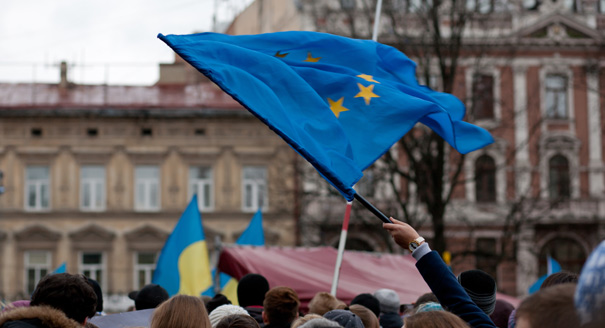
Signing and ratifying Association Agreements with Georgia, Moldova, and Ukraine has proven to be an impressive affirmation of Brussels’ soft power. The EU’s overtures have persuaded elites and mobilised societies despite the fact that the Agreements come neither with a membership promise nor with the kind of financial assistance that has been given to the EU’s new member states.

EU assistance has been effective in restoring macro-financial stability in all three countries. While costs of compliance with the DCFTA were calculated, level of investment associated with the necessary modernisation to make these economies competitive were neglected. The discrepancy between costs and benefits should prompt the EU to be more flexible.

Brussels’ achievements remain fragile. Informal interests continue to play important roles in these countries and have the potential to thwart reforms. In the absence of strong, de-politicised institutions, the EU should work to support political consolidation—the alternative is further polarisation and political fragility—while at the same time insisting on adherence to democratic standards and strengthened institutional checks and balances.

Read Full Text

This study was originally published by the European Parliament with the title “The state of implementation of the associations and free trade agreements with Ukraine, Georgia and Moldova with a particular focus on Ukraine and systemic analysis of key sectors.”

About the Authors

Balázs Jarábik

Political analyst, former Slovak diplomat, and consultant specializing in Eastern Europe

Iulian Groza

Jana Kobzová

Viktor Konstantynov

Tsovinar Kuiumchian

Leonid Litra

Tornike Sharashenidze

Isaac Webb

Former Junior Fellow, Russia and Eurasia Program

Authors

Balázs Jarábik

Political analyst, former Slovak diplomat, and consultant specializing in Eastern Europe

Balázs Jarábik
Iulian Groza
Jana Kobzová
Viktor Konstantynov
Tsovinar Kuiumchian
Leonid Litra
Tornike Sharashenidze
Isaac Webb
Former Junior Fellow, Russia and Eurasia Program
Political ReformForeign PolicyCaucasusGeorgiaEastern EuropeUkraineMoldovaRussiaEurope

Carnegie India does not take institutional positions on public policy issues; the views represented herein are those of the author(s) and do not necessarily reflect the views of Carnegie, its staff, or its trustees.

More Work from Carnegie India

  • Commentary
    The Impact of U.S. Sanctions and Tariffs on India’s Russian Oil Imports

    This piece examines India’s response to U.S. sanctions and tariffs, specifically assessing the immediate market consequences, such as alterations in import costs, and the broader strategic implications for India’s energy security and foreign policy orientation.

      Vrinda Sahai

  • Commentary
    NISAR Soars While India-U.S. Tariff Tensions Simmer

    On July 30, 2025, the United States announced 25 percent tariffs on Indian goods. While diplomatic tensions simmered on the trade front, a cosmic calm prevailed at the Sriharikota launch range. Officials from NASA and ISRO were preparing to launch an engineering marvel into space—the NASA-ISRO Synthetic Aperture Radar (NISAR), marking a significant milestone in the India-U.S. bilateral partnership.

      Tejas Bharadwaj

  • Commentary
    Indian Airstrikes in Pakistan: May 7, 2025

    On May 7, 2025, between 1:05 and 1:30 a.m. (IST), airstrikes carried out by the Indian Air Force hit nine locations inside Pakistan and Pakistan occupied Kashmir (PoK). It was codenamed Operation Sindoor.

      Rudra Chaudhuri

  • Research
    Views From Taipei: Essays by Young Indian Scholars on China

    This compendium brings together three essays by scholars who participated in Carnegie India's Security Studies Dialogue in 2024, each examining a different aspect of China’s policies. Drawing on their expertise and research, the authors offer fresh perspectives on key geopolitical challenges.

      • +1

      Vijay Gokhale, Suyash Desai, Amit Kumar, …

  • Commentary
    The India-U.S. TRUST Initiative: Advancing Semiconductor Supply Chain Cooperation

    As part of the TRUST initiative, leaders of the two countries committed to building trusted and resilient supply chains, including for semiconductors and critical minerals. India and the United States have made steady progress in this area over the years. This essay explores the takeaways from discussions on semiconductor supply chains that took place at Carnegie India’s 9th Global Technology Summit.

      Konark Bhandari

Get more news and analysis from
Carnegie India
Carnegie India logo, white
Unit C-4, 5, 6, EdenparkShaheed Jeet Singh MargNew Delhi – 110016, IndiaPhone: 011-40078687
  • Research
  • About
  • Experts
  • Projects
  • Events
  • Contact
  • Careers
  • Privacy
  • For Media
Get more news and analysis from
Carnegie India
© 2026 Carnegie Endowment for International Peace. All rights reserved.