

In The Media
Jessica Tuchman Mathews
{
  "authors": [
    "Jessica Tuchman Mathews"
  ],
  "type": "legacyinthemedia",
  "centerAffiliationAll": "",
  "centers": [
    "Carnegie Endowment for International Peace",
    "Malcolm H. Kerr Carnegie Middle East Center"
  ],
  "collections": [
    "Iranian Proliferation"
  ],
  "englishNewsletterAll": "",
  "nonEnglishNewsletterAll": "",
  "primaryCenter": "Carnegie Endowment for International Peace",
  "programAffiliation": "",
  "programs": [],
  "projects": [],
  "regions": [
    "Middle East",
    "Iran"
  ],
  "topics": [
    "Political Reform",
    "Security",
    "Nuclear Policy"
  ]
}
Source: Getty
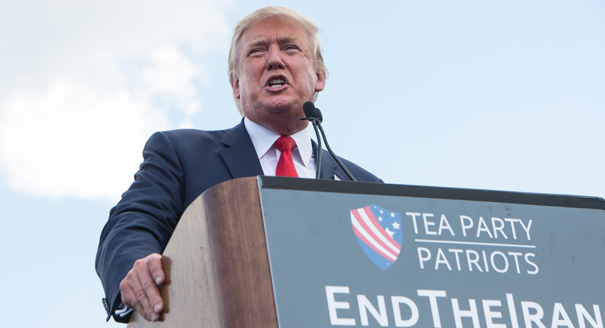
The Iran Deal may not be perfect but the decision by the Trump Administration weakens oversight mechanisms and causes rifts between America and its European allies.
Source: New York Review of Books
Imagine a business deal among multiple parties. It is so complex that after years of negotiation the contract runs to 159 pages. Once agreed upon, the project proceeds without problems, but two years later one of the signers changes his mind. His lawyers rewrite some of the deal’s provisions, and he announces he’ll pull out unless the other parties accept the new terms.
That, in essence, is what Donald Trump announced on October 13 when he refused to certify to Congress that the Iran nuclear deal, known as the Joint Comprehensive Plan of Action (JCPOA), was working. Certification does not affect the deal itself. It is a purely domestic act. The president is required to do it every ninety days by the terms of the legislation with which Congress approved the JCPOA in 2015. Repeated certifications of this kind are commonly used in contentious situations, such as when sanctions are waived or arms are sold to a problematic buyer, to assure Congress that its conditions are still being met. It is difficult to imagine a president taking what should have been a routine official signature as a reminder of his predecessor’s achievement and therefore an intolerable personal insult. But that is what happened.
On the occasion of his second required certification last July, Trump exploded in anger at his aides for not providing him with an alternative course and made it clear that he didn’t intend to sign again—whether Iran had violated the deal or not. Since then his national security team has frantically sought to come up with a ploy that would satisfy the president without immediately pulling the United States out of the nuclear deal. They have tested various options in public settings and private conversations with European cosigners of the agreement. None was well received, to put it mildly....
This book review was originally published in the New York Review of Books.
Distinguished Fellow
Mathews is a distinguished fellow at the Carnegie Endowment for International Peace. She served as Carnegie’s president for 18 years.
Recent Work
Jessica Tuchman Mathews
Jessica Tuchman Mathews
Carnegie India does not take institutional positions on public policy issues; the views represented herein are those of the author(s) and do not necessarily reflect the views of Carnegie, its staff, or its trustees.

In any defense establishment, change is an ongoing process. However, despite the best of intentions, existing bureaucracies, bound by habit and years of socialization, have their limits in implementing transformative change.

Anit Mukherjee

After the chill in ties between 2020 and 2024 that brought India–China relations to their lowest point in several decades, the two countries have engaged each other afresh. This paper argues that there are predominantly four imperatives guiding India’s approach to China, and they exist in an order of priority.

Saheb Singh Chadha

This piece argues that the present Indian strategy, based on opportunistic diversification and utilization of limited strategic reserves, remains inadequate when confronting supply disruptions. It evaluates India’s options in the short, medium, and long terms.

Vrinda Sahai

This piece examines India’s response to U.S. sanctions and tariffs, specifically assessing the immediate market consequences, such as alterations in import costs, and the broader strategic implications for India’s energy security and foreign policy orientation.
Vrinda Sahai
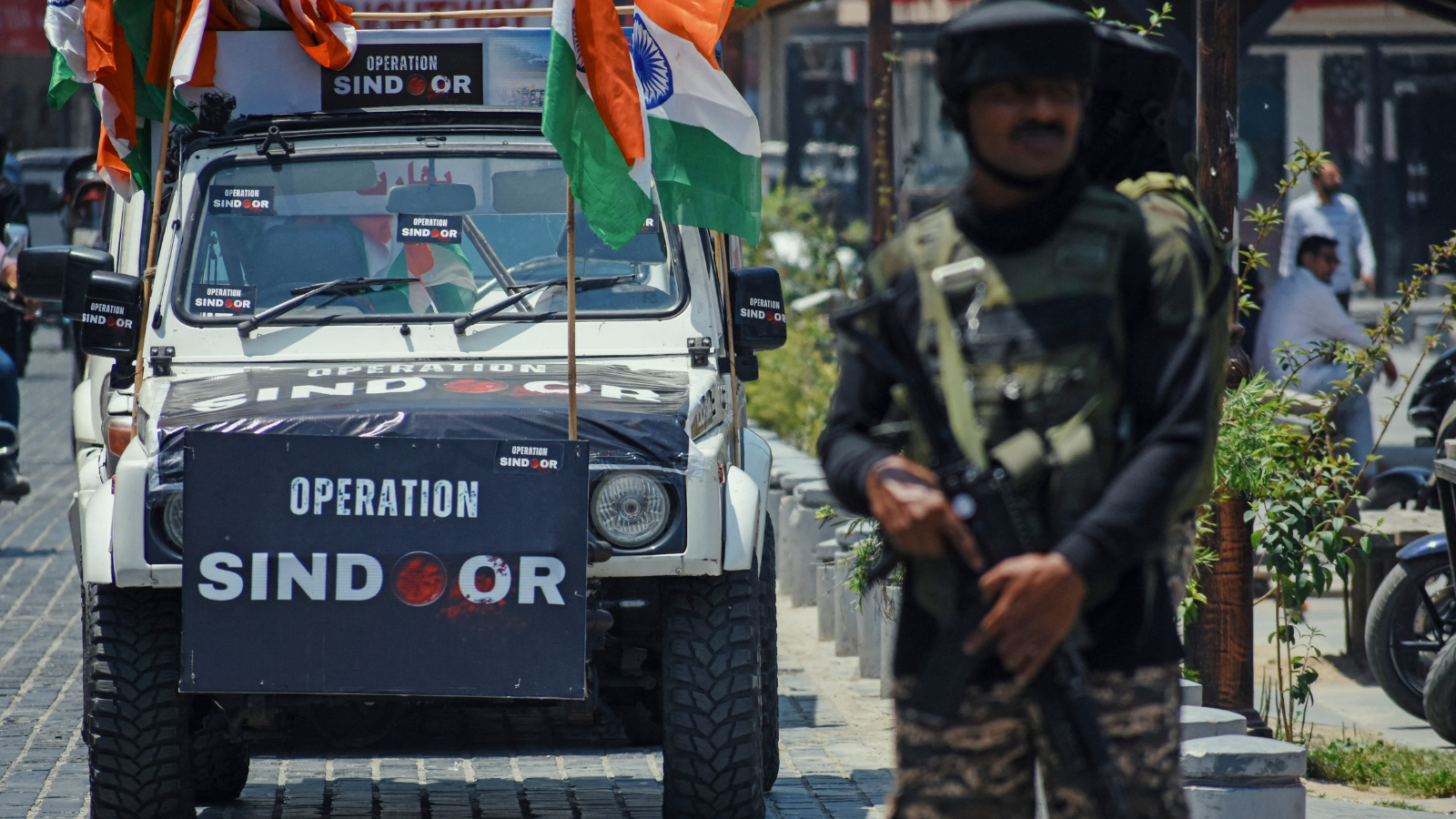
The India-Pakistan conflict that played out between May 6 and May 10, 2025, offers several military lessons. This article presents key takeaways from Operation Sindoor and breaks down how India’s preparations shaped the outcome and what more is needed to strengthen future readiness.

Dinakar Peri