

Commentary
Pierre Vimont
{
  "authors": [
    "Pierre Vimont"
  ],
  "type": "legacyinthemedia",
  "centerAffiliationAll": "dc",
  "centers": [
    "Carnegie Endowment for International Peace",
    "Carnegie Europe"
  ],
  "collections": [
    "Europe’s Southern Neighborhood"
  ],
  "englishNewsletterAll": "ctw",
  "nonEnglishNewsletterAll": "",
  "primaryCenter": "Carnegie Europe",
  "programAffiliation": "EP",
  "programs": [
    "Europe"
  ],
  "projects": [],
  "regions": [
    "Middle East",
    "Europe",
    "North America",
    "United States",
    "Western Europe",
    "Iran"
  ],
  "topics": [
    "Foreign Policy",
    "Security",
    "Religion"
  ]
}
Source: Getty
Europeans have the power and the means to influence events in the Middle East peace process. They must take the initiative and act now.
Source: Progressive Post
There has been a marked lack of progress in the Middle East peace process in recent times, with Europeans struggling to make themselves heard. However, they have the power and the means to influence events and they must therefore take the initiative and act now.
Rarely has there ever been such a sense of stagnation and despondency about the Middle East situation between Israel and the Palestinian Authority. In fact, what we are witnessing today is a significant and worrying decline in the efforts required to broker peace between the two nations. The progress achieved by, and efforts documented, in the Oslo Accords have gradually slowed down and lost momentum to such a point that the accords appear to have lost all purpose. The logic that once brought the nations together for peace talks has been replaced in recent years by a systematic settlement policy by the Israeli authorities, to which they have now added systematic daily monitoring of all movements of the Palestinian population. At the same time, there is division within the Palestinian ranks, which threatens to undermine the negotiating capacity of their leaders. Furthermore, there is a general sense that, for many other countries in the region, the Israeli-Palestinian issue has been relegated to a far lower priority than it has been previously due to the more pressing concerns surrounding Iranian influence in the region.
When one considers these other factors then some may argue that the main participants traditionally involved in the peace-making process appear to have lost their vision and determination. US President Donald Trump appears reluctant to commit America towards helping to achieve a lasting solution to the Middle East problem. The Quartet (Quartet on the Middle East), which is mandated by the United Nations to revitalise the peace process, remains powerless to assist in any meaningful way as they do not have a grip on the events on the ground. There is however, some limited hope as it appears that Russia, China and France are, amongst others, trying to rekindle the peace talks, albeit bilaterally. But they must realise that there are limits to the progress that their willingness to do something can achieve.
Beyond the ever-present fundamental problem of a complete lack of trust between the two nations who each claim rights over the same land there are two conflicting developments which have combined to put us in the current impasse.
Since rising to power the Netanyahu government’s de facto policy has seen an unprecedented reduction in the freedom of movement of Palestinians and their associated actions along both the West Bank and the Gaza strip. Given the present lack of unity and cohesion between Palestinians and the end of their diplomatic isolation, Israeli leaders can cast doubt for the first time on the likelihood that a two-state solution can bring about lasting peace in the Middle East. This is important given that many consider that it is the Israelis that have largely sought to undermine the peace process.
At the same time, the said policy has not resolved any issues on either side and does itself carry the inherent risk of increasing tensions between the two nations whilst we must also acknowledge that there is the potential for future confrontation. In light of recent events, particularly those surrounding clashes at various sacred sites in Jerusalem, it is clear that the Palestinian population are capable of mobilising and resisting. In addition, the Palestinian cause remains united both across the Arab world and beyond. The cause remains resolute behind the rallying cry of resolution 2334 (which requires the cessation of settlement activity in the occupied Palestinian territory), which was adopted at the United Nations in December. In addition, there is a widely held belief in each nation that those in power are expecting a conflict in Gaza or on the Lebanon border in the future. This view is shared by Israeli leaders.
Faced with such a discouraging situation, the international community has not yet been able to find the resources, determination or energy to find a way out of this impasse. Is there no future without conflict? And Europeans, much like the other participants, have not given any impression that they are willing to tackle the problem directly. However, Europeans continue to affirm that they want to push on and find a lasting solution to the Israeli-Palestinian conflict.
This is an ambitious and innovative vision for the European nations to propose given that what they need today is another Venice Declaration similar to the one signed in 1980. This strategy should include clear and precise commitments on the following points. Firstly, action is needed on the ground to implement all elements of the cooperation framework which the European Union has already committed to along with the Israelis and the Palestinians. This is necessary in order to obtain concrete results that change the everyday life of the people living with the conflict. Secondly, we need an in-depth discussion with Israel on the principle of self-determination for the Palestinian people. Thirdly, we need a resolute effort together with the Palestinians to end the division between Fatah and Hamas and push towards a wider consolidation of the Palestinian Authority’s governmental authority. Fourthly, a diplomatic effort is needed amongst the Arab countries that signed the 2002 Arab Peace Initiative to implement the operational content that the initiative currently lacks. Finally, the international community needs to get behind this initiative should the current American efforts be, as one might fear, at their limit.
No one is in any doubt that such a European initiative will encounter many obstacles and challenges along the way, mainly within Europe itself, as there are a number of competing views as to how best to approach the Middle East problem. Europe must act now. We must be ambitious and hope to regain a role within the peace process. We must do so to help restore the possibility of a successful conclusion to the peace process. We cannot be put off just because there are obstacles standing in our way.
This op-ed was originally published by the Progressive Post.

Senior Fellow, Carnegie Europe
Pierre Vimont is a senior fellow at Carnegie Europe. His research focuses on the European Neighborhood Policy, transatlantic relations, and French foreign policy.
Recent Work
Pierre Vimont
Pierre Vimont
Carnegie India does not take institutional positions on public policy issues; the views represented herein are those of the author(s) and do not necessarily reflect the views of Carnegie, its staff, or its trustees.

In any defense establishment, change is an ongoing process. However, despite the best of intentions, existing bureaucracies, bound by habit and years of socialization, have their limits in implementing transformative change.

Anit Mukherjee

How is AI reshaping space security, creating governance challenges, and where does international diplomacy stand today?


Tejas Bharadwaj, Almudena Azcárate Ortega

After the chill in ties between 2020 and 2024 that brought India–China relations to their lowest point in several decades, the two countries have engaged each other afresh. This paper argues that there are predominantly four imperatives guiding India’s approach to China, and they exist in an order of priority.

Saheb Singh Chadha

This piece argues that India’s central challenge is not managing a single flashpoint but resolving the underlying tension between expansion and institutional coherency of the BRICS grouping.

Vrinda Sahai
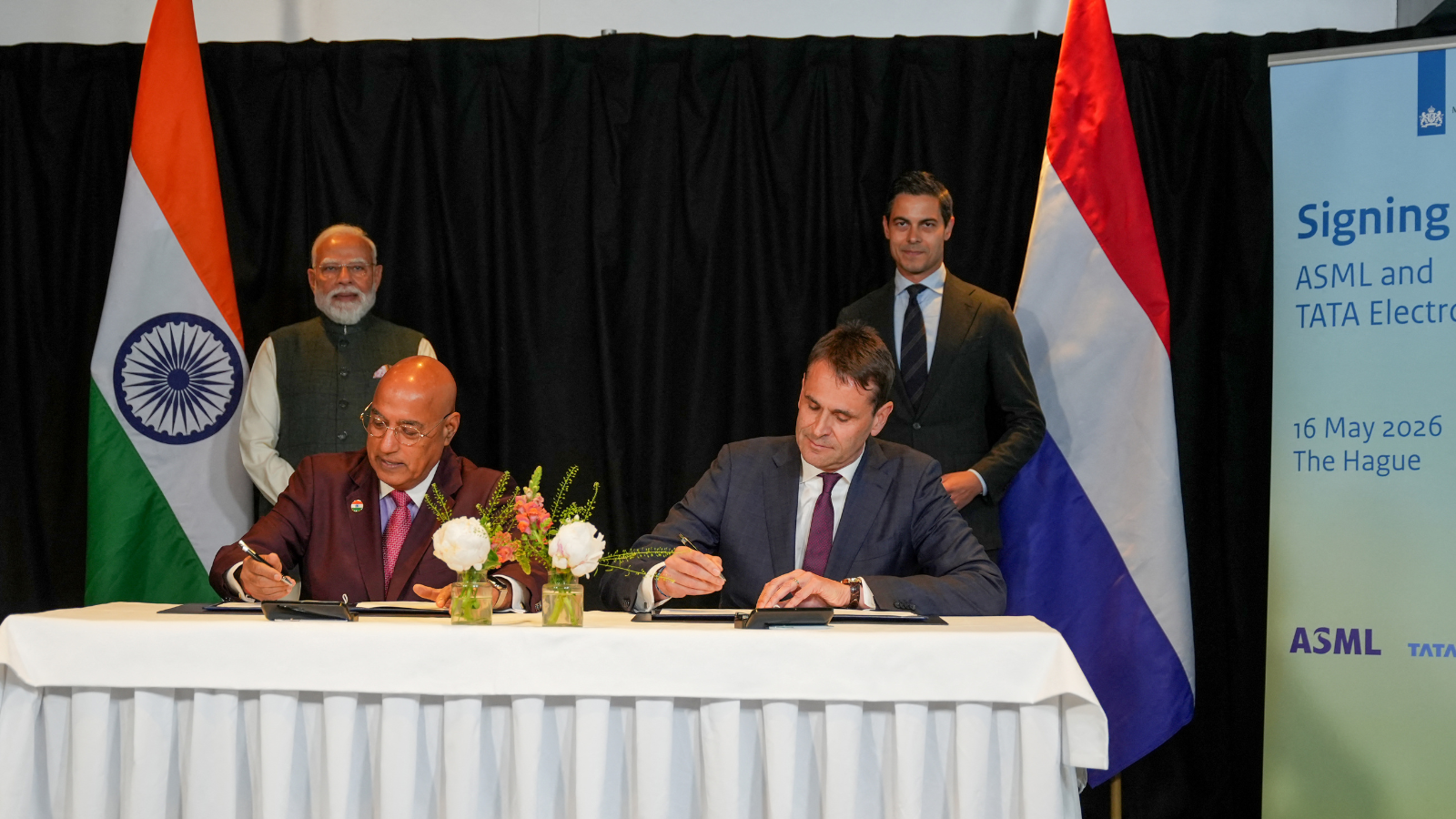
The ASML MoU with Tata Electronics is an indicator of how far the Indian semiconductor ecosystem has come. This ecosystem has been years in the making and represents real commercial logic.

Konark Bhandari