

Report
- +2
George Perkovich, Jessica Tuchman Mathews, Joseph Cirincione, …
{
  "authors": [
    "Jon Wolfsthal"
  ],
  "type": "other",
  "centerAffiliationAll": "dc",
  "centers": [
    "Carnegie Endowment for International Peace"
  ],
  "collections": [],
  "englishNewsletterAll": "ctw",
  "nonEnglishNewsletterAll": "",
  "primaryCenter": "Carnegie Endowment for International Peace",
  "programAffiliation": "NPP",
  "programs": [
    "Nuclear Policy"
  ],
  "projects": [],
  "regions": [
    "Russia"
  ],
  "topics": [
    "Nuclear Policy",
    "Arms Control"
  ]
}
Source: Getty
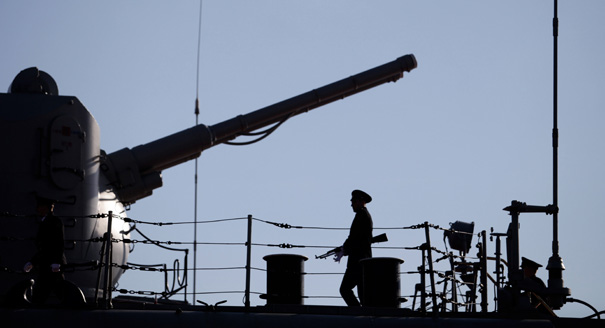
The New START Treaty continues to provide benefits to both Russia and the United States, despite Russia’s interference in the 2016 U.S. presidential election.
Source: Foreign Policy
On February 5, the central limits in the New Strategic Arms Reduction Treaty (New START) will enter into force and both the United States and Russia will meet their obligations. Just seven years ago, it was difficult to imagine the two states agreeing to manage their ongoing nuclear rivalry in such productive fashion. Even securing the Treaty’s approval in the first place was never a sure thing. Thankfully for the security of the United States, however, the agreement was negotiated in record time, approved by the Senate, and ratified by President Barack Obama in 2011.
Given all of the bad (not fake) news and tension in the U.S.-Russian relationship, it is indeed remarkable that New START exists. By containing the nuclear competition between our two countries, and providing both with unprecedented transparency, verification access and information about the size, shape and deployment of our strategic offensive nuclear forces, the treaty has maintained a modicum of predictability and professionalism in an otherwise tortured relationship. New START continues to provide benefits to both countries, despite Russia’s interference in America’s election, the continued illegal occupation of Crimea, and Russia’s continued violation of other arms control agreements like the Intermediate Range Nuclear Forces Treaty. It has not solved all our problems, but it has helped prevent them from spiraling out of control.
Under New START, both countries may deploy no more than 1,550 strategic offensive nuclear weapons, and deploy no more than 700 strategic nuclear delivery vehicles. An additional 100 SNDVs may be non-deployed (as models, spares, and training units, for example). More important, both sides permit the other to conduct intrusive on-site inspections that enable the parties to have high confidence that the terms of the Treaty are indeed being met. The countries also meet regularly in the Bilateral Consultative Commission to work out any disagreements or questions about interpretations or procedures.
In short, one major element that helped manage U.S.-Russian tensions in the Cold War—nuclear arms control—has remained viable, and provides some hope for the future relationship. The fact that both states are meeting their obligations shows that both still, even in this environment, want to manage their competition that both benefit from predictability in the nuclear arena.
Sadly, New START will expire in 2021 unless the presidents of both countries agree to extend the agreement for up to five years. Thus far, however, Donald Trump shown no interest in extending New START.
The draft of the Trump administration’s Nuclear Posture Review (NPR) that leaked last month has a short mention of the agreement and notes it remains in the interest of the United States that the agreement be implemented, but is silent on the issue of extension. Likewise, the Trump team has only halfheartedly pursued the strategic stability talks with Russia teed up by the Obama administration. These had been designed to re-engage Russia in a way that did not condone business as usual but could still provide critical insight into Moscow’s nuclear and security behavior.
Absent an extension, the limits, and the inspections that go along with them, will expire in February 2021, one month after the next President takes their oath of office. This situation is remarkably similar and equally as dangerous as the one left to the Obama administration its predecessors. The 1991 START agreement expired in December 2009, leaving precious little time for President Obama’s team to negotiate a successor agreement. Without one, we would have lived the last decade without any direct transparency into Russia’s nuclear complex. Such conditions would likely have led to a worsened political relationship, and a resulting nuclear competition that would have made the missile and bomber gaps of the past pale by comparison. That’s to say nothing of the billions of dollars more our intelligence community would have required to compensate for the loss of inspections and data exchanges provided under the treaty.
Arms control remains a tough sell. It always has been. Critics complain that such agreements constrain America’s freedom of action, and that negotiating with our adversaries condones other unsavory behavior they are engaged in. In fact, decades of history show that arms control agreements that are verifiable and mutually implemented are key tools for securing American interests and in shaping the strategic environment to our advantage.
This, sadly, is one of the lessons Trump’s Nuclear Posture Review, and indeed his overall approach to nuclear issues, fails to heed. By denigrating any agreements negotiated by President Obama (and likely exactly because they were negotiated by him), the Trump Administration is in danger of focusing only on military tools to coercion instead of using all of the diplomatic, economic, political and security tools in the American tool chest. By pursuing arms reduction agreements, America can understand more about Russia’s intentions, shape their thinking, enhance our alliances, and strengthen our global leadership on nonproliferation maters. By relegating arms control to an afterthought, America loses a key tool in controlling the military threats facing our country and our allies.
New START has not solved all of our problems with Russia by any means. But we know much more about Russia’s nuclear activities because of New START than we would have if the GOP leadership had prevailed and defeated the agreement in 2010. Moreover, we are at risk of losing the last remaining elements of stability and predictability in the bilateral nuclear relationship if we allow the question of New START extension to linger for too long.

Former Nonresident Scholar, Nuclear Policy Program
Jon Wolfsthal was a nonresident scholar with the Nuclear Policy Program.
Recent Work



George Perkovich, Jessica Tuchman Mathews, Joseph Cirincione, …
Jon Wolfsthal
Carnegie India does not take institutional positions on public policy issues; the views represented herein are those of the author(s) and do not necessarily reflect the views of Carnegie, its staff, or its trustees.

This piece argues that India’s central challenge is not managing a single flashpoint but resolving the underlying tension between expansion and institutional coherency of the BRICS grouping.

Vrinda Sahai

Asia’s two largest nuclear powers have never threatened each other with nuclear weapons. How much will the recent deadly border clashes between China and India change the security landscape?


Toby Dalton, Tong Zhao, Rukmani Gupta
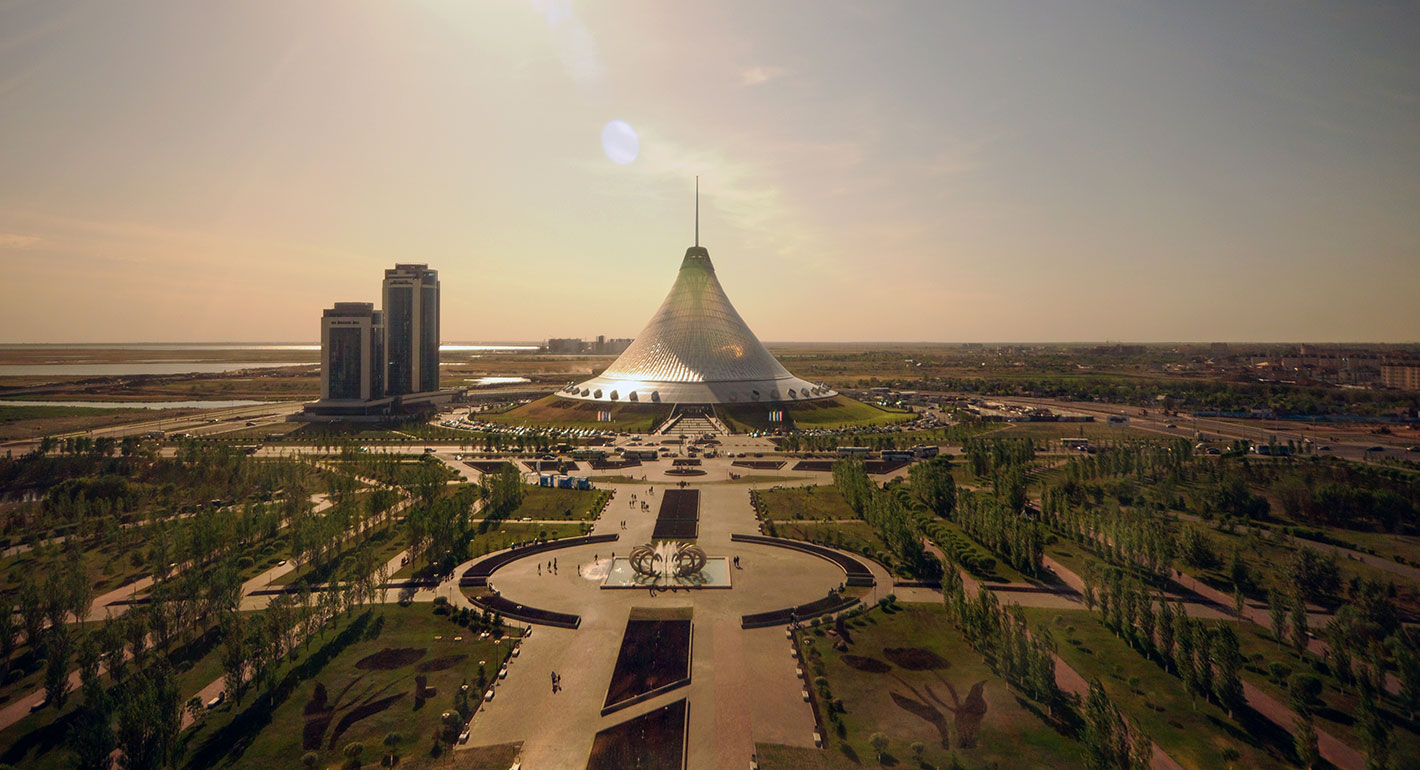
With contributors from various Central Asian nations and beyond, this issue of Seminar provides a selection of perspectives about the past, present, and future trajectory of Central Asia, and the growing role of external actors, particularly India, China, Russia, and the EU in this evolving and dynamic space.
Rhea Menon, Sharanya Rajiv, 64592
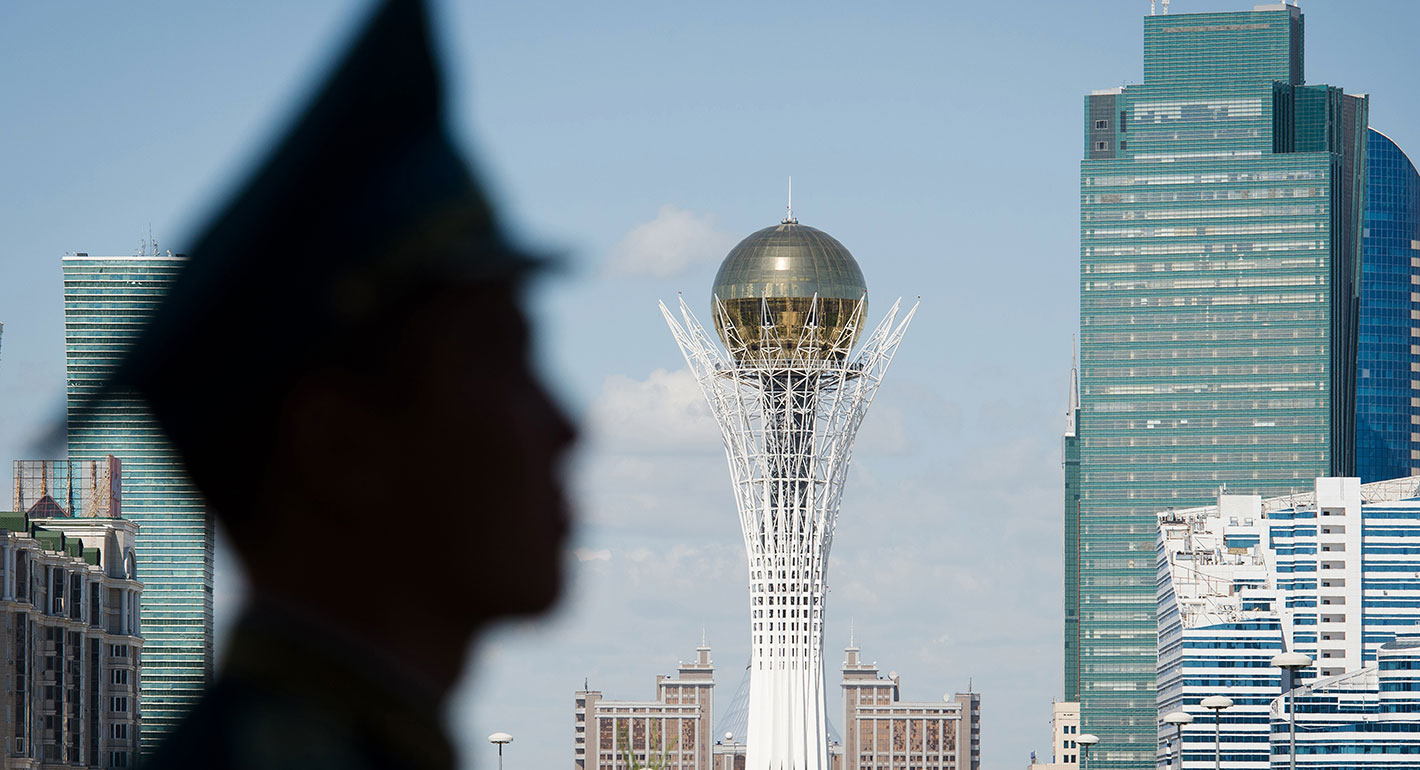
The rise of China as an economic powerhouse in Asia, along with rapid globalization, has brought Central Asia back in the limelight as a bridge connecting the established markets of the West with the emerging markets of the East.
Rhea Menon, Sharanya Rajiv
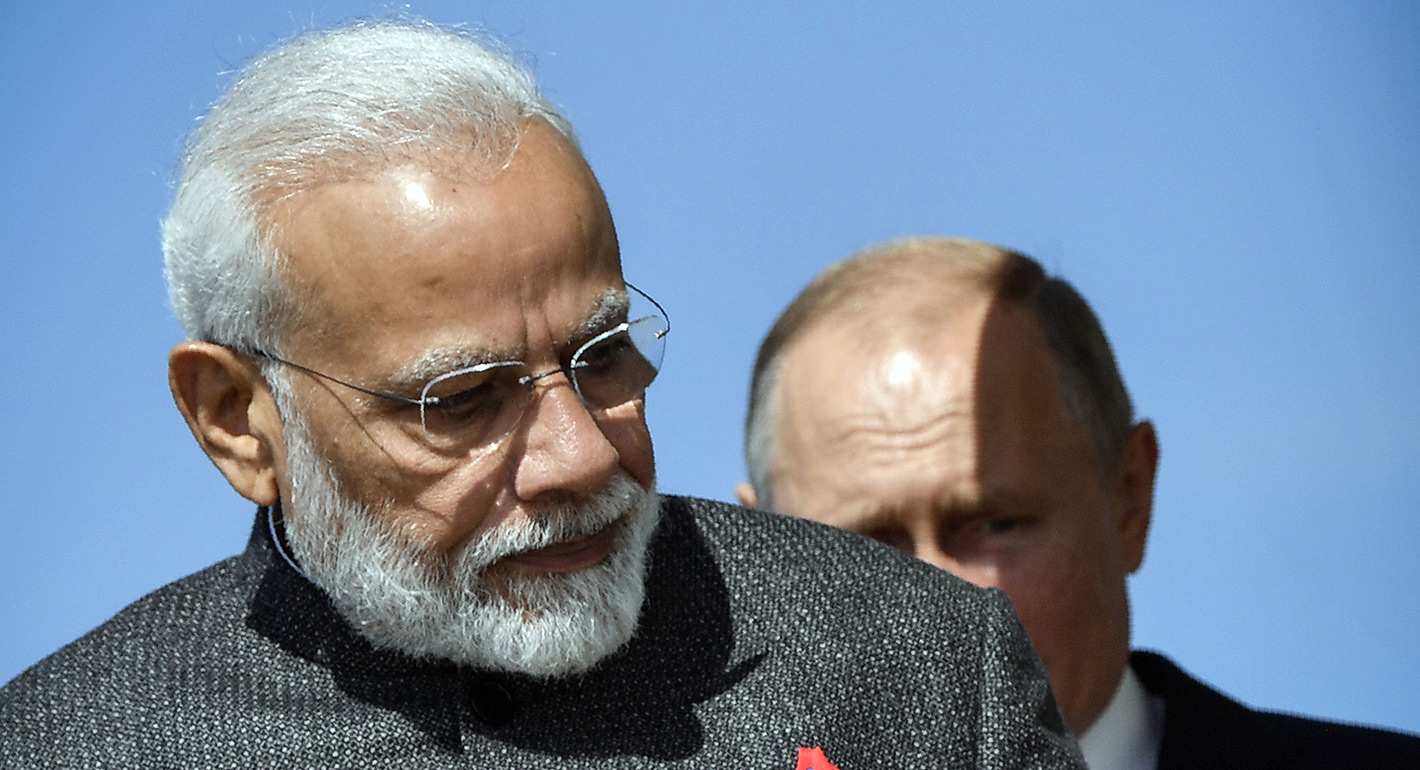
The special and privileged strategic partnership between India and Russia now spans across both Eurasia and the Indo-Pacific.
Sharanya Rajiv, 64592