

Other
- +5
Frances Z. Brown, Zainab Usman, Erin Jones, …
{
  "authors": [
    "Aqil Shah"
  ],
  "type": "other",
  "centerAffiliationAll": "dc",
  "centers": [
    "Carnegie Endowment for International Peace"
  ],
  "collections": [],
  "englishNewsletterAll": "ctw",
  "nonEnglishNewsletterAll": "",
  "primaryCenter": "Carnegie Endowment for International Peace",
  "programAffiliation": "SAP",
  "programs": [
    "South Asia"
  ],
  "projects": [],
  "regions": [
    "South Asia",
    "Pakistan"
  ],
  "topics": [
    "Democracy",
    "Security",
    "Military",
    "Foreign Policy",
    "Civil Society",
    "Religion"
  ]
}
Source: Getty
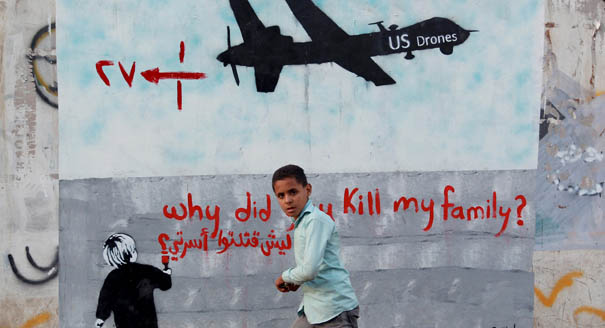
New interview and survey data from Pakistan provide little or no evidence to support the claim that U.S. drone strikes generate blowback and contribute to the radicalization of local populations.
Source: International Security
Many analysts argue that U.S. drone strikes generate blowback: by killing innocent civilians, such strikes radicalize Muslim populations at the local, national, and even transnational levels. This claim, however, is based primarily on anecdotal evidence, unreliable media reports, and advocacy-driven research by human rights groups. Interview and survey data from Pakistan, where, since 2004, the U.S. Central Intelligence Agency has launched more than 430 drone strikes, show little or no evidence that drone strikes have a significant impact on militant Islamist recruitment either locally or nationally. Rather, the data reveal the importance of factors such as political and economic grievances, the Pakistani state's selective counterterrorism policies, its indiscriminate repression of the local population, and forced recruitment of youth by militant groups.
Similarly, trial testimony and accounts of terrorists convicted in the United States, as well as the social science scholarship on Muslim radicalization in the United States and Europe, provide scant evidence that drone strikes are the main cause of militant Islamism. Instead, factors that matter include a transnational Islamic identity's appeal to young immigrants with conflicted identities, state immigration and integration policies that marginalize Muslim communities, the influence of peers and social networks, and online exposure to violent jihadist ideologies within the overall context of U.S. military interventions in Muslim countries.
This article was originally published in International Security.

Former Visiting Scholar, South Asia Program
Aqil Shah was a visiting scholar in the South Asia Program at the Carnegie Endowment for International Peace.
Recent Work



Frances Z. Brown, Zainab Usman, Erin Jones, …
Aqil Shah
Carnegie India does not take institutional positions on public policy issues; the views represented herein are those of the author(s) and do not necessarily reflect the views of Carnegie, its staff, or its trustees.

In any defense establishment, change is an ongoing process. However, despite the best of intentions, existing bureaucracies, bound by habit and years of socialization, have their limits in implementing transformative change.

Anit Mukherjee

After the chill in ties between 2020 and 2024 that brought India–China relations to their lowest point in several decades, the two countries have engaged each other afresh. This paper argues that there are predominantly four imperatives guiding India’s approach to China, and they exist in an order of priority.

Saheb Singh Chadha

This piece argues that India’s central challenge is not managing a single flashpoint but resolving the underlying tension between expansion and institutional coherency of the BRICS grouping.

Vrinda Sahai

A partnership between India, a country of subcontinental size, and Africa, a continent of fifty-four countries, may seem asymmetric until one notes that both are home to nearly the same number of people—1.4 billion. This essay spells out the existing challenges to the partnership, its optimal potential, and the possible pathways to realize it over the next quarter-century.

Rajiv Bhatia

The India–EU Free Trade Agreement (FTA) is shaping up to be one of the most consequential trade negotiations, both economically and strategically. But, what’s in the agreement, what’s missing, and what will determine its success in the years ahead
Vrinda Sahai, Nicolas Köhler-Suzuki