

Paper
Ariel (Eli) Levite, Toby Dalton
{
  "authors": [
    "Ariel (Eli) Levite"
  ],
  "type": "legacyinthemedia",
  "centerAffiliationAll": "dc",
  "centers": [
    "Carnegie Endowment for International Peace",
    "Malcolm H. Kerr Carnegie Middle East Center"
  ],
  "collections": [
    "U.S. Nuclear Policy"
  ],
  "englishNewsletterAll": "ctw",
  "nonEnglishNewsletterAll": "",
  "primaryCenter": "Carnegie Endowment for International Peace",
  "programAffiliation": "NPP",
  "programs": [
    "Nuclear Policy"
  ],
  "projects": [],
  "regions": [
    "North America",
    "United States",
    "Middle East",
    "Iran"
  ],
  "topics": [
    "Political Reform",
    "Nuclear Policy",
    "Global Governance"
  ]
}
Source: Getty
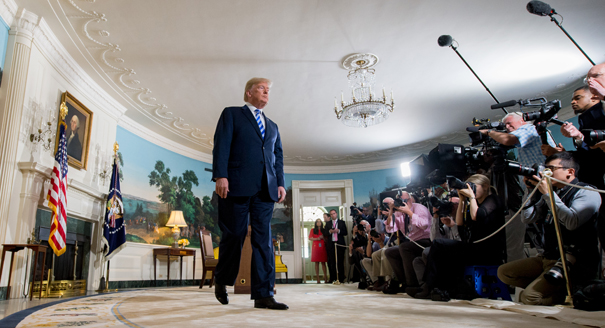
The negative consequences of pulling out of the JCPOA could be diminished by aligning the goals announced by the Trump administration into an operational, strategic agenda.
Source: National Interest
The most negative consequences of casting the JCPOA aside could still be mitigated by converting the lofty goals announced by the administration into a far more pragmatic operational agenda. To succeed, three requirements stand out. First, to define realistic red lines that Iran's nuclear, missile, and regional activity must not be allowed to cross, indefinitely, regardless whether a new deal is in place. The credibility of U.S. deterrence against crossing them would be greatly enhanced by making these more modest than the goals envisaged by Secretary Pompeo, which in turn would enhance the chances of building broader international support for them. All of these would also make compliance with such red lines somewhat easier for Iran to contemplate. Second, Trump must resuscitate an international coalition that is far broader than the Gulf States and Israel. He must include the transatlantic alliance by refraining from imposing broad secondary sanctions on allies' companies, while also seeking complementary quiet understandings with China. Third, he should seize on some positive signals from the Kremlin about seriously exploring the possibility of building a partnership with Russian to significantly narrow the permissible scope for Iran's nuclear, missile, and Syria activities.
Ultimately, though, much would also depend on explicit U.S. willingness to walk away from the goal of actively promoting regime change. The pursuit of regime change will only stiffen the resistance of all elements of Iranian society (including those who otherwise despise clerical rule). Finally, the threat of American-forced regime change will also enhance Iran’s interest in nuclear weapons as an insurance policy. We should not abandon the hope of a fundamental transformation in the orientation of the Iranian regime, but this development should come from the inside.
This article was originally published in the National Interest.

Senior Fellow, Nuclear Policy Program, Technology and International Affairs Program
Levite was the principal deputy director general for policy at the Israeli Atomic Energy Commission from 2002 to 2007.
Recent Work

Ariel (Eli) Levite, Toby Dalton
Ariel (Eli) Levite, Toby Dalton
Carnegie India does not take institutional positions on public policy issues; the views represented herein are those of the author(s) and do not necessarily reflect the views of Carnegie, its staff, or its trustees.

How is AI reshaping space security, creating governance challenges, and where does international diplomacy stand today?


Tejas Bharadwaj, Almudena Azcárate Ortega

The U.S.–India semiconductor cooperation story is well-stocked with top-level strategic intent. What remains unresolved, however, are some underlying challenges that will determine whether the cooperation actually functions. Three such friction points stand out.

Shruti Mittal
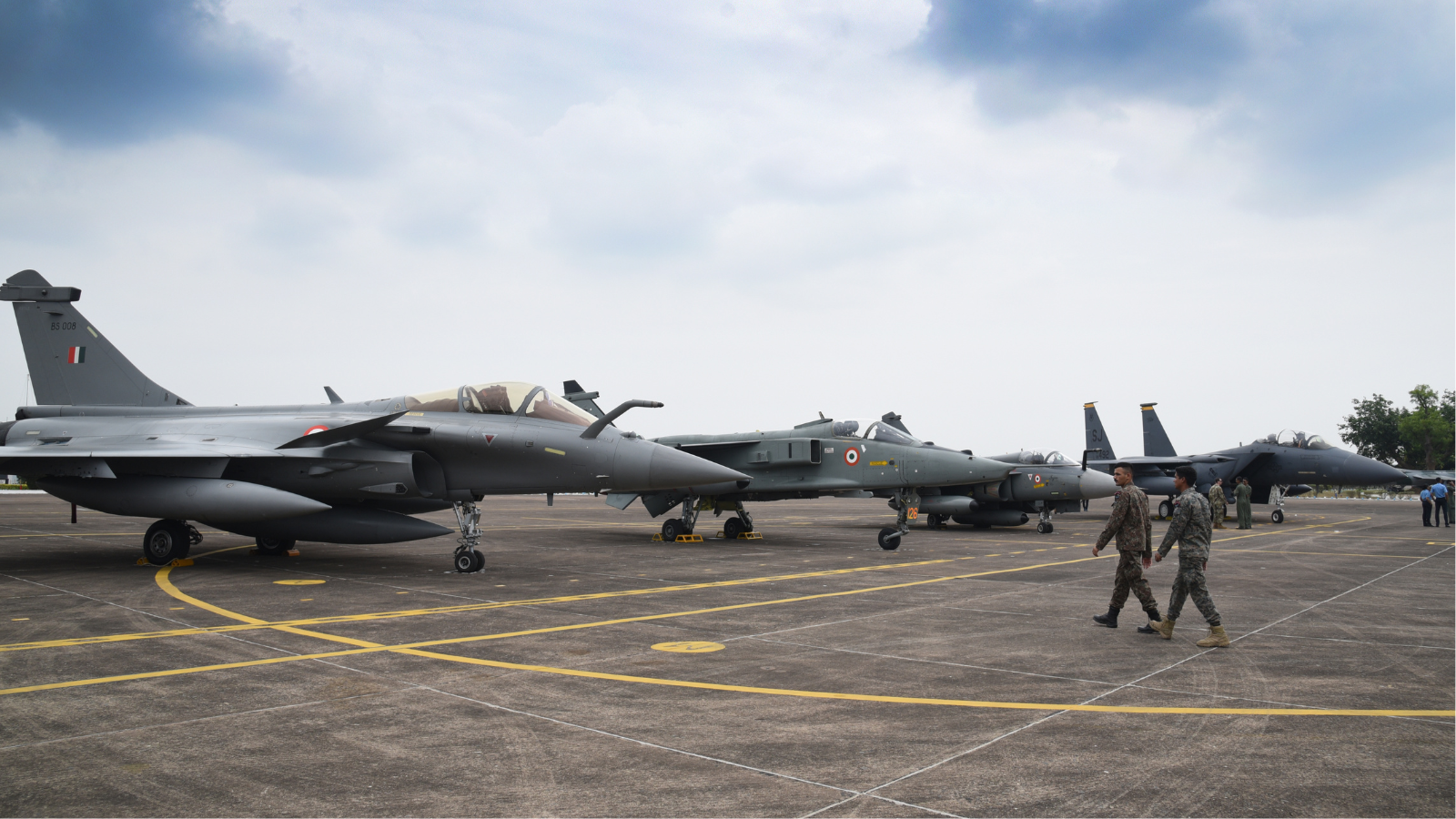
India and the United States are close to concluding a Reciprocal Defense Procurement Agreement (RDPA) that will allow firms from the two countries to sell to each other’s defense establishments more easily. While this may not remedy the specific grievances both sides may have regarding larger bilateral issues, an RDPA could restore some momentum, following the trade deal announcement.

Konark Bhandari

On the last day of the India AI Impact Summit, India signed Pax Silica, a U.S.-led declaration seemingly focused on semiconductors. While India’s accession to the same was not entirely unforeseen, becoming a signatory nation this quickly was not on the cards either.
Konark Bhandari

This piece examines India’s response to U.S. sanctions and tariffs, specifically assessing the immediate market consequences, such as alterations in import costs, and the broader strategic implications for India’s energy security and foreign policy orientation.

Vrinda Sahai