

Commentary
Judy Dempsey
{
  "authors": [
    "Judy Dempsey"
  ],
  "type": "legacyinthemedia",
  "centerAffiliationAll": "dc",
  "centers": [
    "Carnegie Endowment for International Peace",
    "Carnegie Europe"
  ],
  "collections": [
    "Transatlantic Cooperation"
  ],
  "englishNewsletterAll": "ctw",
  "nonEnglishNewsletterAll": "",
  "primaryCenter": "Carnegie Europe",
  "programAffiliation": "EP",
  "programs": [
    "Europe"
  ],
  "projects": [],
  "regions": [
    "Europe",
    "Western Europe",
    "France",
    "Germany",
    "Iran"
  ],
  "topics": [
    "Foreign Policy",
    "EU",
    "Security"
  ]
}
Source: Getty
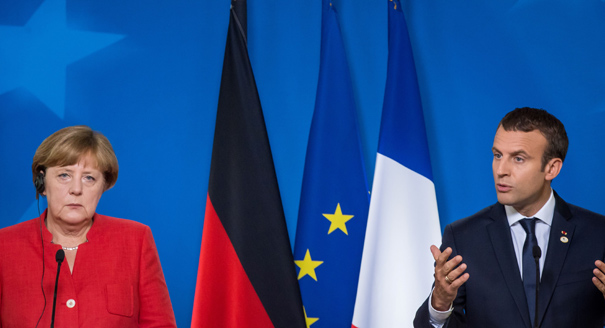
Paris and Berlin have diametrically opposed views about what the future of the EU should look like.It is hard to see how both views can be reconciled.
Next week’s EU summit should be a chance for the bloc’s leaders to set out an ambitious strategic agenda. At stake is the future of the eurozone, the shape of Europe’s defence and security ambitions and a decades-long failure to agree a refugee and asylum policy.
But the meetings are not just about the EU responding to its own crises. They are also about the bloc’s two most important leaders confronting the erosion of the post-1945 transatlantic pact that has held the west together.US president Donald Trump has punctured the continent’s comfort zone with his steel tariffs and broader rejection of global institutions such as the G7. It is now up to the German chancellor Angela Merkel and French president Emmanuel Macron to step into the breach. But don’t bet on it. The summit could go terribly wrong.
It is clear that Paris and Berlin have diametrically opposed views about what the future of the EU should look like. France wants a Europe that acts strategically across the board. Germany has shunned a broad strategy in favour of cautious incrementalism. It is hard to see how both views can be reconciled.
Mr Macron has set out bold plans for an integrated EU. His proposals would lead to a two-speed Europe, with the European Commission having substantial influence on fiscal policy and the eurozone countries calling the shots through an EU finance minister, a banking union and a eurozone budget.
Ms Merkel responded this month, belatedly and cautiously. The chancellor, who is now in her fourth and probably final term, faces big problems at home as well as serious divisions among the EU member states.
The risk-averse Ms Merkel politically and instinctively supports an intergovernmental approach in which the member states, not the commission, would wield influence. She is loath to have a common EU budget or fund that would, as she sees it, weaken the motivation for Italy to undertake major structural reforms. Besides, her conservative bloc would not buy into an agreement that would require Germany to spend more to bail out badly run economies, in addition to ceding parliamentary oversight to Brussels. For Ms Merkel, such a concession would be political suicide.
Her other worry is that Mr Macron’s policies would lead to a differentiated Europe that would marginalise non-eurozone members. That scenario would play into the hands of populist-led governments in Poland, Hungary and the Czech Republic, who enjoy railing against Brussels.
Further south, with support from central European leaders, populist parties in Austria and Italy are focused on controlling the flows of refugees and migrants first and foremost. EU reforms take second place.
Since the EU is not likely to make meaningful progress over defence and security issues, Mr Macron has proposed a French-led European Intervention Force. It is a kind of coalition of the willing, neither hobbled by EU institutions nor member states. That speaks volumes about Paris’s low expectations about European defence and security ambitions.
Ms Merkel herself does not ask hard questions about the strategic role of Germany’s miserably equipped armed forces. German soldiers do not even have enough thermal underwear, let alone bulletproof vests or submarines that work.
The chancellor pays lip service to consolidating Europe’s wasteful armaments industry, but she was the one that in 2012 pulled the plug on a €35bn merger between Britain’s BAE Systems and EADS (now Airbus), which is partly owned by Germany. National sovereignty, jobs and a pacifist culture have prevailed over efficiency and strategic thinking here.
Then there is Brexit. The UK’s vote to leave has changed the dynamics inside the EU. The balance of power has shifted to France and Germany, but it’s not quite that clear-cut. The Dutch and Swedes, Danes and Finns, Irish and Baltic states hate the idea of losing a Britain that supported a pro-free market but fiscally strict EU. London also checked the pace of the Franco-German engine.
Now, these countries want Ms Merkel to push back against Mr Macron’s policies because they are intrinsically federalist and feel, to some, French-dominated. At the same time, their leaders want to know what plans Ms Merkel herself has for the bloc.
Maybe they will be enlightened on Tuesday, when Mr Macron and Ms Merkel meet outside Berlin to forge a common position ahead of the EU summit. One thing is clear: muddling through is no longer a viable option.
This article was originally published by the Financial Times.

Nonresident Senior Fellow, Carnegie Europe
Judy Dempsey is a nonresident senior fellow at Carnegie Europe
Recent Work
Judy Dempsey
Judy Dempsey
Carnegie India does not take institutional positions on public policy issues; the views represented herein are those of the author(s) and do not necessarily reflect the views of Carnegie, its staff, or its trustees.

In any defense establishment, change is an ongoing process. However, despite the best of intentions, existing bureaucracies, bound by habit and years of socialization, have their limits in implementing transformative change.

Anit Mukherjee

After the chill in ties between 2020 and 2024 that brought India–China relations to their lowest point in several decades, the two countries have engaged each other afresh. This paper argues that there are predominantly four imperatives guiding India’s approach to China, and they exist in an order of priority.

Saheb Singh Chadha

This piece argues that India’s central challenge is not managing a single flashpoint but resolving the underlying tension between expansion and institutional coherency of the BRICS grouping.

Vrinda Sahai
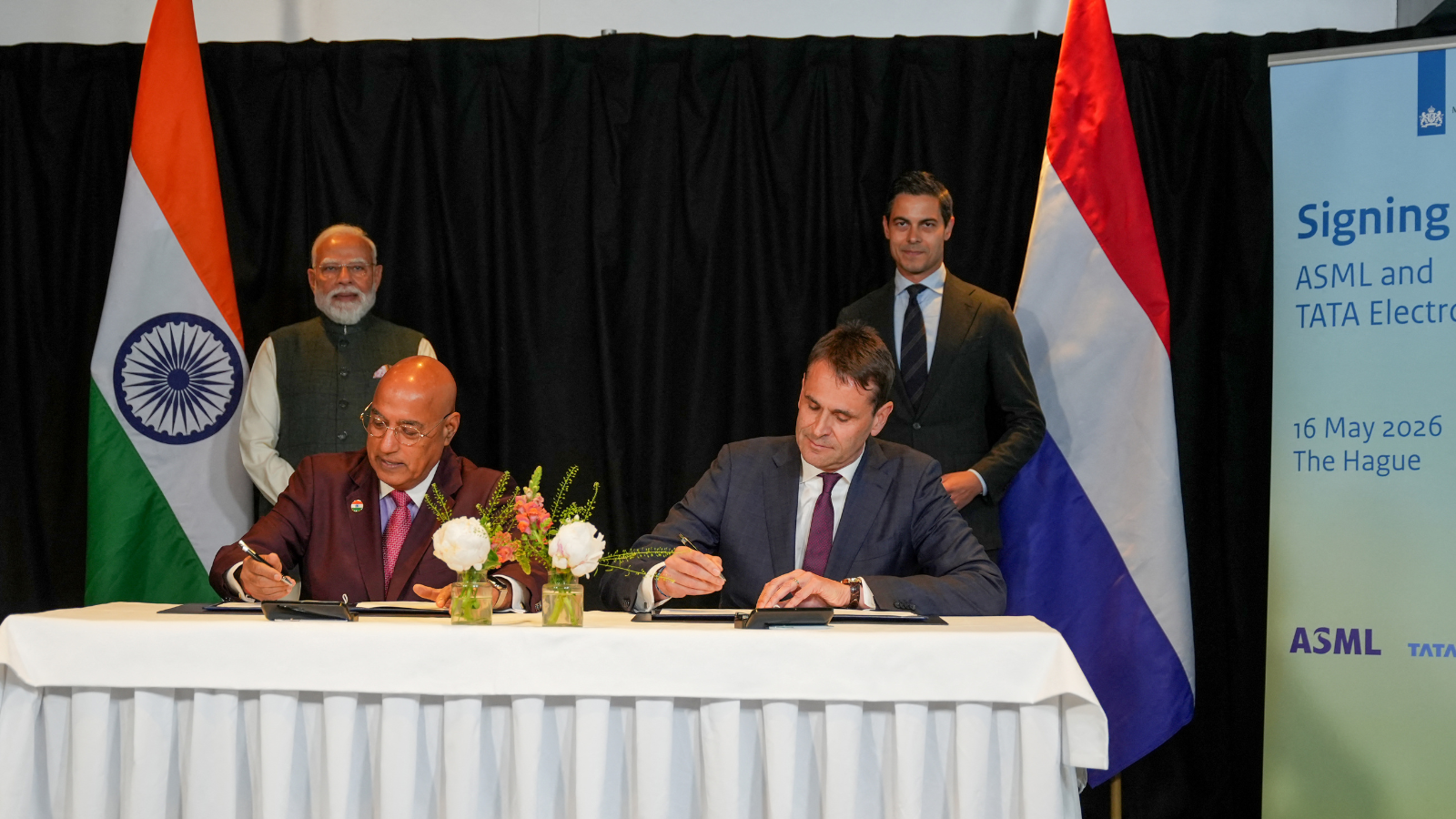
The ASML MoU with Tata Electronics is an indicator of how far the Indian semiconductor ecosystem has come. This ecosystem has been years in the making and represents real commercial logic.

Konark Bhandari

A partnership between India, a country of subcontinental size, and Africa, a continent of fifty-four countries, may seem asymmetric until one notes that both are home to nearly the same number of people—1.4 billion. This essay spells out the existing challenges to the partnership, its optimal potential, and the possible pathways to realize it over the next quarter-century.

Rajiv Bhatia