

Paper
Sarah Yerkes, Natalie Triche, Amr Hamzawy
{
  "authors": [
    "Sarah Yerkes"
  ],
  "type": "legacyinthemedia",
  "centerAffiliationAll": "dc",
  "centers": [
    "Carnegie Endowment for International Peace",
    "Malcolm H. Kerr Carnegie Middle East Center"
  ],
  "collections": [
    "Arab Awakening"
  ],
  "englishNewsletterAll": "menaTransitions",
  "nonEnglishNewsletterAll": "",
  "primaryCenter": "Carnegie Endowment for International Peace",
  "programAffiliation": "MEP",
  "programs": [
    "Middle East"
  ],
  "projects": [
    "Tunisia Monitor"
  ],
  "regions": [
    "North Africa",
    "Tunisia",
    "Maghreb"
  ],
  "topics": [
    "Political Reform",
    "Democracy",
    "Civil Society"
  ]
}
Source: Getty
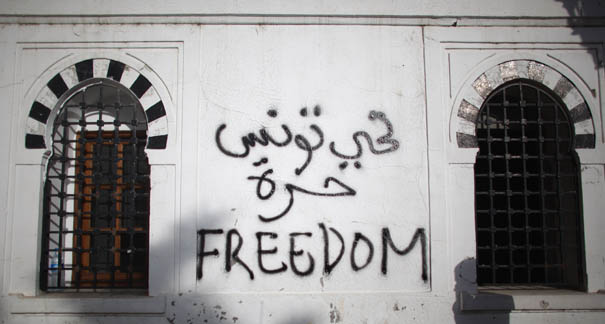
The government and civil society have been productive collaborators during previous phases of the Tunisian transition, but today, a climate of fear and a growing trust gap are getting in the way of their cooperation.
Source: Foreign Affairs
Tunisia is often heralded as the sole success story to come out of the 2011 Arab uprisings, insomuch as it is the only country that established a democratic government in their wake. In a 2017 study conducted by Freedom House, Tunisia was the only country in the Middle East and North Africa ranked as “free.” But the relative success of Tunisia’s transition does not mean that the process has been an easy one. The country’s seven-year-long transition to democracy has been excruciatingly difficult, marked by several terrorist attacks, ongoing economic crisis, political stalemate, and tenuous compromises between Islamists and secularists. At several points since the overthrow of former President Zine al-Abidine Ben Ali, Tunisians have been forced to question whether their democratic experiment will survive the pressure.
If you ask many Tunisians what has made the difference in holding together the fabric of their democracy, they will say civil society. Civil society was deeply repressed during the decades of Ben Ali’s rule and flourished in the postrevolution period. Thousands of civil society organizations (CSOs) were formed, with missions ranging from protecting human rights to monitoring the government to fighting corruption. CSO efforts have been behind most of the important human rights advances in Tunisia and have helped keep the government on track and accountable. In 2015, four CSOs (two labor unions, the Tunisian Human Rights League, and the Tunisian Order of Lawyers) were awarded the Nobel Peace Prize for their role in brokering an important 2013 compromise between Islamists and secularists that is widely believed to have saved the country’s democracy.
The critical importance of CSOs makes Law 30 of 2018, which the Tunisian parliament adopted on July 27, very worrisome. The law establishes a national registration of institutions and requires public and private companies, including CSOs, to register with this new entity. The law came in response to the European Parliament adding Tunisia to its list of countries at “high risk” of money laundering and terror financing in February, a decision that harmed efforts to rebuild the Tunisian economy and that many European parliamentarians criticized as undeserved. Advocates of including CSOs within Law 30 argue that some CSOs are fronts for terrorist organizations and thus the whole sector must be more tightly controlled. But several prominent CSOs warned against passing it, calling it unconstitutional and pointing out that Decree 88, the current law on nongovernmental organizations (NGOs), already regulates the civil society sector and provides the transparency the new law supposedly seeks.
Including CSOs within Law 30 is not only unnecessary, it appears to be a backdoor way to increase government oversight of civil society and will undoubtedly create a chilling effect on freedom of association in Tunisia. Human rights CSOs—traditionally the most vulnerable subset—will be among the worst affected. Laws to monitor and regulate civil society activity are often effective tools of state repression but are unlikely to have a discernible impact on terror financing and money laundering. In other words, terrorists will likely keep up their work through extralegal or informal means, while CSOs will be burdened with extra paper work and bureaucracy—and this is the best-case scenario. The worst-case scenario is that fear of submitting themselves to strict government oversight will prevent organizations from performing their important work.
Strangely, the law comes on the heels of a lengthy report by the parliamentary Commission on Individual Liberty and Equality (COLIBE) that seemed to signal a strong commitment by the government to address human rights concerns and to work with civil society to improve the environment for the freedoms of expression and association. Thus, the Tunisian government is sending mixed, and sometimes dangerous, signals regarding its commitment to human rights issues and civil society writ large.
Tunisia has made remarkable strides over the past few years in advancing human rights causes, particularly when it comes to the rights of women. In July 2017, it passed a landmark law to fight violence against women. In addition to recognizing economic, sexual, political, and psychological violence against women, it removed Article 227 of the Tunisian Code of Criminal Procedure, which allowed for a pardon of someone who committed an act of sexual abuse against a minor when he married his victim. The law did not provide sufficient funding for women’s shelters and will require additional police training to be fully effective, but it is an important step toward acknowledging and starting to address a severe pattern of abuse against women. Another win came in September, when Tunisian women gained the right to marry non-Muslim men. And women’s rights groups, with the help of President Beji Caid Essebsi, are now working to amend a law that limits the inheritances women can receive to half of what men can receive.
In the political realm, Tunisia has the highest percentage of women legislators of any Arab parliament (31.3 percent, well above the 20 percent serving in the United States Congress). As the result of a 2016 amendment to the electoral law that established horizontal and vertical gender parity requirements, women won 49 percent of seats in May’s municipal elections. The municipal elections also saw the victory of the first female mayor of Tunis, Souad Abderrahim, a member of the Islamist party Ennahda.
Tunisia has also made progress in addressing racial discrimination. Following years of fierce advocacy by CSOs, the government is now drafting the first law in the Arab world criminalizing discrimination based on race, color, or descent. The draft law also includes measures to combat racial discrimination by addressing it in education, culture, and the media.
Although Tunisia still has a long way to go to protect the rights of LGBTI individuals, it has taken small steps toward normalizing homosexuality in the Tunisian public sphere. The first LGBTI radio station in the Arab world, Shams Rad, was launched in December 2017. It has sparked controversy, but a primary court recently ruled that Shams Rad does not violate or threaten “social and family values” or their reputations and is therefore allowed to continue operating, signaling a move toward greater tolerance in Tunisian society.
Alongside these positive developments have been more concerning ones. Despite promising that they would do so, the government has failed to halt its policy of forced exams for those accused of homosexuality. Consensual same-sex sexual relations remain illegal under Article 230 of the Tunisian Code of Criminal Procedure, and human rights groups have reported a pattern of abuse and harassment of LGBTI individuals.
International organizations (as well as the U.S. Department of State) continue to report persistent use of torture in prisons and detention centers. Torture was a trademark of the Ben Ali era, making its continuation under the democratic government particularly discouraging. Activists have criticized the antiterrorism law enacted in the wake of two 2015 terror attacks for leading to arbitrary arrests and detentions as well as police abuse of power. Analysts have noted the regular use of “public morality” violations to arrest people for behaviors such as eating during Ramadan, exhibiting public displays of affection, or wearing clothing that is insulting to the police. The infamous “kiss affair” in October 2017, when two people were sentenced to jail for kissing in a car, sparked public outrage. And the transitional justice process, tasked with addressing the abuses of the Ben Ali regime, suffered a blow earlier this year when parliament refused to grant the Truth and Dignity Commission an extension of its mandate.
All of these developments signal that both civil society and the government have more work ahead of them to address human rights abuses. To move Tunisia over the finish line of becoming a fully consolidated liberal democracy thus requires an even stronger commitment toward protecting the freedoms of expression and association.
The international community has an important role to play in encouraging Tunisia to keep the space for civil society open and free. The United States has been one of the key supporters—both rhetorically and financially—of Tunisia’s democratic transition, funneling hundreds of millions of dollars to support civil society as well as the development of effective government institutions. But in conversations I have had with Tunisian officials, it is clear that some in the government do not understand the potential impact Law 30 or other draft legislation could have on the country’s relationship with the international community. The United States Congress took a positive step in this direction by requiring that the State Department report on the potential effect of changes to the NGO law on U.S. interests, from practical considerations such as severely limiting the work of U.S. organizations in the field to protecting human rights and promoting free expression. This report should be made public to sound the alarm bell to the Tunisian government and civil society about the damage that amending the law could do to the U.S.-Tunisian relationship.
Concerns over terror financing are legitimate, and Tunisia is understandably eager to earn the trust of European investors, governments, and tourists. But a report published by the Project on Middle East Democracynotes that Decree 88 already contains the necessary provisions to fight terror financing. Specifically, it prohibits NGOs from “‘incitement for violence, hatred, fanaticism, or discrimination on religious, racial or regional grounds,’ as well as ‘distributing monies to their members for personal benefit or exploitation of the association for tax evasion purposes” and calls for the “suspension or dissolution of any NGO that violates these prohibitions.” Combating terrorism in Tunisia thus requires better enforcement of the existing law, not a new law with potentially devastating consequences. The prioritization of fighting terrorism has already come at a cost, and this approach could make human rights advancements another victim.
The United States and Europe should also encourage the Tunisian government to implement the COLIBE report’s recommendations through legislation. They should work with the more than 90 civil society organizations that published the “Pact for Equality and Individual Freedoms,” a report outlining the fundamental freedoms that all Tunisian citizens should enjoy, to ensure that adequate attention is paid to priorities such as ending torture, protecting sexual freedom, and improving the judicial process.
Finally, the Tunisian government should engage in a serious dialogue with civil society and the international community about efforts to amend legislation relating to NGOs. The government and civil society have been productive collaborators during previous phases of the transition, but today, a climate of fear and a growing trust gap are getting in the way of their cooperation. If the government’s primary goal is really to increase transparency, it should have no problem getting civil society on board. But establishing transparency in a nontransparent manner, without the buy-in of the most important pillar of Tunisian democracy, is likely to backfire.

Acting Co-Director and Senior Fellow, Middle East Program
Sarah Yerkes is acting co-director and a senior fellow in the Middle East Program at the Carnegie Endowment for International Peace. Her research focuses on democracy and governance, U.S. foreign policy towards the Middle East and North Africa, and political and economic reform in Tunisia.
Recent Work

Sarah Yerkes, Natalie Triche, Amr Hamzawy
Carnegie India does not take institutional positions on public policy issues; the views represented herein are those of the author(s) and do not necessarily reflect the views of Carnegie, its staff, or its trustees.

A partnership between India, a country of subcontinental size, and Africa, a continent of fifty-four countries, may seem asymmetric until one notes that both are home to nearly the same number of people—1.4 billion. This essay spells out the existing challenges to the partnership, its optimal potential, and the possible pathways to realize it over the next quarter-century.

Rajiv Bhatia

Experts weigh in on whether the United States is too hostile toward China.


Stephen Wertheim, Evan S. Medeiros, Vijay Gokhale
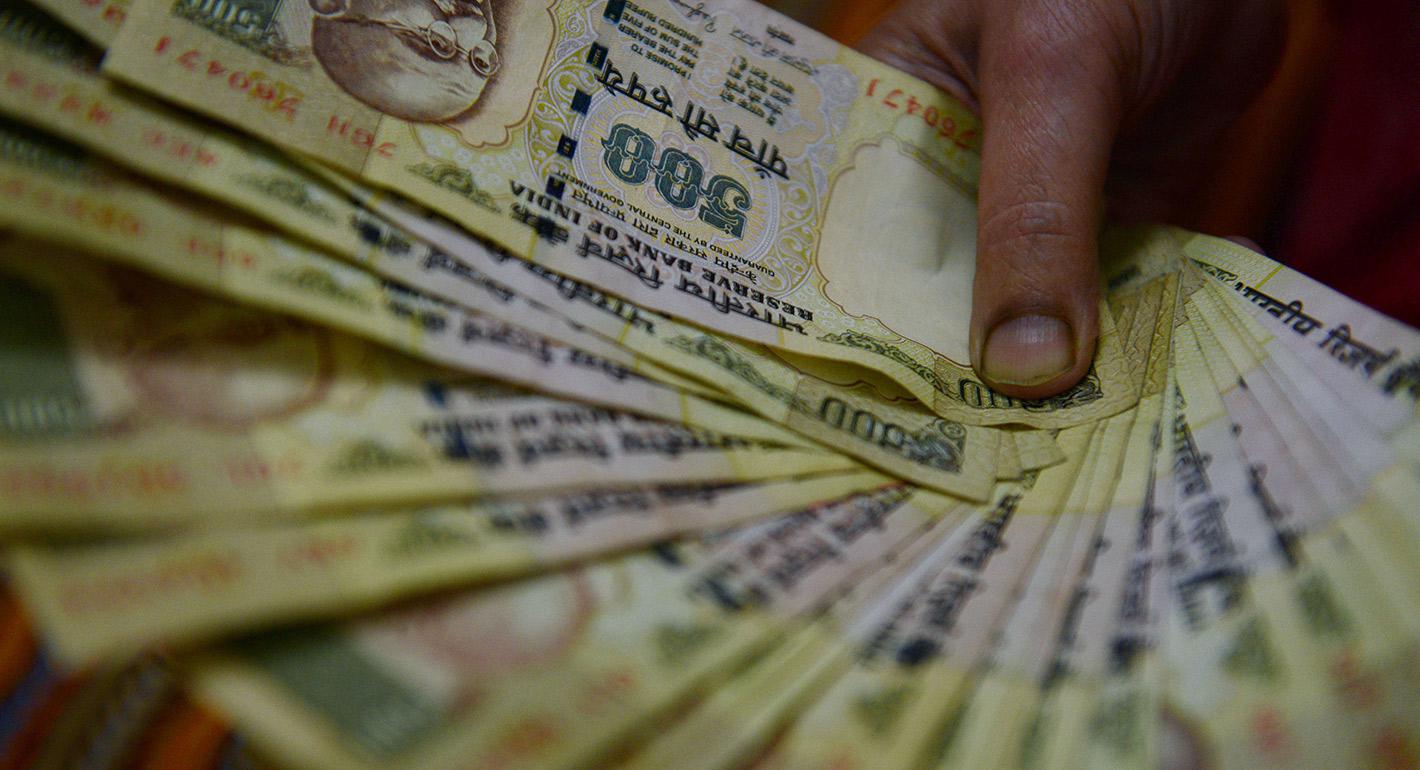
As India’s economy recovers from the coronavirus pandemic, Indian businesses need efficient financial structures to regain their ground. Key reforms to India’s Insolvency and Bankruptcy Code could fill these gaps.

Anirudh Burman

Access to cross-border data is an integral piece of the law enforcement puzzle. India is well placed to lead the discussions on international data agreements subject to undertaking necessary surveillance reforms.

Smriti Parsheera, Prateek Jha
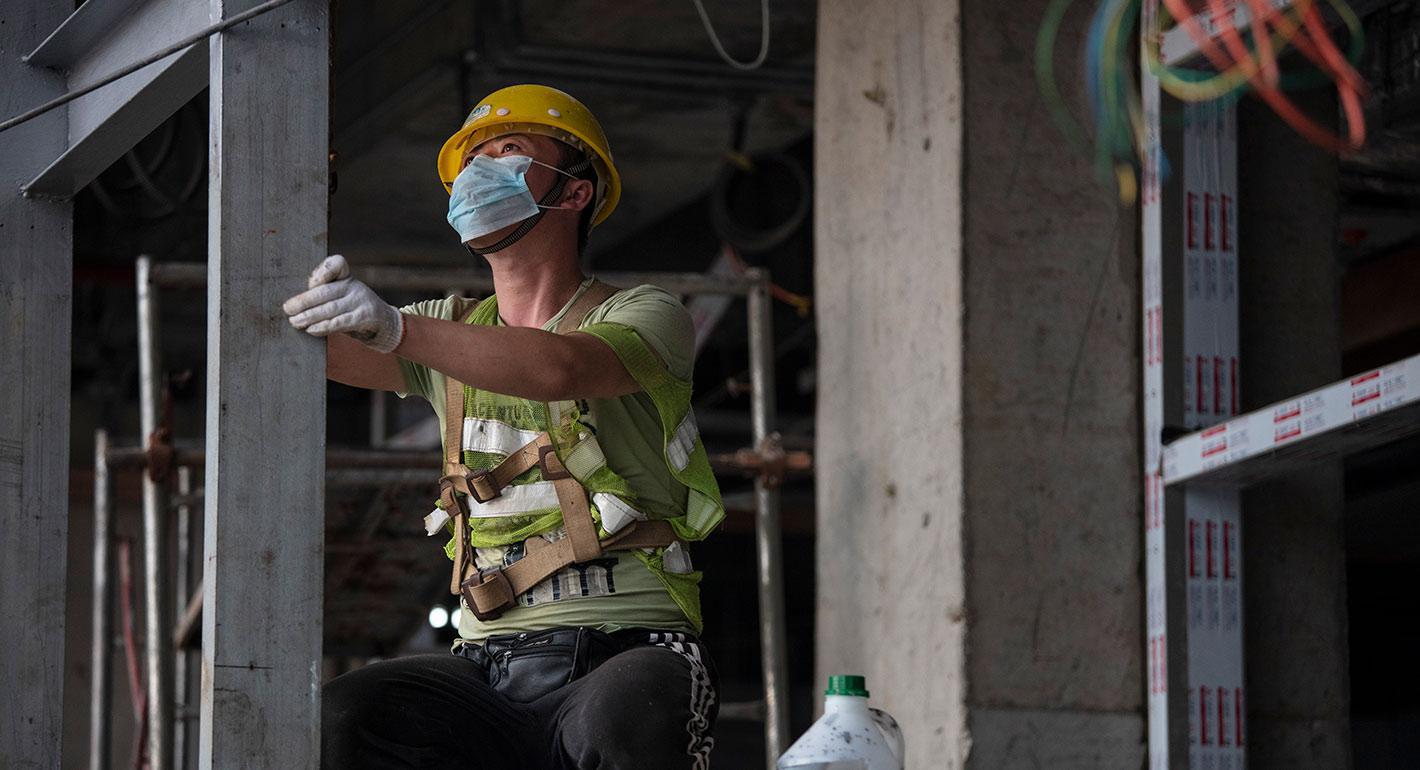
After the coronavirus pandemic wanes, how will China’s reorientation of the Belt and Road Initiative to address global health concerns influence its relationships with South Asian countries?


Deep Pal, Rahul Bhatia