

Paper
Christopher S. Chivvis, Rohan Mukherjee, Milan Vaishnav
{
  "authors": [
    "Milan Vaishnav"
  ],
  "type": "legacyinthemedia",
  "centerAffiliationAll": "dc",
  "centers": [
    "Carnegie Endowment for International Peace"
  ],
  "collections": [],
  "englishNewsletterAll": "ctw",
  "nonEnglishNewsletterAll": "",
  "primaryCenter": "Carnegie Endowment for International Peace",
  "programAffiliation": "SAP",
  "programs": [
    "South Asia"
  ],
  "projects": [
    "India Elects 2019"
  ],
  "regions": [
    "South Asia",
    "India"
  ],
  "topics": [
    "Political Reform"
  ]
}
Source: Getty
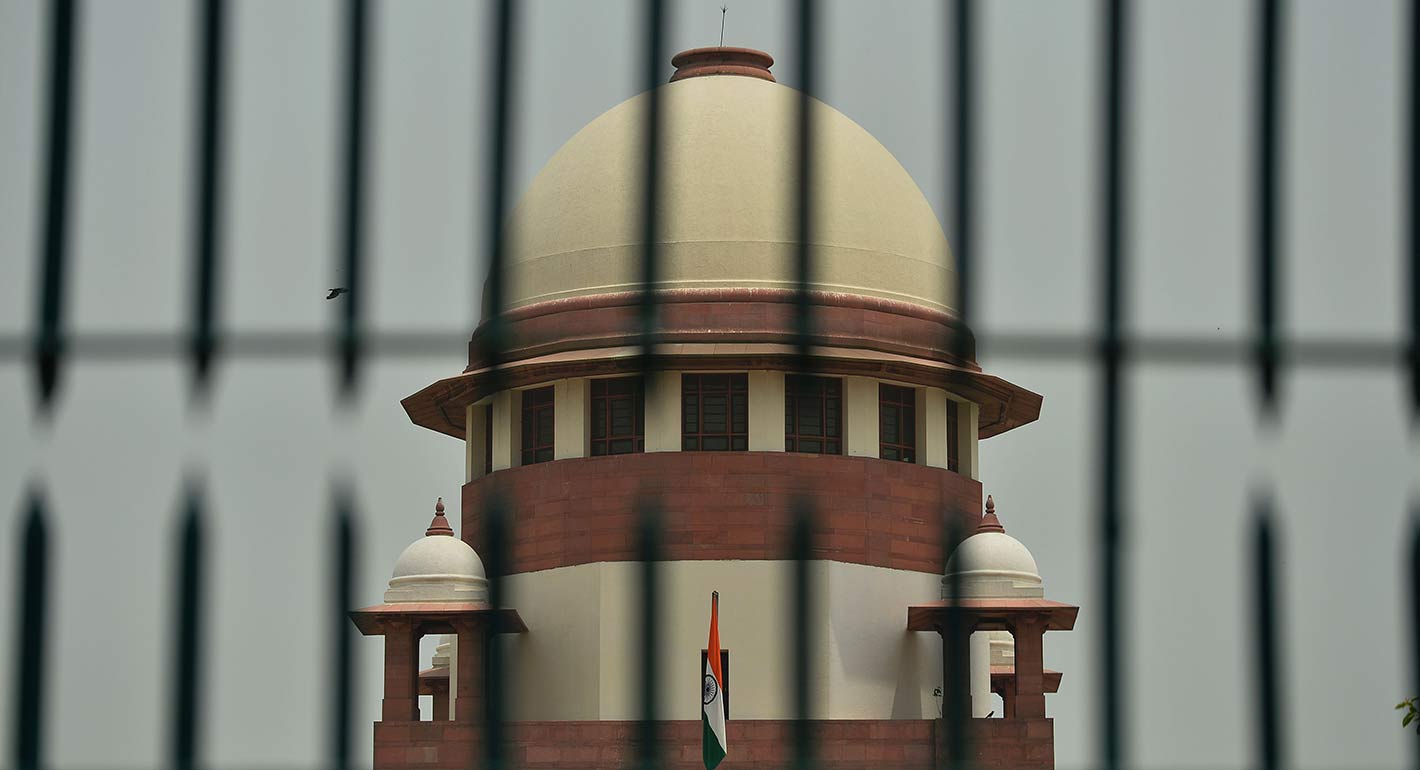
India’s Supreme Court correctly ruled that only Parliament can disqualify candidates facing criminal charges. But both Parliament and the Court have a responsibility to address the criminalization of Indian politics.
Source: Hindustan Times
Responding to a cluster of petitions from civil society organisations, the Supreme Court ruled on Tuesday that it did not have the authority to disqualify political candidates charge-sheeted with crimes — including sitting Members of Parliament (MPs) and Members of the Legislative Assemblies (MLAs) — from contesting elections.
According to statistics compiled by the Association for Democratic Reforms (ADR), nearly one-third of incumbent MPs and MLAs face pending criminal cases, with roughly half of these facing serious charges that would merit real jail time if a conviction were obtained.
Although a five-judge Constitution Bench lamented the growing criminalisation of politics in India decried by the petitioners, it sided with the government in ruling that the authority to disqualify candidates was vested with the sovereign powers of the Parliament under the Constitution as well as the provisions of the Representation of the People Act, which provides the legislative framework for the conduct of elections.
Legislating on a subject on which the Constitution and subsequent statute is “crystal clear” regarding Parliament’s role would be akin to crossing a “Lakshman Rekha,” the ruling argued.
The Court — in my view — was correct in deferring to Parliament’s authority over this issue. It is another matter that a body comprised of some of the country’s foremost lawbreakers must make the very laws which would regulate their behaviour — something which is highly unlikely without a combination of sustained social pressure and intense judicial scrutiny. But in punting the issue to Parliament, the Court missed an opportunity to reflect on the deeper causes of the criminalisation of political life in India—causes it does have a role in remedying.
It is no surprise that political parties recruit candidates with criminal association to contest elections given that an abundance of empirical data conclusively demonstrates such candidates have a wealth advantage that gives them a leg up in financing — and winning — increasingly competitive elections.
Yet, the Election Commission (EC) struggles mightily to regulate the opaque flow of funds. Even when politicians brazenly flout election spending regulations, the EC’s legal authority to check these transgressions has been called into question.
The Court made no mention of the role of money power and how it fuels criminality, but this is an area where the judiciary can buttress the EC’s supervisory powers over elections to ensure that the agency’s rules have real teeth. Just as the Court allied with the EC in a landmark 2003 ruling to ensure that candidates must disclose their financial assets and criminal antecedents at the time of nomination, it must also ensure that basic disclosure norms are not violated with abandon.
However, this begs the question why voters vote for criminal candidates in the first place. Until and unless the state of governance improves, there will always be pockets of support for politicians who can use their criminal reputations as a signal of their credibility ‘to get things done’.
The depressing fact is that when the state cannot deliver basic services, justice, or security, voters are willing to contract with those who will. The court’s responsibility here is twofold. On the one hand, endemic delays in everyday justice help drive ordinary citizens into the embrace of tainted candidates willing to provide timely dispute resolution and contract enforcement.
Furthermore, it is the judiciary’s laxity in processing cases against these politicians which allows them to ply their trade without fear of sanction. Because the judicial system operates at a snail’s pace, it can take decades for a criminal case to reach its logical conclusion — especially when one of the parties involved is an individual with considerable political and financial clout.
In December 2017, the Government announced it would set up 12 fast-track courts across the country to try criminal cases pending against sitting MPs and MLAs. Six months after a March 2018 deadline, 40 percent of pending cases have been transferred to special courts — of which judgments have been pronounced in just 136 (11 percent). Fast-track courts, the record reflects, quickly succumb to the broader pathologies of the country’s creaky justice system.
Parliament must take up the Court’s plea to debate whether debarring candidates accused — as opposed to convicted — of crimes is a step worth taking given the presumption of innocence. Fixing the rule of law by potentially violating it is a step not to be taken lightly.
But the Court cannot absolve itself of the responsibility to address the deeper causes of the criminalization of politics, as opposed to merely chiseling away at the symptoms. In concluding its judgment, the Court urged Parliament to move swiftly because “voters cry for systematic sustenance of constitutionalism.” The Court failed to note that they are also crying out for the rule of law in practice to match up to the lofty ideals on paper.

Director and Senior Fellow, South Asia Program
Milan Vaishnav is a senior fellow and director of the South Asia Program and the host of the Grand Tamasha podcast at the Carnegie Endowment for International Peace. His primary research focus is the political economy of India, and he examines issues such as corruption and governance, state capacity, federalism, and electoral behavior. He also conducts research on the Indian diaspora.
Recent Work

Christopher S. Chivvis, Rohan Mukherjee, Milan Vaishnav



Sophia Besch, Eric Ciaramella, Steve Feldstein, …
Carnegie India does not take institutional positions on public policy issues; the views represented herein are those of the author(s) and do not necessarily reflect the views of Carnegie, its staff, or its trustees.

In any defense establishment, change is an ongoing process. However, despite the best of intentions, existing bureaucracies, bound by habit and years of socialization, have their limits in implementing transformative change.

Anit Mukherjee

As AI grows more sophisticated, as the supply chains that power it become more contested, and as access to frontier models becomes geopolitically charged, India must begin to ask a different set of questions. Not what applications it can build on someone else’s infrastructure but what the world needs.

Konark Bhandari

The Indian Ocean Region hosts one of the densest concentrations of subsea cables in the world. Yet, despite accounting for a significant share of global internet traffic, India’s participation remains limited.

Charukeshi Bhatt

How is AI reshaping space security, creating governance challenges, and where does international diplomacy stand today?


Tejas Bharadwaj, Almudena Azcárate Ortega

After the chill in ties between 2020 and 2024 that brought India–China relations to their lowest point in several decades, the two countries have engaged each other afresh. This paper argues that there are predominantly four imperatives guiding India’s approach to China, and they exist in an order of priority.

Saheb Singh Chadha