

• Research
  • About
  • Experts
Carnegie India logoCarnegie lettermark logo
{
  "authors": [
    "Frederic Wehrey",
    "Jalel Harchaoui"
  ],
  "type": "legacyinthemedia",
  "centerAffiliationAll": "dc",
  "centers": [
    "Carnegie Endowment for International Peace"
  ],
  "collections": [],
  "englishNewsletterAll": "menaTransitions",
  "nonEnglishNewsletterAll": "",
  "primaryCenter": "Carnegie Endowment for International Peace",
  "programAffiliation": "MEP",
  "programs": [
    "Middle East"
  ],
  "projects": [],
  "regions": [
    "North Africa",
    "Libya"
  ],
  "topics": [
    "Political Reform",
    "Security",
    "Military",
    "Foreign Policy"
  ]
}

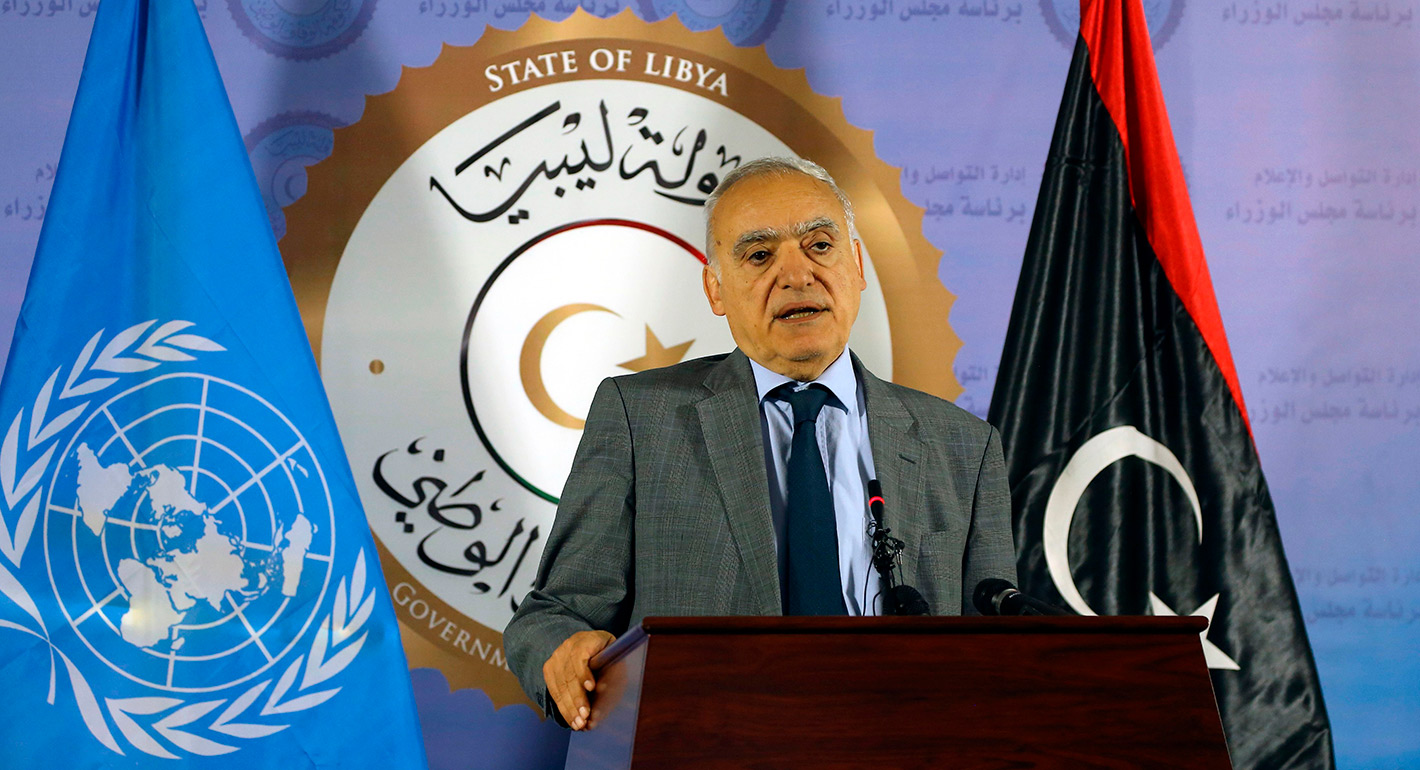
Source: Getty

In The Media

Is Libya Finally Ready for Peace?

Over the years, Libya’s leaders have met, led by earnest Western ministers and heads of state. But beyond this, these meetings produce no breakthrough agreements.

Link Copied
By Frederic Wehrey and Jalel Harchaoui
Published on Nov 30, 2018

Source: Foreign Affairs

Pity Libyans for the pageantry of their international summits. Over the years, at palaces, resorts, and hotels across several continents, the country’s factional leaders have met, shepherded by earnest-looking Western ministers and heads of state. Action plans are laid out and deadlines set. The participants emerge with verbal promises of consensus, a photo op, sometimes even a hug. Meanwhile, back in Libya citizens languish under warring militias, economic misery, and aloof elites. Invariably, after each summit, vows pronounced in remote locales disintegrate on contact with these more proximate realities.

On November 12–13, Italy’s populist government played host to the latest such event, this time in the city of Palermo, Sicily. The meeting occurred in the shadow of intense Italian rivalry with France over Libya. Last May, at a largely unilateral summit in Paris, French President Emmanuel Macron had obtained from four Libyan leaders a verbal commitment to hold general elections by December of this year—a deadline that the UN quietly shelved earlier this month as untenable. Palermo was meant as Italian revenge. By forging a new local and international consensus on Libya, a successful summit would have bolstered Italy’s claim to being the most relevant and credible Western power broker in the embattled North African country.

This is not what happened, as no clear message emerged from Palermo. The Libyan participants—most crucially Prime Minister Fayez al-Serraj, who heads the internationally recognized Government of National Accord (GNA) in Tripoli; and his rival, the military leader Field Marshal Khalifa Hafar, who rules the so-called Tobruk government in the country’s east—emerged with yet another UN-backed pledge to hold an election, now slated to take place by June 2019. Libyan delegates held side working groups on security and the economy. But beyond this, the summit produced no breakthrough agreement. 

Read the full Article

This article was originally published in Foreign Affairs.

About the Authors

Frederic Wehrey

Senior Fellow, Middle East Program

Frederic Wehrey is a senior fellow in the Middle East Program at the Carnegie Endowment for International Peace, where his research focuses on governance, conflict, and security in Libya, North Africa, and the Persian Gulf.

Jalel Harchaoui

Associate Fellow at the Royal United Services Institute (RUSI).

Jalel Harchaoui is a political scientist specialising in North Africa, with a specific focus on Libya. He worked on the same topics previously at The Global Initiative Against Transnational Organised Crime, a Geneva-based NGO, as well as at the Clingendael Institute, based in The Hague. His research has concentrated on Libya’s security landscape and political economy.

Authors

Frederic Wehrey
Senior Fellow, Middle East Program
Frederic Wehrey
Jalel Harchaoui
Associate Fellow at the Royal United Services Institute (RUSI).
Jalel Harchaoui
Political ReformSecurityMilitaryForeign PolicyNorth AfricaLibya

Carnegie India does not take institutional positions on public policy issues; the views represented herein are those of the author(s) and do not necessarily reflect the views of Carnegie, its staff, or its trustees.

More Work from Carnegie India

  • Commentary
    The Impact of U.S. Sanctions and Tariffs on India’s Russian Oil Imports

    This piece examines India’s response to U.S. sanctions and tariffs, specifically assessing the immediate market consequences, such as alterations in import costs, and the broader strategic implications for India’s energy security and foreign policy orientation.

      Vrinda Sahai

  • Article
    Military Lessons from Operation Sindoor

    The India-Pakistan conflict that played out between May 6 and May 10, 2025, offers several military lessons. This article presents key takeaways from Operation Sindoor and breaks down how India’s preparations shaped the outcome and what more is needed to strengthen future readiness.

      Dinakar Peri

  • Book
    India and the Sovereignty Principle: The Disaggregation Imperative

    This book offers a comprehensive analysis of India's evolving relationship with sovereignty in a complex global order. Moving beyond conventional narratives, it examines how the sovereignty principle shapes India's behavior across four critical domains—from traditional military power to contemporary data governance.

      Rudra Chaudhuri, Nabarun Roy

  • Commentary
    NISAR Soars While India-U.S. Tariff Tensions Simmer

    On July 30, 2025, the United States announced 25 percent tariffs on Indian goods. While diplomatic tensions simmered on the trade front, a cosmic calm prevailed at the Sriharikota launch range. Officials from NASA and ISRO were preparing to launch an engineering marvel into space—the NASA-ISRO Synthetic Aperture Radar (NISAR), marking a significant milestone in the India-U.S. bilateral partnership.

      Tejas Bharadwaj

  • Article
    Hidden Tides: IUU Fishing and Regional Security Dynamics for India

    This article examines the scale and impact of Chinese IUU fishing operations globally and identifies the nature of the challenge posed by IUU fishing in the Indian Ocean Region (IOR). It also investigates why existing maritime law and international frameworks have struggled to address this growing threat.

      Ajay Kumar, Charukeshi Bhatt

Get more news and analysis from
Carnegie India
Carnegie India logo, white
Unit C-4, 5, 6, EdenparkShaheed Jeet Singh MargNew Delhi – 110016, IndiaPhone: 011-40078687
  • Research
  • About
  • Experts
  • Projects
  • Events
  • Contact
  • Careers
  • Privacy
  • For Media
Get more news and analysis from
Carnegie India
© 2026 Carnegie Endowment for International Peace. All rights reserved.





