

Paper
Louise Tillin, Milan Vaishnav, Andy Robaina
{
  "authors": [
    "Milan Vaishnav"
  ],
  "type": "legacyinthemedia",
  "centerAffiliationAll": "dc",
  "centers": [
    "Carnegie Endowment for International Peace"
  ],
  "collections": [],
  "englishNewsletterAll": "ctw",
  "nonEnglishNewsletterAll": "",
  "primaryCenter": "Carnegie Endowment for International Peace",
  "programAffiliation": "SAP",
  "programs": [
    "South Asia"
  ],
  "projects": [
    "India Elects 2019"
  ],
  "regions": [
    "South Asia",
    "India"
  ],
  "topics": [
    "Political Reform",
    "Economy"
  ]
}
Source: Getty
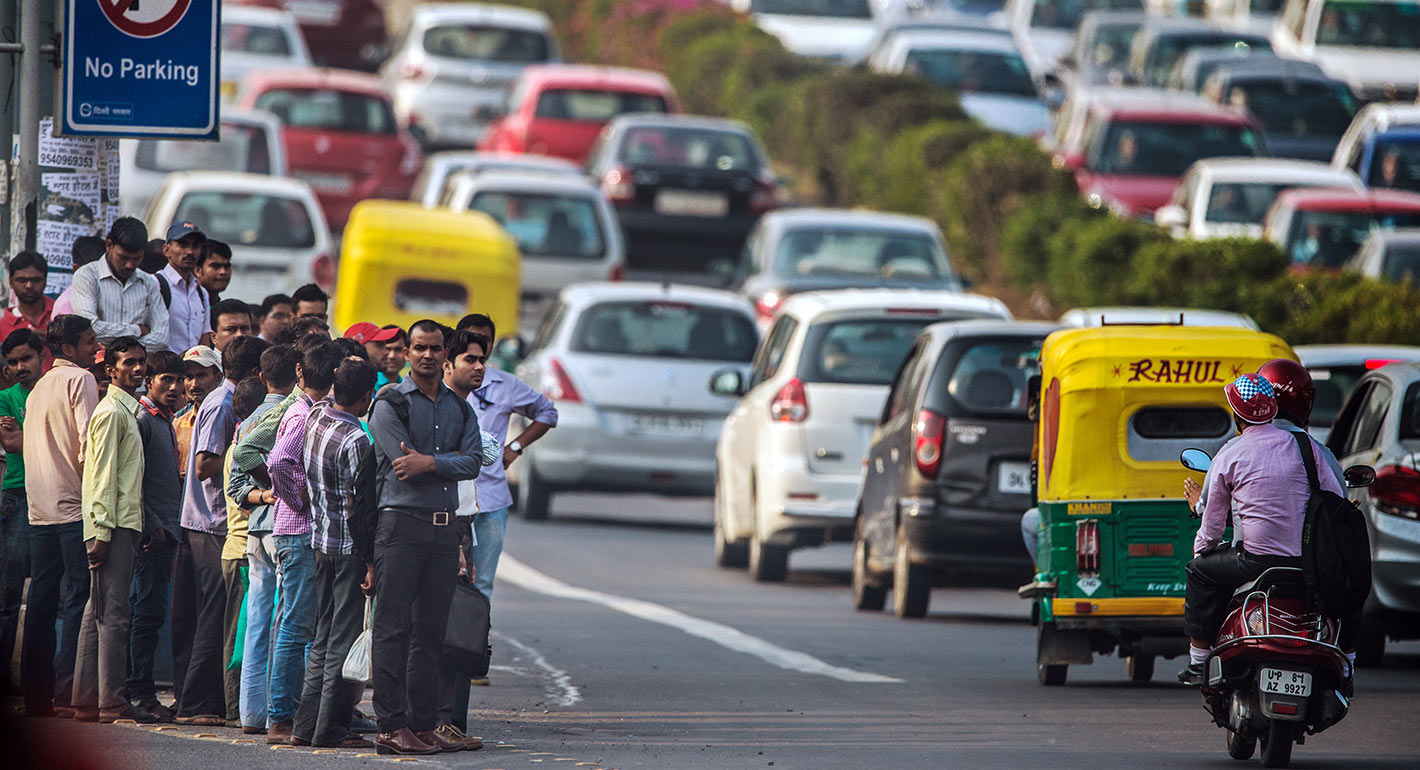
Any large-scale income support program would require state capacity and fiscal resources. Unfortunately, both are in short supply in India.
Source: Washington Post
This spring, nearly 900 million Indians will be eligible to cast their votes in nationwide general elections. While official campaigning is still weeks away, India’s two principal parties — Prime Minister Narendra Modi’s ruling Bharatiya Janata Party and its archrival, the Indian National Congress — are leaving no stone unturned in their quest for votes.
First came the BJP government’s announcement that it would guarantee 10 percent of university seats and civil service posts for “economically weaker sections” of the populace untouched by existing affirmative action programs. Last week, the dynastic Congress party responded by announcing that Priyanka Gandhi — the latest in the line of Nehru-Gandhi heirs to take the political plunge — would play an active role in the forthcoming campaign.
And on Monday, Congress president Rahul Gandhi unveiled what is likely to be his party’s signature campaign priority: a universal basic income for poor families across the country.
The timing of the announcement, which immediately set social media alight and dominated the evening news programs, is almost as interesting as the content: On Friday, the Modi government will present its final budget of its tenure before general elections. While the government was widely expected to unveil its own income support scheme for rural Indians, who have grown anxious amid low commodity prices and rising debts, it now finds itself in danger of being outmaneuvered. In politics, big is good, and bigger is better. The government must at least match what the Congress has to offer or risk losing the perceptions game.
Ironically, it was the Modi government that first mooted the idea of a universal basic income in its 2017 flagship economic survey. While the government has shown no haste in carrying the idea forward, two opposition-controlled states — Telangana and Odisha — have since implemented a partial income guarantee scheme squarely aimed at lifting farmers’ incomes. More recently, the ruling party in the state of Sikkim — a BJP ally — has announced it will unveil a comprehensive universal basic income by 2022.
The Congress’ surprise announcement is emblematic of most blue-sky campaign promises: long on promise and short on specifics.
Implementing any large-scale income support program calls for two essential ingredients: state capacity and fiscal resources. Unfortunately, both are in short supply in India. The country’s social service plumbing is notoriously feeble: India’s welfare machinery suffers from endemic “leakage” (or corruption) and “poor targeting” (an inability to properly identify and deliver benefits to eligible recipients). Furthermore, India’s fiscal accounts are underwater. Last week, the International Monetary Fund’s chief economist flagged the country’s fiscal deficit as a major economic risk factor, especially in an election year prone to populist giveaways.
Neither the Congress nor the BJP has grappled with the realities of implementing a universal basic income for 200 million rural households, but a proposal unveiled this week by a team led by Arvind Subramanian — the former chief economic adviser to the Modi government — provides a tantalizing blueprint for dispensing cash to India’s neediest citizens while potentially circumventing the country’s administrative infirmities. Subramanian, now a visiting lecturer at the Harvard Kennedy School, and his co-authors have called for the next Indian government to implement what they call a QUBRI, or a quasi-universal basic rural income for India.
The idea is simple enough: The government would provide an annual lump sum payment to every poor rural household in India — no questions asked — as a financial safety net. The proposal suggests an annual transfer of 18,000 rupees (1,500 rupees per month) to each eligible rural household — about $250 annually.
To target recipients effectively, the proposed QUBRI would exclude the richest 25 percent of households. Transfers would be sent electronically to recipient bank accounts, which are ubiquitous now even in remote areas thanks to a recent government effort to universalize banking access. The authors estimate the costs of the scheme would be around 1.3 percent of India’s gross domestic product — a significant chunk of which would come from eliminating a raft of regressive agricultural subsidies.
This sounds wonderful in practice, but the politics are not nearly as cut and dry. For starters, if eliminating farmer subsidies were painless, the government would have done it a long time ago. Research suggests that many Indians are leery of giving up existing subsidies in favor of uncertain cash transfers.
Moreover, the existing debate is exclusively focused on India’s rural dwellers. But it is India’s urban population that is burgeoning as migrants flock to cities in search of opportunity. The inadequacy of formal-sector jobs and the abysmal state of urban amenities suggest it is only a matter of time before urban residents demand their share of government largesse.
For now, these technical details will be left to the economists and opinion writers to debate. For India’s politicians, there’s an election to be won. But the question remains: Will the Indian electorate really be wooed by a mere promise of easy cash? In 2014, voters were drawn to Modi like a moth to a flame, swayed by his pledge of ushering in “acche din” (good times) for the Indian economy, generating millions of jobs and reviving India’s moribund investment cycle. Five years later, his promises remain unfulfilled and voters, for their part, have begun to expect more.

Director and Senior Fellow, South Asia Program
Milan Vaishnav is a senior fellow and director of the South Asia Program and the host of the Grand Tamasha podcast at the Carnegie Endowment for International Peace. His primary research focus is the political economy of India, and he examines issues such as corruption and governance, state capacity, distributive politics, and electoral behavior. He also conducts research on the Indian diaspora.
Recent Work


Louise Tillin, Milan Vaishnav, Andy Robaina


Milan Vaishnav, Sameer Lalwani, Tanvi Madan, …
Carnegie India does not take institutional positions on public policy issues; the views represented herein are those of the author(s) and do not necessarily reflect the views of Carnegie, its staff, or its trustees.

This piece argues that India’s central challenge is not managing a single flashpoint but resolving the underlying tension between expansion and institutional coherency of the BRICS grouping.

Vrinda Sahai
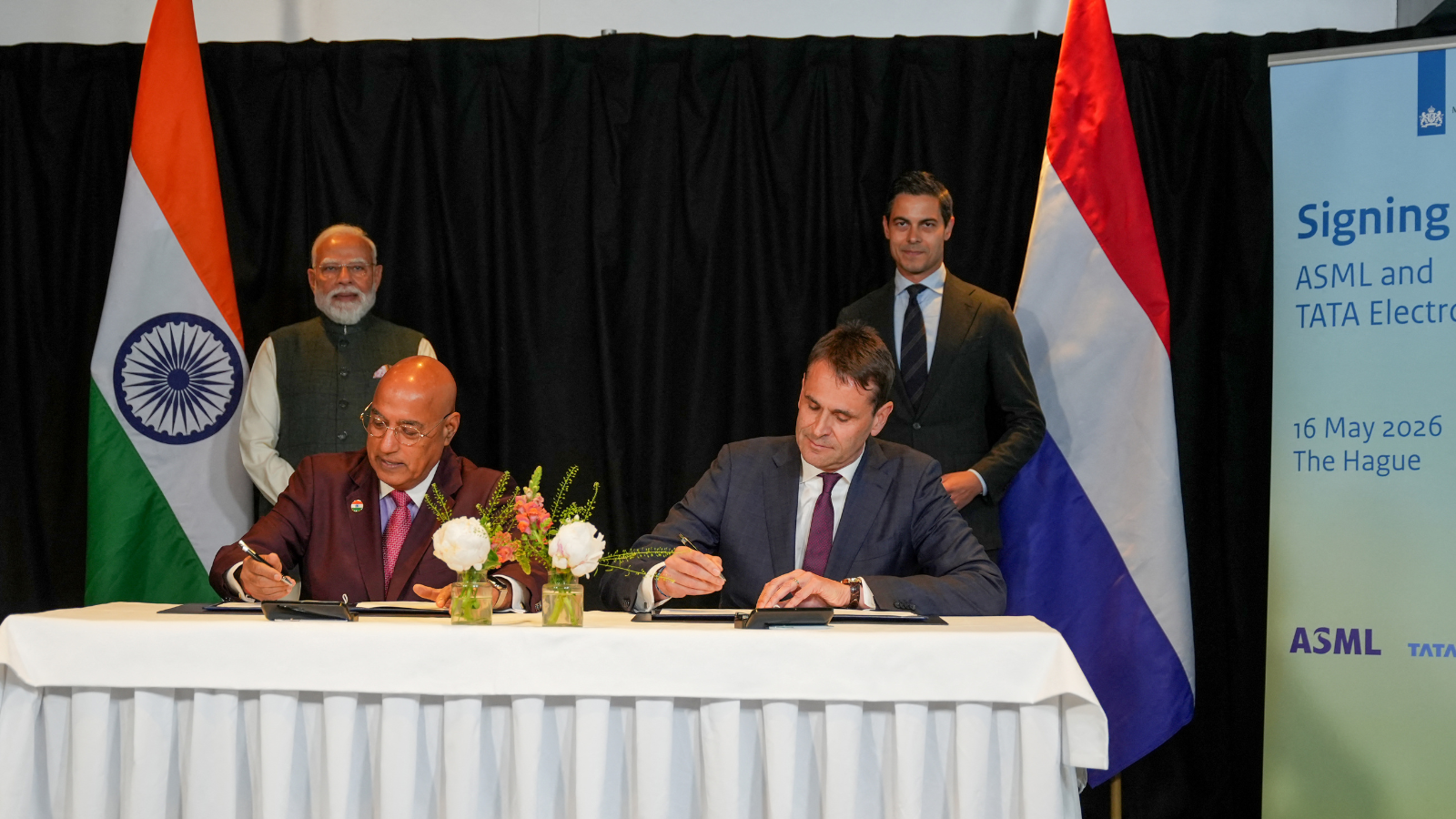
The ASML MoU with Tata Electronics is an indicator of how far the Indian semiconductor ecosystem has come. This ecosystem has been years in the making and represents real commercial logic.

Konark Bhandari
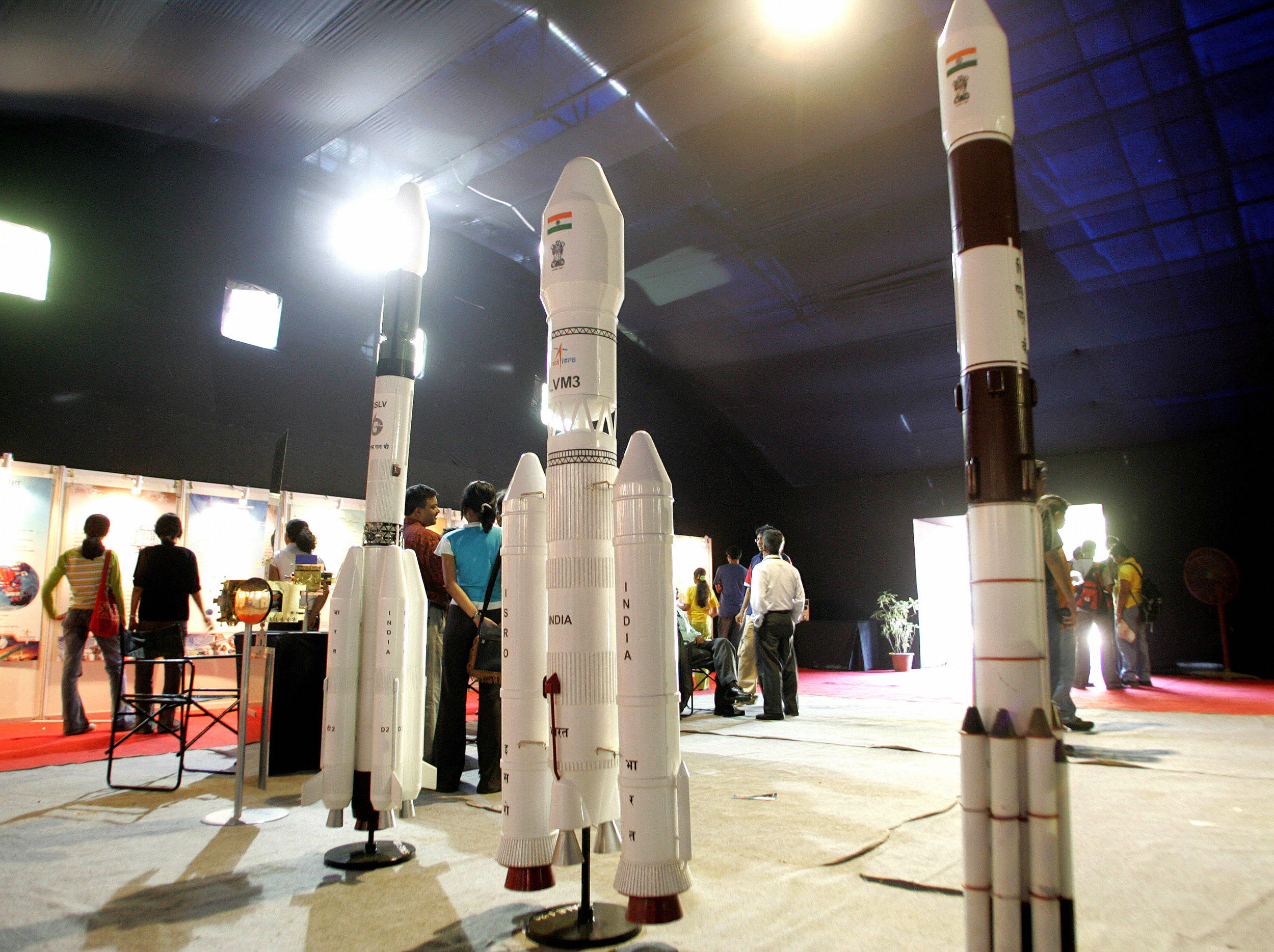
This paper examines the relationship between India’s evolving space policy and the corresponding growth in private space ventures. It analyzes both the enabling factors created by recent regulatory changes and the persistent challenges facing entrepreneurs in this capital-intensive, highly regulated industry.
Harshan Vazhakunnam

A partnership between India, a country of subcontinental size, and Africa, a continent of fifty-four countries, may seem asymmetric until one notes that both are home to nearly the same number of people—1.4 billion. This essay spells out the existing challenges to the partnership, its optimal potential, and the possible pathways to realize it over the next quarter-century.

Rajiv Bhatia

The U.S.–India semiconductor cooperation story is well-stocked with top-level strategic intent. What remains unresolved, however, are some underlying challenges that will determine whether the cooperation actually functions. Three such friction points stand out.

Shruti Mittal