

Commentary
James Schwemlein
{
  "authors": [
    "James Schwemlein"
  ],
  "type": "legacyinthemedia",
  "centerAffiliationAll": "dc",
  "centers": [
    "Carnegie Endowment for International Peace"
  ],
  "collections": [],
  "englishNewsletterAll": "ctw",
  "nonEnglishNewsletterAll": "",
  "primaryCenter": "Carnegie Endowment for International Peace",
  "programAffiliation": "SAP",
  "programs": [
    "South Asia"
  ],
  "projects": [],
  "regions": [
    "South Asia",
    "India",
    "Pakistan"
  ],
  "topics": [
    "Political Reform",
    "Security",
    "Global Governance",
    "Foreign Policy"
  ]
}
Source: Getty
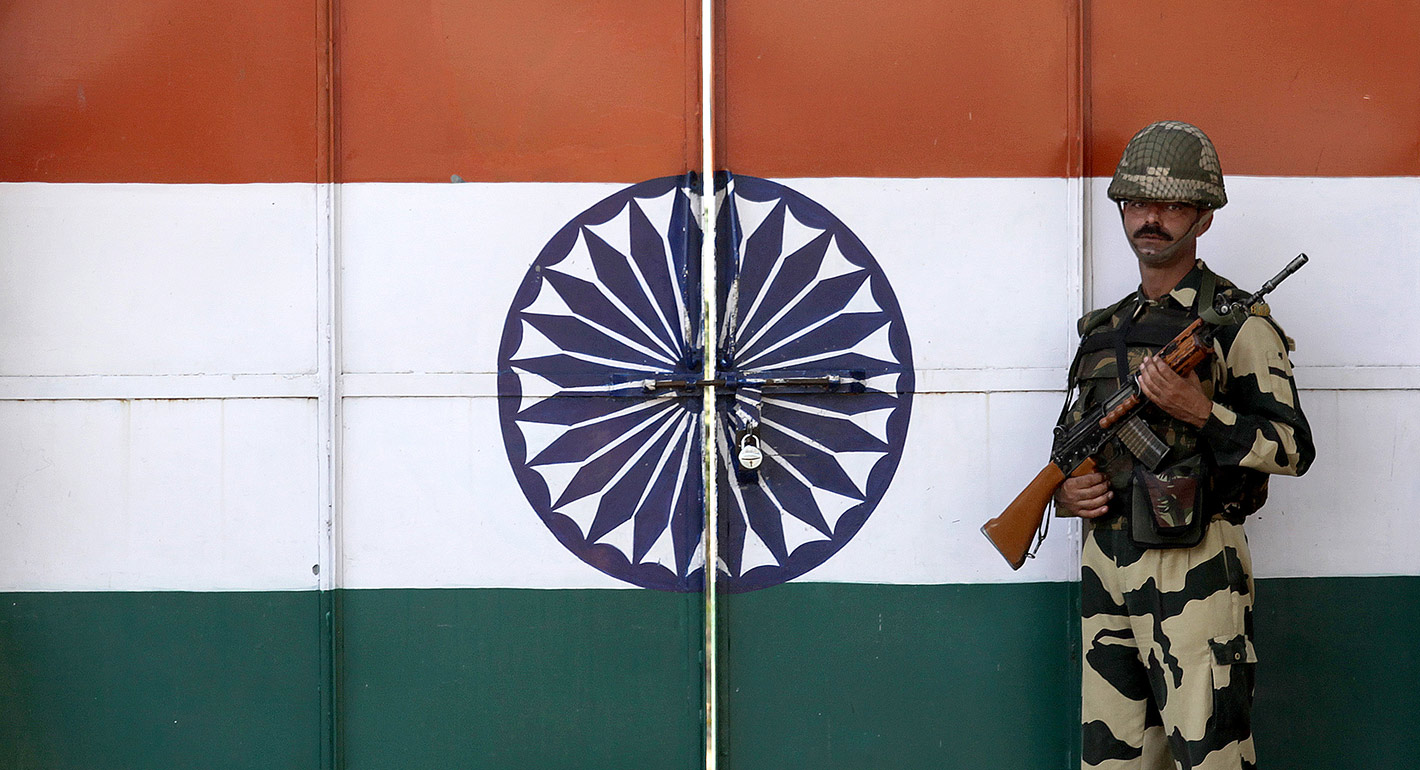
Indian observers hope that the enhanced military capabilities demonstrated in India’s attack will deter future Pakistani terrorism.
Source: Axios
In retaliation for the Feb. 14 terrorist attack in the Pulwama district of Kashmir, which killed 44 Indian security personnel, the Indian Air Force (IAF) conducted strikes on Tuesday against an alleged terrorist training facility and madrassa complex in the Pakistani town of Balakot.
Why it matters: The operation was the first cross-border sortie by the IAF since the 1971 India-Pakistan war. Escalating tensions have sparked fears of a standoff between the nuclear-armed rivals.
Details: Although the facts are in dispute, the airstrikes apparently targeted Jaish-e-Mohammed, a UN-sanctioned terrorist group that claimed responsibility for the Pulwama attack, among others in India. Both the Pulwama attack, the bloodiest such incident in the disputed territory of Kashmir in over three decades, and the strikes on Balakot, which lies outside the region, marked escalations from previous incidents.
What to watch: In a week when the U.S. is focused on the Trump-Kim summit, Venezuela, and Taliban negotiations in Qatar, other regional powers will likely take the lead in restraining the two sides:
Pakistan, after claiming that the strikes hit nothing but trees and soil, is likely to convene an emergency parliamentary session tomorrow to condemn India’s action. India hopes that Pakistan’s reaction will be all fury but no fire.
Yes, but: Electoral politics in the lead-up to India's May elections is likely to produce chest-thumping from Prime Minister Narendra Modi's government and the IAF that could provoke a more direct Pakistani reaction.
The bottom line: Indian observers hope that the enhanced military capabilities demonstrated in India's attack will deter future Pakistani terrorism. But that seems unlikely, as Pakistan relies on militant proxies and the world's fastest-growing nuclear arsenal to counterbalance India. The challenge for New Delhi will be mitigating terrorism without inciting reactions that could prove disastrous to India's prospects as an emerging power.

Former Nonresident Scholar, South Asia Program
James Schwemlein was a nonresident scholar in the South Asia Program at the Carnegie Endowment for International Peace.
Recent Work
James Schwemlein
James Schwemlein
Carnegie India does not take institutional positions on public policy issues; the views represented herein are those of the author(s) and do not necessarily reflect the views of Carnegie, its staff, or its trustees.

In any defense establishment, change is an ongoing process. However, despite the best of intentions, existing bureaucracies, bound by habit and years of socialization, have their limits in implementing transformative change.

Anit Mukherjee

As AI grows more sophisticated, as the supply chains that power it become more contested, and as access to frontier models becomes geopolitically charged, India must begin to ask a different set of questions. Not what applications it can build on someone else’s infrastructure but what the world needs.

Konark Bhandari

The Indian Ocean Region hosts one of the densest concentrations of subsea cables in the world. Yet, despite accounting for a significant share of global internet traffic, India’s participation remains limited.

Charukeshi Bhatt

How is AI reshaping space security, creating governance challenges, and where does international diplomacy stand today?


Tejas Bharadwaj, Almudena Azcárate Ortega

After the chill in ties between 2020 and 2024 that brought India–China relations to their lowest point in several decades, the two countries have engaged each other afresh. This paper argues that there are predominantly four imperatives guiding India’s approach to China, and they exist in an order of priority.

Saheb Singh Chadha