

Q&A
Eugene Rumer
{
  "authors": [
    "Eugene Rumer"
  ],
  "type": "legacyinthemedia",
  "centerAffiliationAll": "dc",
  "centers": [
    "Carnegie Endowment for International Peace"
  ],
  "collections": [],
  "englishNewsletterAll": "ctw",
  "nonEnglishNewsletterAll": "",
  "primaryCenter": "Carnegie Endowment for International Peace",
  "programAffiliation": "russia",
  "programs": [
    "Russia and Eurasia"
  ],
  "projects": [],
  "regions": [
    "North America",
    "United States",
    "Russia",
    "Western Europe",
    "Germany"
  ],
  "topics": [
    "Security",
    "Foreign Policy"
  ]
}
Source: Getty
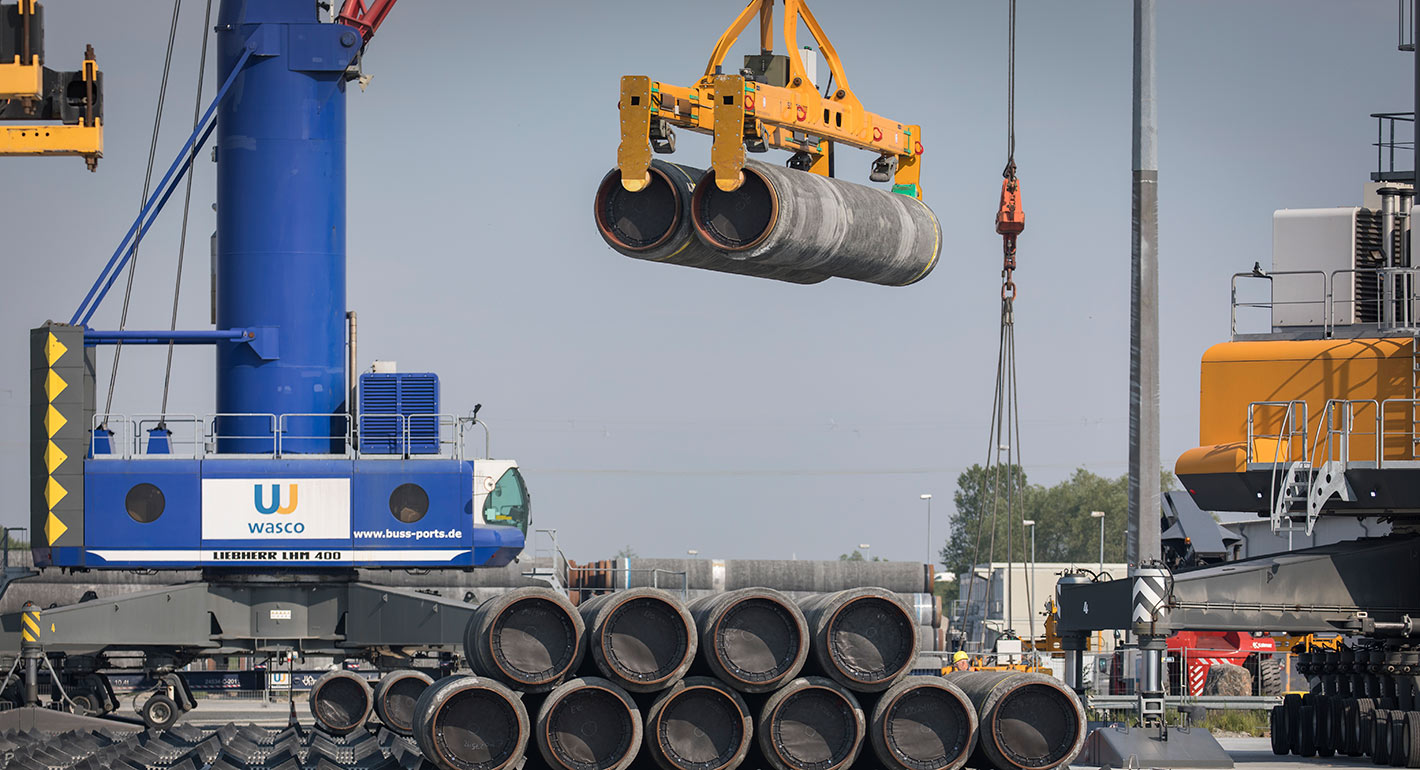
The proposed sanctions goal of protecting Europe from Russian energy blackmail is based on an obsolete understanding of energy markets.
Source: Politico Magazine
“Don’t just sit there, sanction someone” should be the motto for U.S. foreign policy these days. Let’s impose more sanctions on Iran for violating the agreement from which the Trump administration withdrew unilaterally. Let’s hit Russia with sanctions not only for its 2016 interference in U.S. elections, but for future interference it has yet to commit, instead of passing bills to enhance election security.
Now the House and Senate are considering legislation to impose sanctions on companies involved in building the Nord Stream 2 gas pipeline from Russia to Germany. On Wednesday the Senate Foreign Relations Committee passed the sanctions bill 20-2.
Ostensibly intended to protect Europe from Russia’s malign influence by halting pipeline construction, this legislation will do nothing of the sort. It is far more likely to undermine U.S. relations with Germany and push Russia even closer to China. In fact, if U.S. lawmakers really want to undercut Russia’s leverage against Europe, they should support the pipeline project.
There is much to criticize about Nord Stream 2. It is yet another example of the cozy relationship between Russian and German business elites. Gazprom, the Russian state-controlled natural gas monopoly and Nord Stream’s majority shareholder, is known for its business practices skewed to benefit Kremlin insiders, many of whom are under U.S. sanctions. The Kremlin has also used Gazprom as a foreign policy tool to bully its neighbors dependent on Russian gas.
But the proposed legislation will not change Gazprom, its German and other European partners, or the Kremlin’s bullying habits. Nor will it stop the pipeline, which has the necessary financing and is more than two-thirds completed.
Even if the proposed sanctions deter some companies from participating in the project, others will step in. The German government has rejected the Trump administration’s threat of unilateral extraterritorial sanctions against German companies involved in the pipeline project.
The new pipeline is not as scary as some U.S. lawmakers seem to think. True, as the pipeline’s critics charge, once it is built, Nord Stream 2 could—theoretically, if Russia develops new supply sources—deliver as much as 55 billion cubic meters more Russian gas annually to Europe. It’s also true that the volume of Russian gas deliveries to Europe keeps rising and has reached a record high of 200 bcm in 2018. These critics fear that Europe is becoming too dependent on Russian gas, and a new pipeline would make the problem only worse. But in fact, Russia’s share of Europe’s gas imports has been decreasing. In 1980, during the Cold War, Russia supplied 80 percent of Europe’s natural gas imports; in 2018, that share was 40 percent.
Yes, Russia remains the biggest exporter of gas to Europe. But Europe’s demand for imports is projected to increase beyond Russia’s ability to satisfy it. Already now Norway, Qatar, Algeria, Nigeria, Peru and even the United States are shipping gas to Europe via pipelines and Liquefied Natural Gas terminals. More fields have been discovered off Cyprus, Israel and Egypt as well. Thanks to these new discoveries, the shale gas revolution in the United States and construction of LNG terminals, more suppliers will be competing for a share of Europe’s burgeoning gas market. European consumers are already benefiting from this glut with low prices not seen in years.
The proposed sanctions goal of protecting Europe from Russian energy blackmail is based on an obsolete understanding of energy markets. The days when Russia or the Soviet Union controlled Europe’s gas supply and could cut it by turning the valve are gone.
True, some European countries are more reliant on Russian gas than others and therefore more vulnerable to Russian pressure. But that too is changing thanks to the construction of LNG terminals and interconnector pipelines. These two developments together with deliberate European policy—the EU’s Third Energy Package—rather than threats of sanctions have resulted in an increasingly integrated and competitive European gas market and diversification of supply, which in turn have significantly undercut Russia’s leverage and forced it to compete for its share of the European market. Even Ukraine stopped buying gas from Russia in 2015 and has relied on reverse flow pipelines to buy it from re-sellers in Europe.
Trade creates two-way dependencies. The irony of Russia’s pursuit of Nord Stream 2 is that it is much more likely to increase Russia’s dependence on Europe than the other way around. Nord Stream 2 will be operational for decades to come, locking in Russia as Europe’s supplier at a time when it will face growing competition from other producers and renewables, which are projected to supply over 30 percent of Europe’s energy needs by 2030. Once those future volumes of gas are set aside for delivery to Europe, they can’t be easily reallocated for other potential markets in Asia or elsewhere.
If anything, the Trump administration and its congressional allies should be encouraging Nord Stream 2’s construction, for it will increase Europe’s leverage against Russia and Russia’s dependence on U.S. allies.
Should these sanctions become the law of the land, they won’t have their intended effect—the pipeline, which is supported by the German government and business community, will be completed regardless. While failing to achieve their intended goal, the sanctions could still backfire against U.S. interests. For one, they will deliver a major insult to Germany, a key ally in Europe and lately a favorite target of bashing by the Trump administration and the president personally. In addition to undermining our ties with our allies, the sanctions will push our adversaries closer together. China is the other major market for Russian gas, and a new round of U.S. sanctions targeting Russia’s access to the critically important European market will only encourage it to seek closer ties to China. We should be keeping our friends close, not pushing our adversaries closer together.

Director and Senior Fellow, Russia and Eurasia Program
Rumer, a former national intelligence officer for Russia and Eurasia at the U.S. National Intelligence Council, is a senior fellow and the director of Carnegie’s Russia and Eurasia Program.
Recent Work
Eugene Rumer
Eugene Rumer
Carnegie India does not take institutional positions on public policy issues; the views represented herein are those of the author(s) and do not necessarily reflect the views of Carnegie, its staff, or its trustees.

How is AI reshaping space security, creating governance challenges, and where does international diplomacy stand today?


Tejas Bharadwaj, Almudena Azcárate Ortega

After the chill in ties between 2020 and 2024 that brought India–China relations to their lowest point in several decades, the two countries have engaged each other afresh. This paper argues that there are predominantly four imperatives guiding India’s approach to China, and they exist in an order of priority.

Saheb Singh Chadha

This piece argues that India’s central challenge is not managing a single flashpoint but resolving the underlying tension between expansion and institutional coherency of the BRICS grouping.

Vrinda Sahai

A partnership between India, a country of subcontinental size, and Africa, a continent of fifty-four countries, may seem asymmetric until one notes that both are home to nearly the same number of people—1.4 billion. This essay spells out the existing challenges to the partnership, its optimal potential, and the possible pathways to realize it over the next quarter-century.

Rajiv Bhatia

The U.S.–India semiconductor cooperation story is well-stocked with top-level strategic intent. What remains unresolved, however, are some underlying challenges that will determine whether the cooperation actually functions. Three such friction points stand out.

Shruti Mittal