

Research
- +10
Jarrett Blanc, Thomas de Waal, Karim Sadjadpour, …
{
  "authors": [
    "Jarrett Blanc"
  ],
  "type": "legacyinthemedia",
  "centerAffiliationAll": "",
  "centers": [
    "Carnegie Endowment for International Peace"
  ],
  "collections": [],
  "englishNewsletterAll": "",
  "nonEnglishNewsletterAll": "",
  "primaryCenter": "Carnegie Endowment for International Peace",
  "programAffiliation": "",
  "programs": [],
  "projects": [],
  "regions": [
    "United States",
    "South Asia",
    "Afghanistan"
  ],
  "topics": [
    "Security",
    "Foreign Policy"
  ]
}
Source: Getty
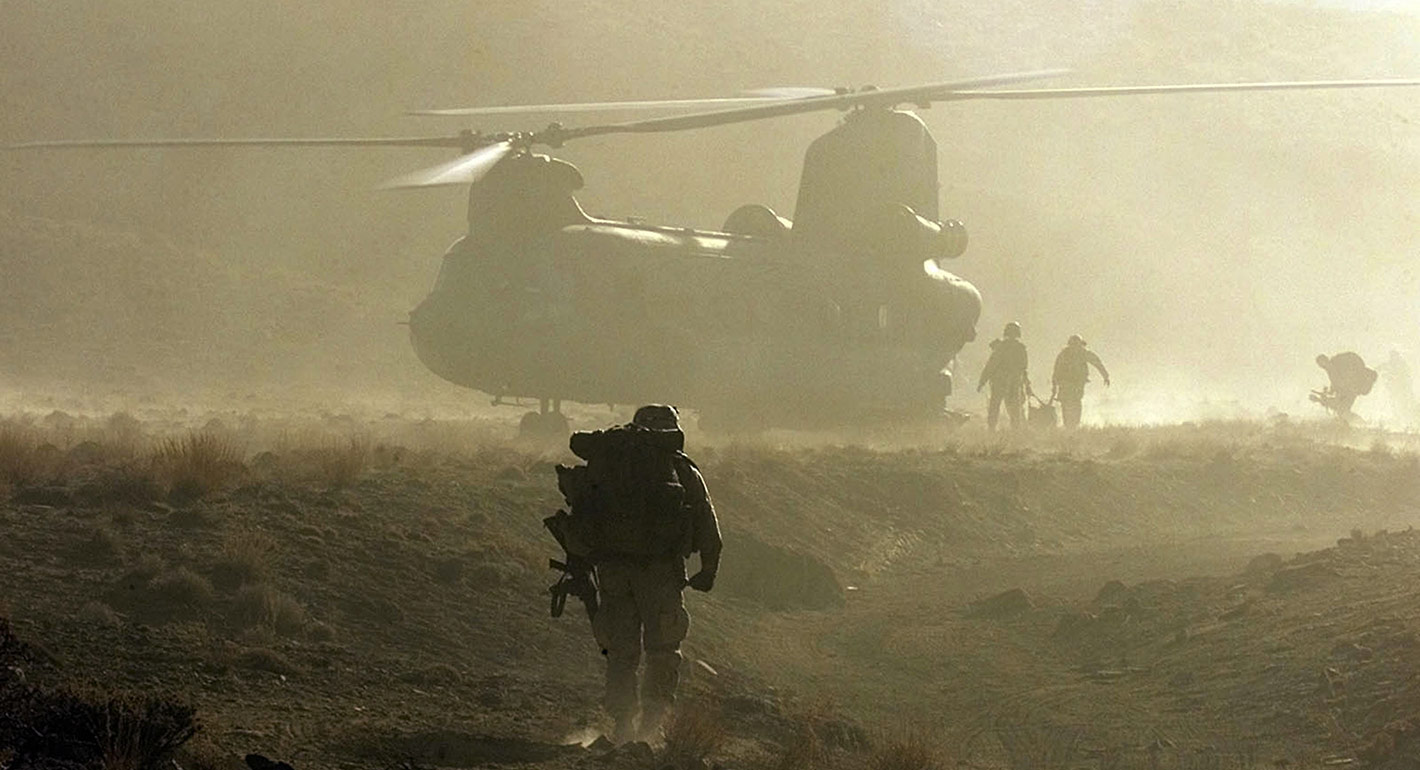
U.S. security requirements and national interests cannot begin to justify the human, strategic, and financial costs of a continued, large-scale U.S. military presence in Afghanistan. It is long past time to accept the risks and difficult compromises of a negotiated settlement.
Source: Washington Post
The United States has spent years slowly losing the war in Afghanistan. We have recently been losing with about 14,000 troops, but we were slowly losing in 2010 with 100,000 troops as well.
We are not losing because of tactics or troop numbers but because of a catastrophic failure to define realistic war goals. After a messy but basically successful counterterrorism effort, we expanded our objectives in ways that were bound to fail. We mortgaged our counterterrorism objectives to more maximalist aims, making our original ambition harder to secure.
U.S. security requirements and national interests cannot begin to justify the human, strategic and financial costs of a continued, large-scale U.S. military presence in Afghanistan. It is long past time to accept the risks and difficult compromises of a negotiated settlement; they only become more severe the longer we delay.
Afghanistan’s civil war is now entering its third generation. America’s war in Afghanistan is entering its second, but the United States and the Taliban are reportedly close to agreeing on a framework for resolving at least the U.S.-Taliban war. The deal’s central elements reflect the core aims of the two sides: The Taliban gets a U.S. commitment to withdraw, and the United States gets a Taliban commitment to police the territory it controls against internationally focused terrorist groups.
Critics argue that Washington should have held off on these issues until the Afghan government reached an agreement with the Taliban about the future of Afghanistan. That argument appeals, but it was tried and repeatedly failed. The Obama administration hamstrung its diplomacy by refusing to compromise on this preferred sequence.
An initial agreement to address core security issues does not, however, mean that all U.S. interests have been addressed or all U.S. leverage expended. Washington needs to try to shape a settlement that ends the worst of the civil war and protects a kind of stable social and political decentralization that reflects the actual powers of the parties.
This would not be a glorious or even satisfying end to the war. Many Afghans (and many of us) will rightly be disappointed by the compromises needed, but it is the best possible outcome.
The United States still has tools to encourage such a deal. Most importantly, an agreement to withdraw troops is not actually a withdrawal. Taliban leaders surely remember previous U.S. drawdown plans in Afghanistan and have observed President Trump’s inconsistency on troop numbers across several conflicts. Pointedly, the Special Operations forces and air targeting teams that are the biggest threat to the Taliban are among the last planned to leave.
Afghan political leaders also understand that any government in Kabul will remain dependent on international assistance. No modern Afghan government has ever kept the peace with its resources alone. The scale of resources needed will be hard for the donor community. It will likely be impossible without U.S. leadership and wholly impossible if the United States deems whatever government emerges in Kabul a pariah.
So the United States has real leverage to support the intra-Afghan negotiations expected to begin in Oslo, but of course, U.S. influence will not be enough. Kabul needs to muster much greater unity of purpose to demonstrate to the Taliban that it will continue to face Afghan opponents who, even without U.S. forces, will impose a high cost for continuing the war.
I believe our Afghan partners are capable of this. If they are not, further extending U.S. troop presence will not solve their problems.
Negotiations might fail. Over 40 years, plenty of efforts to end Afghanistan’s wars have failed. This time around, the United States might be too distracted to use its remaining leverage wisely. The Taliban might be unable or unwilling to abide by its counterterrorism commitments or fail to develop a reasonable and coherent political agenda. Other Afghan factions might prove too divided to effectively oppose or even negotiate with the Taliban. New threats such as the Islamic State could destabilize even a relatively successful outcome. Afghanistan’s neighbors might decide to prioritize their conflict with the United States over our common interest in Afghan stability.
But a failure of the peace process would not justify a return to the status quo. We would then need to address genuine — but limited — national security threats and provide support to Afghan partners with a much smaller set of commitments.
It is always possible to quibble with the details of a peace process or peace deal, but here is the hard reality: U.S. leverage in Afghanistan is a wasting asset. Washington could have made a much better deal five years ago, a still better deal five years before that and an unimaginably good deal in 2001 or 2002. If we fail to reach — or accept — the best deal available now, the best one available tomorrow will be worse.
This article was originally published in the Washington Post.
Former Senior Fellow, Geoeconomics and Strategy Program
Jarrett Blanc was a senior fellow in the Geoeconomics and Strategy Program at the Carnegie Endowment for International Peace.
Recent Work


Jarrett Blanc, Thomas de Waal, Karim Sadjadpour, …

Dan Baer, Rosa Balfour, Jarrett Blanc, …
Carnegie India does not take institutional positions on public policy issues; the views represented herein are those of the author(s) and do not necessarily reflect the views of Carnegie, its staff, or its trustees.

In any defense establishment, change is an ongoing process. However, despite the best of intentions, existing bureaucracies, bound by habit and years of socialization, have their limits in implementing transformative change.

Anit Mukherjee

How is AI reshaping space security, creating governance challenges, and where does international diplomacy stand today?


Tejas Bharadwaj, Almudena Azcárate Ortega

After the chill in ties between 2020 and 2024 that brought India–China relations to their lowest point in several decades, the two countries have engaged each other afresh. This paper argues that there are predominantly four imperatives guiding India’s approach to China, and they exist in an order of priority.

Saheb Singh Chadha

This piece argues that India’s central challenge is not managing a single flashpoint but resolving the underlying tension between expansion and institutional coherency of the BRICS grouping.

Vrinda Sahai

A partnership between India, a country of subcontinental size, and Africa, a continent of fifty-four countries, may seem asymmetric until one notes that both are home to nearly the same number of people—1.4 billion. This essay spells out the existing challenges to the partnership, its optimal potential, and the possible pathways to realize it over the next quarter-century.

Rajiv Bhatia