

Article
Marc Pierini
{
  "authors": [
    "Marc Pierini"
  ],
  "type": "commentary",
  "centerAffiliationAll": "",
  "centers": [
    "Carnegie Endowment for International Peace",
    "Carnegie Europe",
    "Malcolm H. Kerr Carnegie Middle East Center"
  ],
  "collections": [
    "Europe’s Southern Neighborhood"
  ],
  "englishNewsletterAll": "",
  "nonEnglishNewsletterAll": "",
  "primaryCenter": "Carnegie Europe",
  "programAffiliation": "",
  "programs": [],
  "projects": [],
  "regions": [
    "Europe",
    "Türkiye",
    "Middle East",
    "Syria",
    "Western Europe"
  ],
  "topics": [
    "Foreign Policy",
    "Political Reform"
  ]
}
Source: Getty
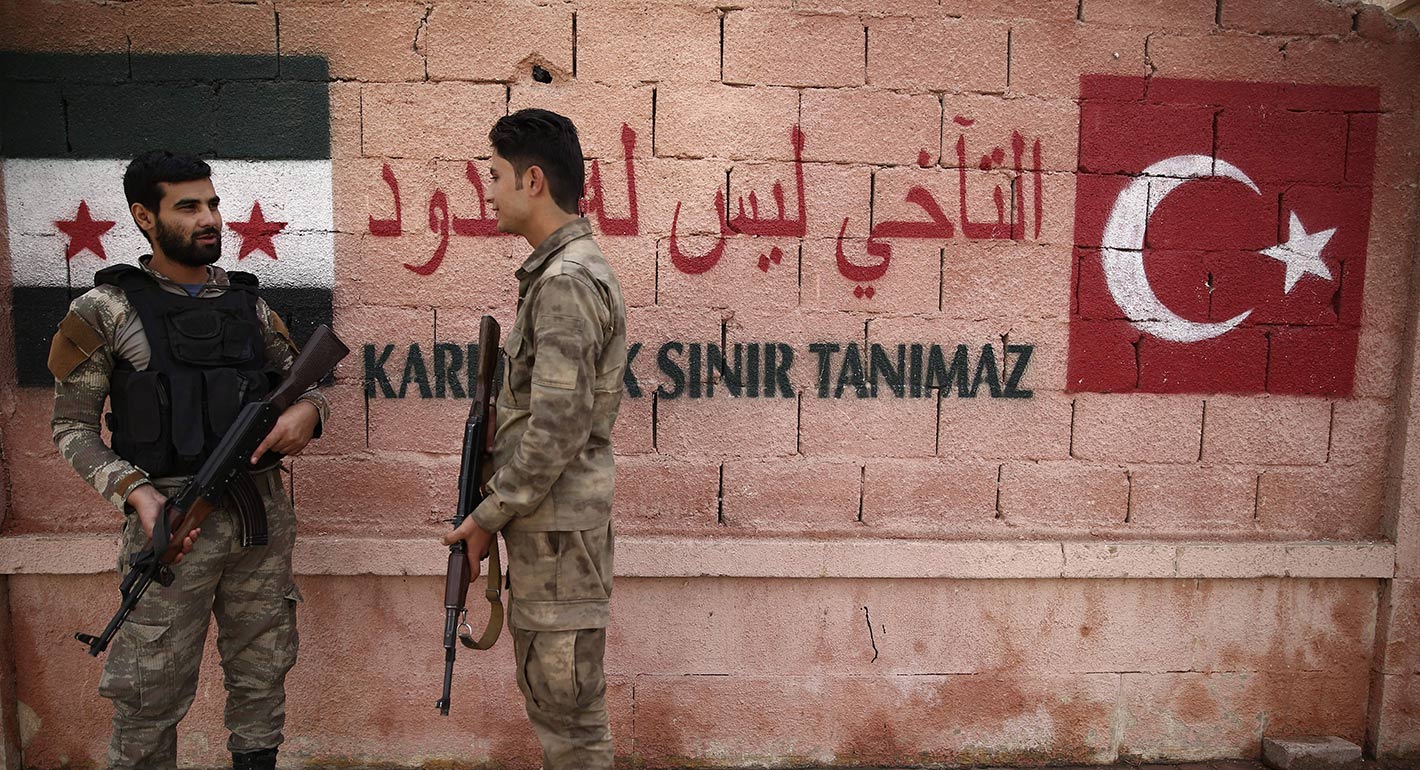
Turkey’s incursion into northern Syria has put further strain on its soured relationship with the EU.
Turkey’s relationship with the EU was already fragile, since President Recep Tayyip Erdoğan’s constitutional reform ended up dismantling the country’s rule of law. But Ankara’s military incursion in Syria has made things worse. Most European countries see it as a domestic political operation, with the fight against the so-called Islamic State taking second priority. Forcing a domestic consensus on terrorism will temporarily silence opponents and dissenters within Turkey’s ruling Justice and Development party (the AKP).
But the EU’s unanimous condemnation, and several EU countries’ arms embargoes, will not deter Ankara. They could even have the exact opposite effect, given the regime’s tight control over Turkey’s judiciary and media. Generally speaking, Turkey’s ultra-nationalist trajectory—designed to consolidate the president’s dominance over domestic politics—has by its very nature a corrosive effect on relations with the EU.
The EU has set up a €6.0 billion facility for humanitarian support for Syrian refugees in Turkey. The projects were spread over four years, and are nearing completion. It was the biggest-ever such operation and won praise from Syrian refugees, host communities, and the EU’s partners in Turkey (the Agency for Emergency Situations, Ministry of Health, Ministry of Education, and Turkish Red Crescent).
But Turkey’s leadership has harshly criticized this massive humanitarian program, in part because the money was not paid in bulk to the government’s accounts (this is not allowed under EU rules). Ankara has also been chagrined by unfulfilled promises made by the EU in 2016 about visa liberalization, upgrading its customs union with Turkey, and the accession process.
If the EU can reach an agreement with Turkey’s leaders, the current humanitarian framework could be extended or adapted.
After a failed coup in July 2016, Turkey’s relations with Russia became much warmer. At first, this reflected the comfort that Ankara found in a relationship where—unlike the EU and the United States—its partner didn’t complain about rule-of-law issues.
Since Russia sold Turkey a supply of S-400 anti-missiles systems, the relationship has taken an entirely different dimension. In the West, Russia is seen as using Turkey to undermine NATO’s own missile defense architecture, and to drive a wedge between Turkey and other NATO members. Ankara’s pro-NATO proclamations will not do much to change this perception.
With the United States, Europe has a different problem. Washington has been unpredictable on issues where a strong transatlantic agreement would be decisive, such as the coalition fighting the Islamic State in northern Syria. This means that the transatlantic allies cannot send a consistent message to Ankara.
The resurgence of nationalist feelings is not just a side effect of the ever-present conspiracy theories in Turkey’s political debates. It is the result of the leadership’s alliance with Turkey’s far-right, ultraconservative Nationalist Movement party (MHP), and their growing influence as an anti-EU, anti-U.S. political movement. This has created an environment in which the pro-EU elements of Turkey’s political spectrum have been marginalized. The leadership now rests on a one-man-rule system—which is the exact opposite of EU standards.
But there is also a deeper trend. A substantial segment of Turkey’s population are uneasy with their country’s affiliation with the West, via NATO, the EU Customs Union, and the Council of Europe.
Perhaps this reflects a more general feeling that, in a post-Cold War environment, Turkey would be better served by stronger alliances with Russia and China and a looser relationship with NATO, placing it in a position equidistant to all the world’s big powers. If implemented, such a fundamental change in foreign policy would constitute a true watershed for Turkey. These are critical choices for Turkey to make. Yet seen from Brussels, they are not being made within a true democracy.
Given Turkey’s current domestic politics, it is doubtful that its leadership will heed any of the EU’s requests on rule of law, economic governance, or foreign policy. So far, Ankara’s needling of the EU seems to have paid off well domestically.
The real problem lies in the consequences for trade and finance. Turkey cannot do without three European anchors: its markets, capital (both short-term funding and foreign direct investment), and technology. It simply doesn’t have meaningful alternatives. But it is unclear whether Turkey’s leadership realizes that hostility with Europe and undemocratic governance makes it harder to resolve the country’s economic woes.
Counterterrorism is one area where the EU and Turkey should work together, as terrorists threaten both Turkey and the EU. It is a very delicate field, because it requires close and confidential dialogue in order to track jihadists, including those with EU passports.
However, the Turkish leadership’s hostile stance on almost all areas of cooperation with the EU may well make working together more difficult than in the past, especially if Ankara decides to send back European jihadists captured under its watch in Turkey and in northern Syria. The issue of jihadists who crossed over to Syria via Turkey with EU passports, and whose citizenship has since been revoked, is a very thorny one for both sides.
This comes on top of several statements by Erdoğan suggesting that Syrian refugees in Turkey could be allowed to go to Europe: "Whether or not we receive support, we will still care for our guests, however, we cannot handle everything. If we see no other solution, we will open the gates, and I think it is obvious which direction they would go."
Trade, and especially the modernization of the Turkey’s custom union agreement with the EU, which has been in effect since January 1996—whereby Turkey’s manufacturing industry is fully integrated to the EU—is the second most important field of cooperation. But here, too, the dismal state of Turkey’s governance creates a huge hurdle.
Direct investment is another vital field of cooperation, since Turkey needs capital and technology from EU firms. But the degraded political environment has cast a dark shadow over future developments. The decision by Volkswagen to freeze a €1.3 billion investment is a case in point. Unsurprisingly, the many political trials underway in the country have taken a huge toll on Turkey’s attractiveness as a business partner. Erasing rule of law may help domestically, but it certainly doesn’t pay off internationally.

Senior Fellow, Carnegie Europe
Marc Pierini is a senior fellow at Carnegie Europe, where his research focuses on developments in the Middle East and Turkey from a European perspective.
Recent Work
Marc Pierini
Marc Pierini
Carnegie India does not take institutional positions on public policy issues; the views represented herein are those of the author(s) and do not necessarily reflect the views of Carnegie, its staff, or its trustees.

After the chill in ties between 2020 and 2024 that brought India–China relations to their lowest point in several decades, the two countries have engaged each other afresh. This paper argues that there are predominantly four imperatives guiding India’s approach to China, and they exist in an order of priority.

Saheb Singh Chadha

This piece argues that India’s central challenge is not managing a single flashpoint but resolving the underlying tension between expansion and institutional coherency of the BRICS grouping.

Vrinda Sahai
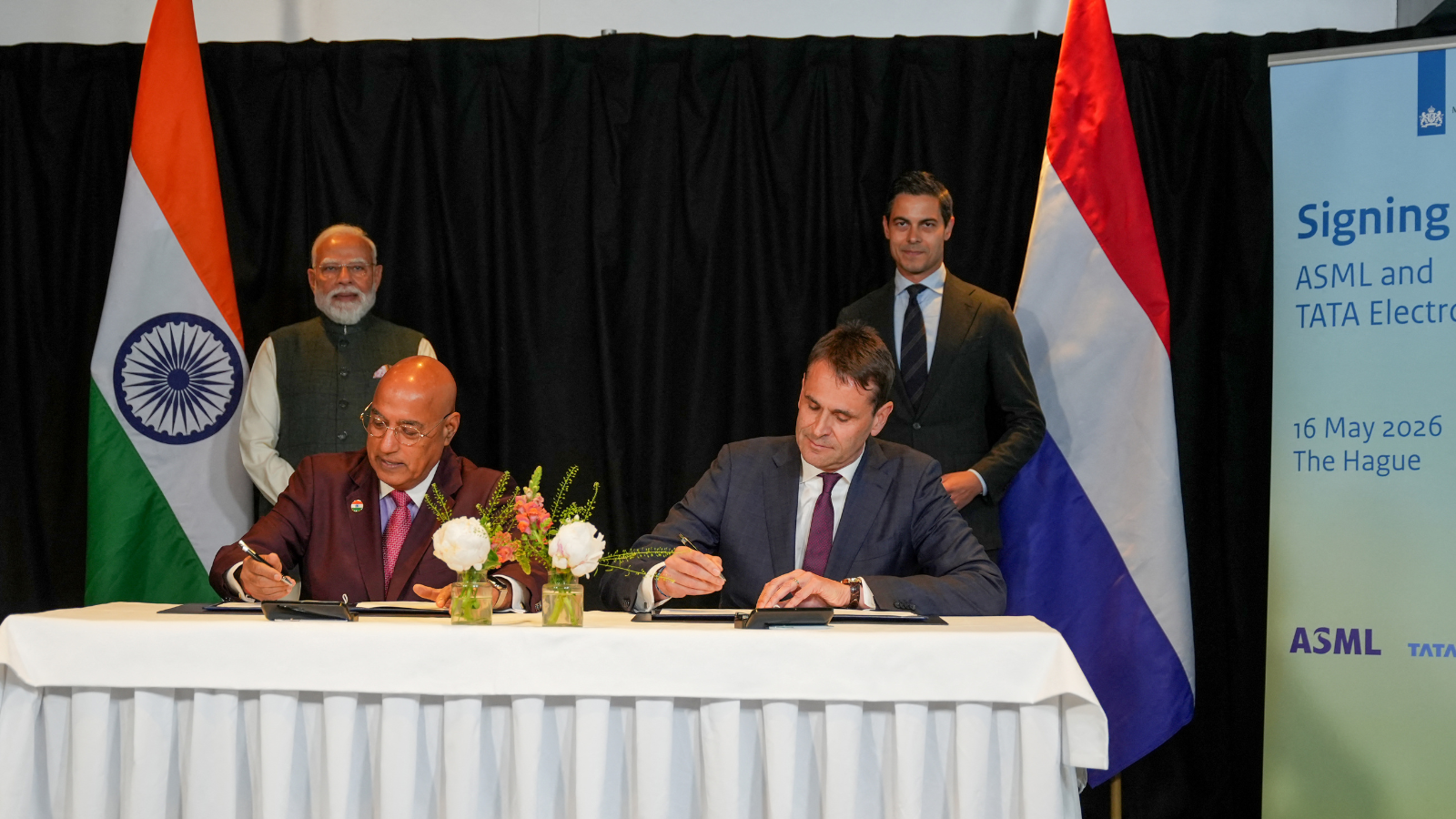
The ASML MoU with Tata Electronics is an indicator of how far the Indian semiconductor ecosystem has come. This ecosystem has been years in the making and represents real commercial logic.

Konark Bhandari

A partnership between India, a country of subcontinental size, and Africa, a continent of fifty-four countries, may seem asymmetric until one notes that both are home to nearly the same number of people—1.4 billion. This essay spells out the existing challenges to the partnership, its optimal potential, and the possible pathways to realize it over the next quarter-century.

Rajiv Bhatia

The India–EU Free Trade Agreement (FTA) is shaping up to be one of the most consequential trade negotiations, both economically and strategically. But, what’s in the agreement, what’s missing, and what will determine its success in the years ahead
Vrinda Sahai, Nicolas Köhler-Suzuki