

Research
- +8
William J. Burns, Michael Chertoff, Catherine Ashton, …
{
  "authors": [
    "William J. Burns"
  ],
  "type": "legacyinthemedia",
  "centerAffiliationAll": "",
  "centers": [
    "Carnegie Endowment for International Peace"
  ],
  "collections": [],
  "englishNewsletterAll": "",
  "nonEnglishNewsletterAll": "",
  "primaryCenter": "Carnegie Endowment for International Peace",
  "programAffiliation": "",
  "programs": [],
  "projects": [],
  "regions": [
    "North America",
    "United States"
  ],
  "topics": [
    "Political Reform",
    "Democracy"
  ]
}
Source: Getty
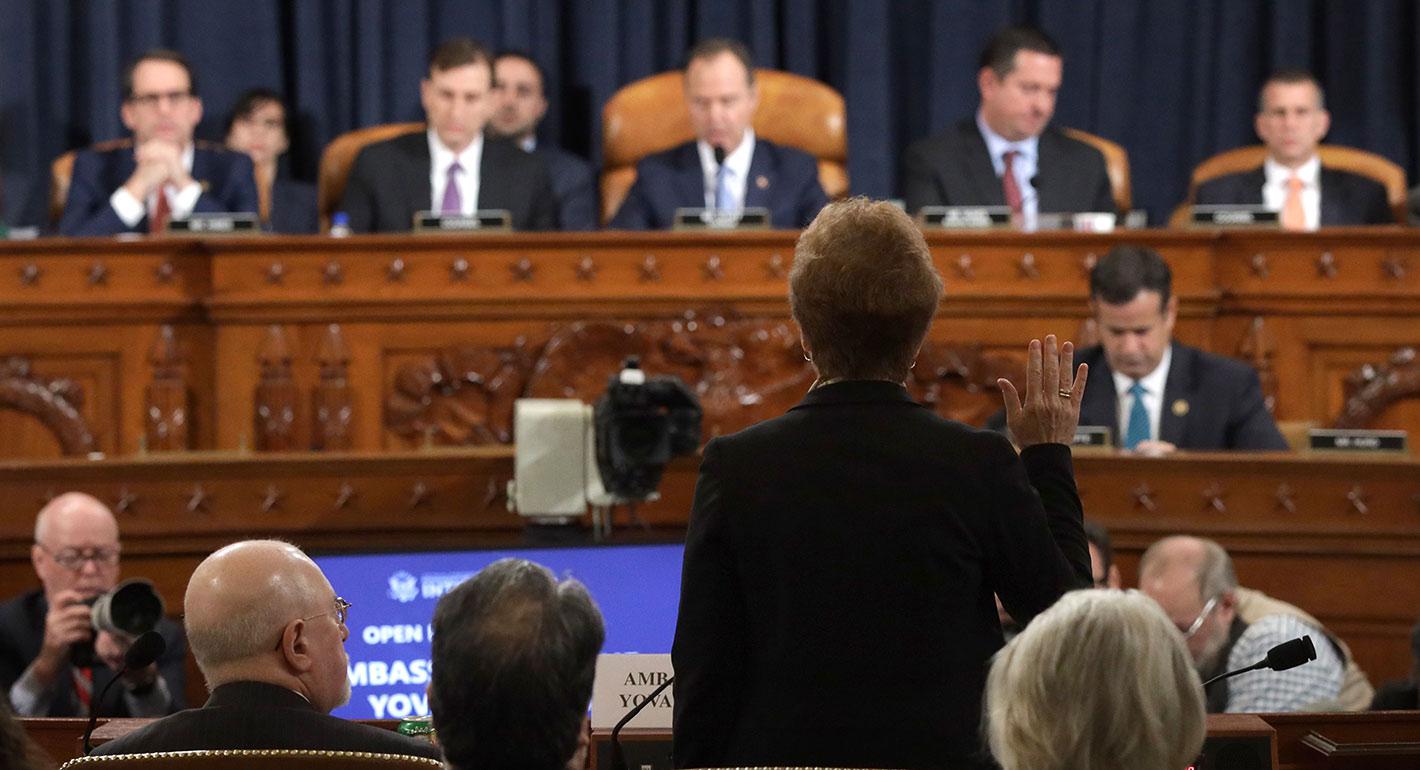
The mistreatment of diplomatic professionals in the impeachment process sends a dangerous message to public servants, the institutions they animate, and the rest of the world.
Source: Atlantic
Three months ago, a group of obscure diplomatic and national-security professionals walked into a public spotlight that none of them ever sought. Called to testify in the congressional impeachment inquiry, they upheld their constitutional oath and told the truth, at considerable risk to themselves and their career. They displayed no signs of partisanship. They showed no prejudice as to the outcome of the inquiry. There was no daylight between their words and deeds and the declared policy of the White House. And there was no shortage of experience, expertise, and human decency. Their example of the ethos of public service and the power and purpose of American diplomacy provided a brief moment of light in a prolonged and dark saga.
After unceasing attacks on their character, service, and institutions by the administration and its partisan allies in Congress, after being thrown under the bus by their own bosses, and after the casual dismissal of their profound concerns about the dangerous precedent of a president putting political interest above the national interest, is that light now fading and forgotten? Has impunity triumphed over integrity?
Diplomats Marie Yovanovitch and William Taylor and National Security Council official Fiona Hill had already left or been forced out of their posts. Last night, Trump pushed Lieutenant Colonel Alexander Vindman out of the National Security Council staff. At issue is not the direction of Ukraine policy—there is plenty of room for debate about our past, present, and future choices. Nor is the issue the Senate’s ultimate verdict—its judgment that Donald Trump’s actions did not warrant removal from office.
The danger is the message that the treatment of these remarkable professionals sends to public servants, the institutions they animate, and the rest of the world. The danger is that we forget their example, normalize Trump’s, and ignore the fallout for American diplomacy.
I had the privilege of serving alongside most of the witnesses many years before they became household names. They worked on hard issues in hard places across administrations of both parties. They all demonstrated an extraordinary commitment to their craft and to the promotion of America’s interests and values. And they all embodied the richness and diversity of our society at its best. Their journeys originated in very different places—from behind the Iron Curtain to America’s heartland, and from the coal country of northern England to the battlefields of Vietnam. But they all converged on a shared destination: love and service for our country.
The quiet dignity, steady resolve, and steely professionalism with which they carried themselves during hours of partisan televised hearings were easily recognizable to anyone who had seen them in action on the diplomatic front lines or amid the unrelenting pressures of Washington policy making.
Having navigated the challenges posed by warlords in Somalia and the combustible circumstances of the post-Soviet world, Yovanovitch was not going to be unnerved by congressional questioners. Having dodged real bullets in Vietnam as a soldier and countless threats as a diplomat in conflict zones, Taylor was not going to be rattled by rhetorical incoming. And it was worth the price of admission to see pompous politicians slink away from challenging Hill, whose intellect and clarity of mind wound up unnerving them—not the other way around.
The integrity of those proud professionals stood in sharp contrast to a bullying president and the empty swagger of a secretary of state who serially fails to abide by his own lectures and stand up for his people, let alone what they stand for. Like all good diplomats wrestling with unsavory characters and unfriendly governments, my former colleagues developed a thick skin for bluster and indignities. None of them, however, imagined they would be the target of that abuse from their own government.
If their example is buried under the rubble of impeachment, all of us will lose. We cannot allow their principled behavior to be dismissed as an anachronism in a world where power trumps principle. We cannot allow their experience to become the realization of Steve Bannon’s fever dream of the defeat of the “administrative state.” And we cannot become resigned to the corrosion and purposeful hollowing out of our institutions.
The evidence of rot within the State Department is pervasive: historic decline in applications to the Foreign Service; unprecedented sidelining of professionals from senior roles in the department; a cacophony of scandals, abuse, and improprieties; and morale that keeps finding new lows. Across the executive branch, the bureaucracy is increasingly beaten down, battered, and belittled.
The risk is that a culture that has sought, however imperfectly, to respect expertise and the disciplined airing of contrary views will gradually be worn down. The risk is that the temptation to go along to get along will become irresistible—that well-meaning officials will become unaware of their own complicity in feeding the callousness of this administration and distorting and undermining the principles that inspire public service in the first place. Government experts may find it harder to resist the stray Sharpie sketches of a meteorologically challenged chief executive, or to convey reservations about policy choices untethered to reality. Policy making may become an exercise in narcissism and adulation, not a principled process shaped by rule of law and informed by facts and experience.
The consequences abroad are just as severe. At the end of his 1946 Long Telegram setting out the Cold War strategy of containment, George Kennan warned that “the greatest danger that can befall us in coping with the problem of Soviet communism, is that we shall allow ourselves to become like those with whom we are coping.” Thirty years after America’s triumph in the Cold War, we are falling into the trap that Kennan feared.
The power of our example—however much we may have exaggerated it over the years—was always more important than the power of our preaching. But that example today only feeds the arguments of our adversaries, emboldens authoritarian leaders, normalizes racists and xenophobes around the world, and unsettles our allies.
The image we are furiously feeding—of unfettered self-dealing and disdain for principled public service—just reinforces the autocratic conceit that democratic systems are no different and no better than dictatorial ones. It weakens our greatest competitive advantage: the alliances and institutions that we built and led to multiply our power and influence.
It’s not just that our friends don’t trust us and our adversaries don’t respect us; it’s that American citizens are (with some reason) losing faith in their own government. Many years of indiscipline and smugness have led to a yawning gap between the American public and the Washington establishment. But when the administration can declare that up is down, that troop deployments are troop withdrawals, and that the president’s call with Ukrainian President Volodymyr Zelensky was “perfect,” then we’re not in Kansas (or Kansas City) anymore. The task of repairing that distrust is growing harder by the day, and with it the task of renewing American diplomacy for an era in which we will need to rely on it more than ever, in a much more competitive international landscape.
In this impatient age, soaked by Trumpian spectacles and scandals that will become only more unbridled, and by social-media and cable-news storms that will become only more ferocious and divisive, forgetting about quiet acts of courage and conviction is all too easy. We owe it to ourselves, and to any hope of renewing our sense of national purpose, to hold on to the example of these public servants and to everything that they represent. If we allow that light to fade, the costs will be enduring—for the institutions on which we depend, and for our image and influence in an unforgiving world.

Former Career Diplomat
A former career diplomat, William J. Burns served as director of the CIA, deputy secretary of State, and ambassador to Russia and Jordan. Burns was also president of the Carnegie Endowment for International Peace from 2015 to 2021.
Recent Work
William J. Burns, Michael Chertoff, Catherine Ashton, …
William J. Burns
Carnegie India does not take institutional positions on public policy issues; the views represented herein are those of the author(s) and do not necessarily reflect the views of Carnegie, its staff, or its trustees.

India and the United States are close to concluding a Reciprocal Defense Procurement Agreement (RDPA) that will allow firms from the two countries to sell to each other’s defense establishments more easily. While this may not remedy the specific grievances both sides may have regarding larger bilateral issues, an RDPA could restore some momentum, following the trade deal announcement.

Konark Bhandari

On the last day of the India AI Impact Summit, India signed Pax Silica, a U.S.-led declaration seemingly focused on semiconductors. While India’s accession to the same was not entirely unforeseen, becoming a signatory nation this quickly was not on the cards either.
Konark Bhandari

This piece examines India’s response to U.S. sanctions and tariffs, specifically assessing the immediate market consequences, such as alterations in import costs, and the broader strategic implications for India’s energy security and foreign policy orientation.

Vrinda Sahai
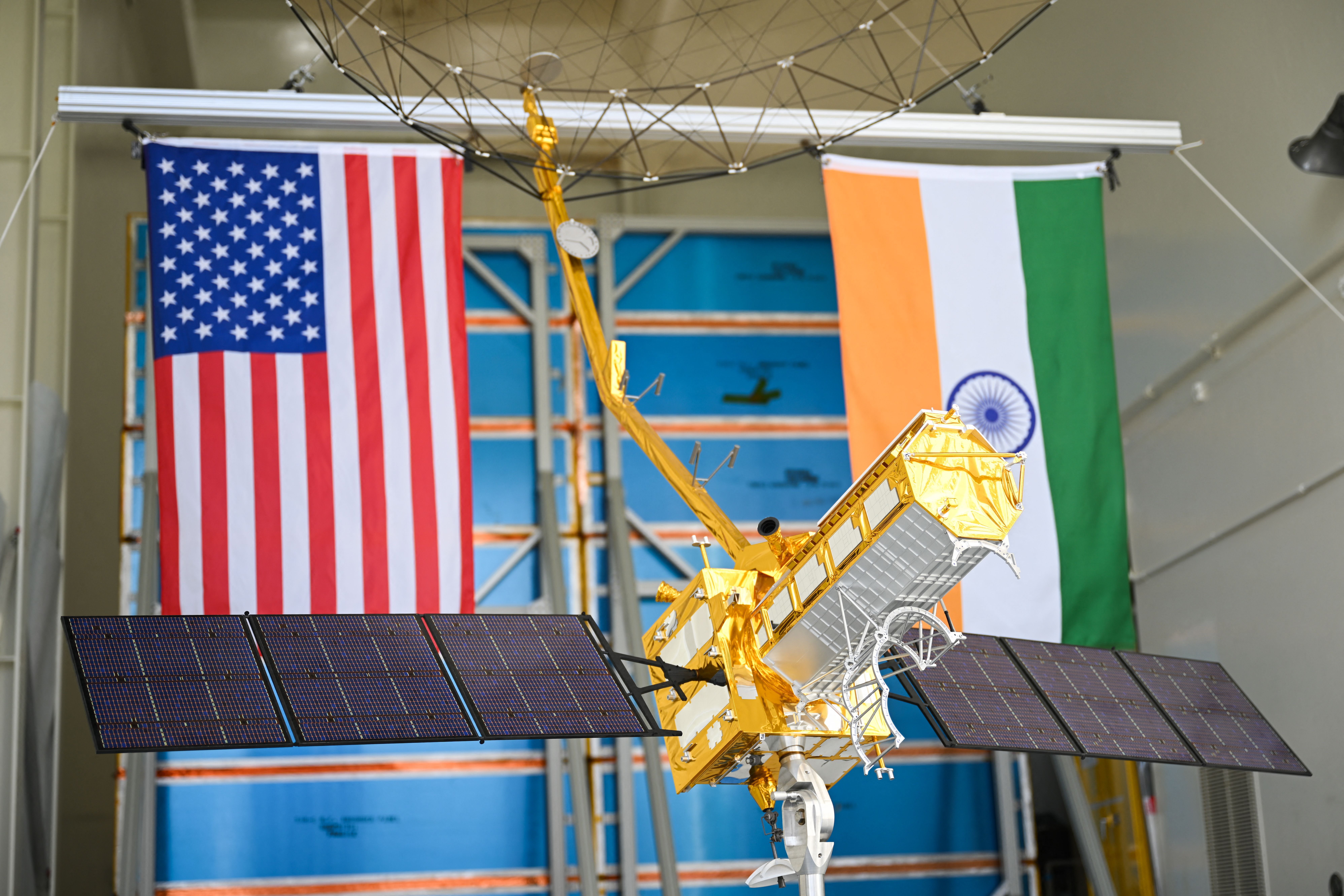
On July 30, 2025, the United States announced 25 percent tariffs on Indian goods. While diplomatic tensions simmered on the trade front, a cosmic calm prevailed at the Sriharikota launch range. Officials from NASA and ISRO were preparing to launch an engineering marvel into space—the NASA-ISRO Synthetic Aperture Radar (NISAR), marking a significant milestone in the India-U.S. bilateral partnership.

Tejas Bharadwaj
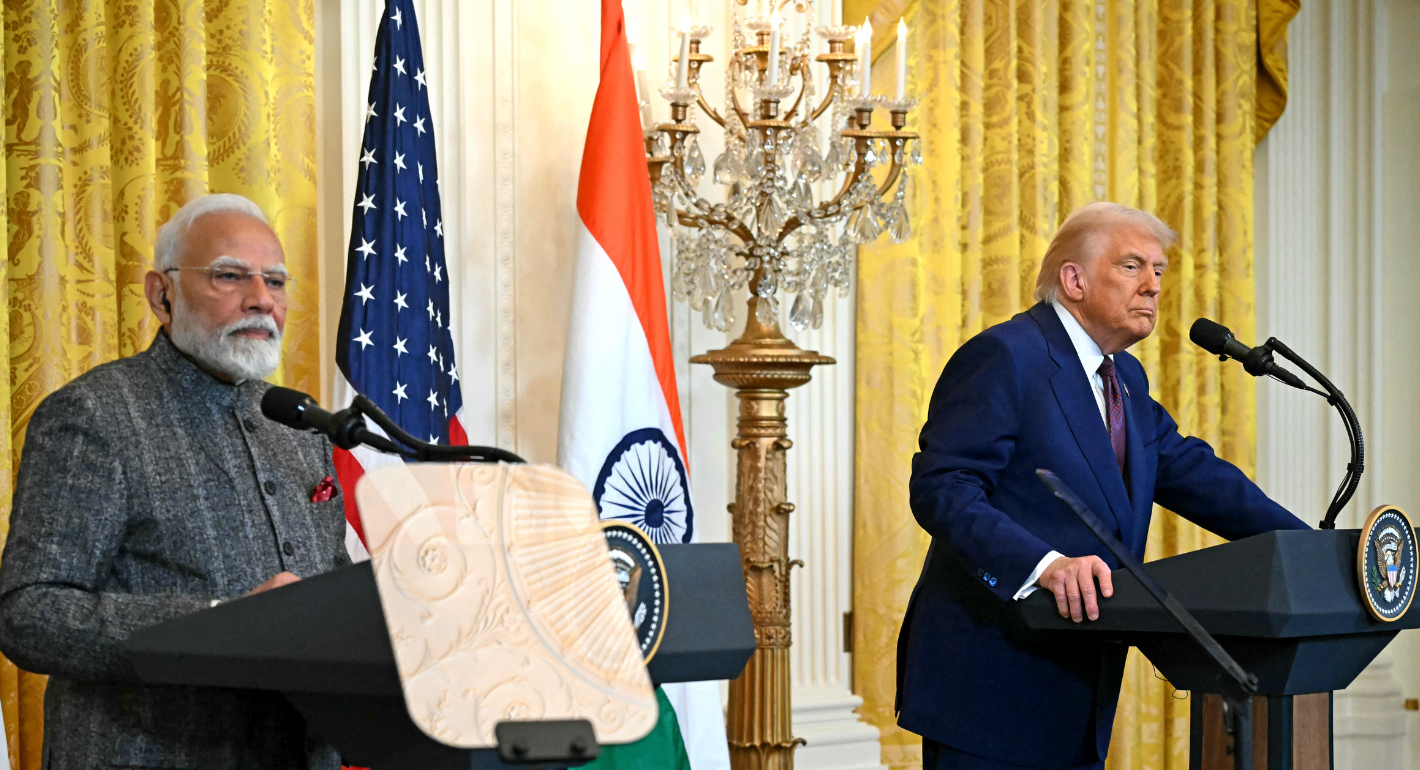
The India-U.S. relationship currently appears buffeted between three “Ts”—TRUST, Tariffs, and Trump.
Arun K. Singh