

Article
- +1
Toby Dalton, Mark Hibbs, Nicole Grajewski, …
{
  "authors": [
    "Mark Hibbs"
  ],
  "type": "other",
  "centerAffiliationAll": "dc",
  "centers": [
    "Carnegie Endowment for International Peace"
  ],
  "collections": [
    "U.S. Nuclear Policy"
  ],
  "englishNewsletterAll": "ctw",
  "nonEnglishNewsletterAll": "",
  "primaryCenter": "Carnegie Endowment for International Peace",
  "programAffiliation": "NPP",
  "programs": [
    "Nuclear Policy"
  ],
  "projects": [],
  "regions": [
    "North America",
    "United States",
    "South America",
    "Middle East",
    "Iran"
  ],
  "topics": [
    "Political Reform",
    "Foreign Policy",
    "Nuclear Policy"
  ]
}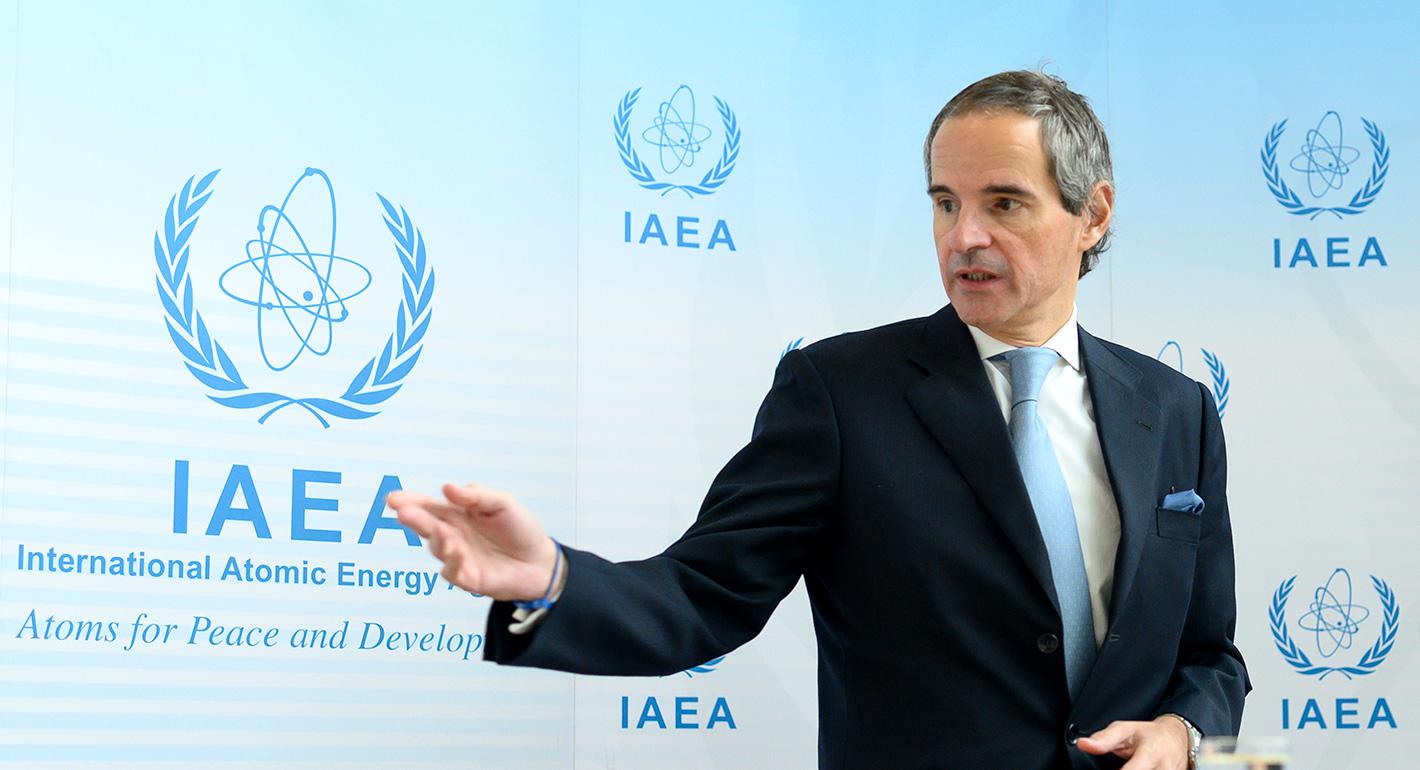
Source: Getty
Differences between Russia and the United States in the Board of Governors at the International Atomic Energy Agency (IAEA) may inhibit multilateral verification of Iran’s safeguards obligations under the Treaty on the Non-Proliferation of Nuclear Weapons (NPT).
Source: European Leadership Network
Argentinian Ambassador Rafael Grossi, who took charge of the International Atomic Energy Agency on 3 December 2019, is staring down the barrel at perhaps his agency’s most immanent challenge: managing re-emerging conflict in the IAEA Board of Governors over nuclear verification in Iran. The technical and political challenges of dealing with Iran at the IAEA have always been difficult, but now these are stoked by rivalry and conflict between Russia and the United States.
Grossi will convene his first board meeting as IAEA Director General the week of 9 March 2020. Looking toward and beyond that encounter, Grossi said during a public appearance at the Carnegie Endowment for International Peace, in Washington, D.C., on 5 February 2020, “There will be a time when I come… to Iran asking them to do the right thing: to work with the agency. And at that moment, not only just the subscribers [to the JCPOA] but other countries, especially in the Board of Governors, will have to stand with the agency. That is what I hope.”
Iran may or may not “do the right thing,” and how far the IAEA can go in pressuring Iran will be in large part be determined by US-Russian relations. At the level of high politics, what has been unfolding in the boardroom reflects growing tensions between two powerful IAEA member states; their different assessments of the international security threat posed by Iran; and Iran’s growing political and military influence in the Middle East. Geopolitics aside, tensions between the US and Russia also centre on nuclear verification; for about a decade Washington and Moscow have been drifting apart over how the IAEA is adapting its safeguards system to changes in the international nuclear landscape.
This brief was originally published by the European Leadership Network.
Nonresident Senior Fellow, Nuclear Policy Program
Hibbs is a Germany-based nonresident senior fellow in Carnegie’s Nuclear Policy Program. His areas of expertise are nuclear verification and safeguards, multilateral nuclear trade policy, international nuclear cooperation, and nonproliferation arrangements.
Recent Work

Toby Dalton, Mark Hibbs, Nicole Grajewski, …
Mark Hibbs
Carnegie India does not take institutional positions on public policy issues; the views represented herein are those of the author(s) and do not necessarily reflect the views of Carnegie, its staff, or its trustees.

How is AI reshaping space security, creating governance challenges, and where does international diplomacy stand today?


Tejas Bharadwaj, Almudena Azcárate Ortega

After the chill in ties between 2020 and 2024 that brought India–China relations to their lowest point in several decades, the two countries have engaged each other afresh. This paper argues that there are predominantly four imperatives guiding India’s approach to China, and they exist in an order of priority.

Saheb Singh Chadha

This piece argues that India’s central challenge is not managing a single flashpoint but resolving the underlying tension between expansion and institutional coherency of the BRICS grouping.

Vrinda Sahai

A partnership between India, a country of subcontinental size, and Africa, a continent of fifty-four countries, may seem asymmetric until one notes that both are home to nearly the same number of people—1.4 billion. This essay spells out the existing challenges to the partnership, its optimal potential, and the possible pathways to realize it over the next quarter-century.

Rajiv Bhatia

The U.S.–India semiconductor cooperation story is well-stocked with top-level strategic intent. What remains unresolved, however, are some underlying challenges that will determine whether the cooperation actually functions. Three such friction points stand out.

Shruti Mittal