

Other
Michael D. Swaine
{
  "authors": [
    "Michael D. Swaine"
  ],
  "type": "legacyinthemedia",
  "centerAffiliationAll": "dc",
  "centers": [
    "Carnegie Endowment for International Peace"
  ],
  "collections": [],
  "englishNewsletterAll": "asia",
  "nonEnglishNewsletterAll": "",
  "primaryCenter": "Carnegie Endowment for International Peace",
  "programAffiliation": "AP",
  "programs": [
    "Asia"
  ],
  "projects": [],
  "regions": [
    "North America",
    "United States",
    "East Asia",
    "China"
  ],
  "topics": [
    "Foreign Policy",
    "Global Governance"
  ]
}
Source: Getty
It is possible that the virus might stimulate greater levels of Sino-U.S. cooperation in some respects, in particular regarding preparations for future pandemics and other transnational security threats
Source: Global Times
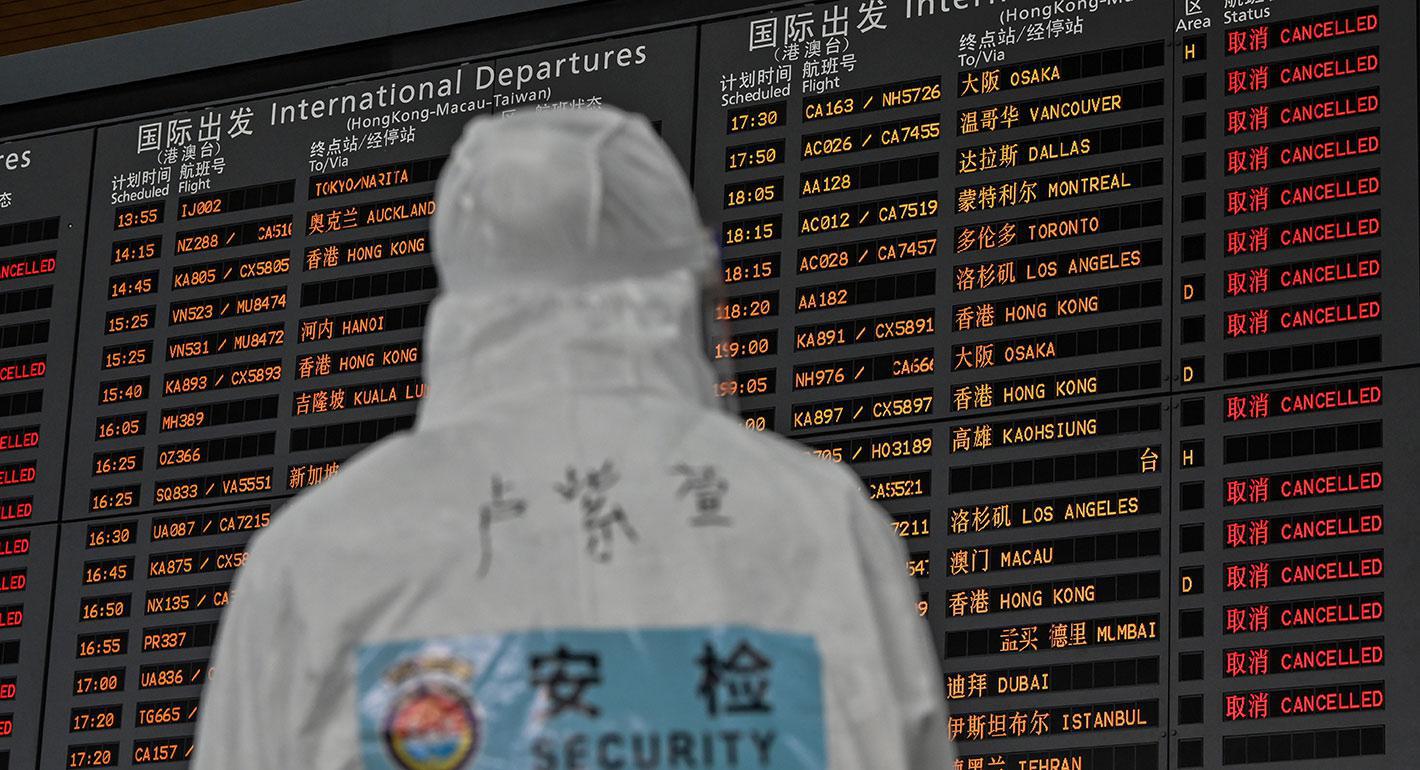
The spreading coronavirus pandemic is having far-reaching effects on the world and it's believed the black swan event will change the world forever. How will the pandemic affect China-US relations, globalization and global leadership? Michael D. Swaine (Swaine), a senior fellow at the Carnegie Endowment for International Peace, and Jeffrey Sachs (Sachs), director of the Center for Sustainable Development at Columbia University, shared their views on these issues in written interviews with Global Times (GT) reporter Yu Jincui.
GT: As the pandemic continues to spread, it seems tensions in the already rocky relations between China and the US have further intensified. How will the pandemic reshape China-US relations? Is it making bilateral relations worse or will it force the two countries to join hands to tackle the common challenge?
Swaine: It is possible that the virus might stimulate greater levels of Sino-US cooperation in some respects, in particular regarding preparations for future pandemics and other transnational security threats, both at the national and subnational levels. But I don't think the COVID-19 virus will fundamentally change the course of US-China relations toward deeper levels of competition overall. This competition is deeply rooted in the structural power shift underway between a rising China and a US that remains wedded to the idea that it must retain some level of predominance in many areas, as well as in the ideological rivalry between the two countries.
Sachs: If China is successful in suppressing the epidemic, transparent in providing data, and proactive in helping other countries through advice, finance, and supplies of critical goods such as personal protection equipment (PPE), then China's global role and standing will improve and grow. It is very important for China to work very hard and transparently to overcome the doubts and concerns about data quality and reporting.
The US COVID-19 crisis is very deep. The crisis was very gravely mismanaged by the Trump administration for many weeks. Now the administration seems to try to blame China, which is harmful and unjustified. We need cooperation, but the Trump administration is very nationalistic and typically opposed to global cooperation. I am therefore worried about the future of bilateral relations as long as Trump is president.
GT: Some argue that the virus is killing globalization, what's your take?
Swaine: My sense is that the virus will stimulate greater international efforts to share scientific information and develop more effective international mechanisms to combat future transnational threats. However, among larger national economies, I also think it will prompt greater efforts to develop more robust domestic economic capacities and reduce external trade and investment dependences, in an attempt to better insulate economies against future shocks. This could reduce overall global growth rates and exacerbate the consequences of COVID-19 for developing economies. So, on balance, I think the primary force behind globalization will be reduced even as contacts in some non-economic areas are expanded.
Sachs: Globalization will survive if the East Asian lessons are learned: to be diligent in recognizing new threats, and to take decisive public actions to address those threats. We should be applying the same approach to climate change and other grave global challenges.
GT: How do you evaluate the US performance as the world's sole superpower during the coronavirus pandemic? How will the pandemic influence US global leadership?
Sachs: US global leadership is at a low ebb with the Trump administration. It is the most incompetent and nationalistic administration in modern US history. It is not capable of effective global cooperation. It only knows the language of nationalism, sanctions, threats, and trade wars. It is very sad and self-defeating for the American people.
GT: What kind of lessons should we draw from this pandemic in terms of crisis response, global governance and international cooperation?
Swaine: The primary lesson to draw is that virtually every country, and especially those with substantial populations, is very unprepared to deal with major nontraditional security threats such as pandemics and climate change. Both leaders and publics in these countries have not devoted the attention and resources to create the institutions and governing capacities needed to rapidly respond to such severe crises. In particular, the virus will likely also show that developing countries are highly vulnerable to these kinds of threats and require much more assistance from wealthier countries to strengthen their response capabilities. This is a major wake-up call to all nations to focus less on creating shareholder wealth for the few and more on stimulating social welfare for all.
Sachs: We should enhance the multilateral institutions. China should actively support the UN system, including the WHO, IMF, and other key institutions. We should learn actively from each other's experiences. In my view, based on the current evidence, China has demonstrated very important lessons on how to fight the pandemic. I hope that China will share these lessons quickly and widely with the rest of the world.
We need also to take seriously the many other threats in the world: wars, extreme nationalism, climate crisis, destruction of biodiversity, extreme poverty, massive inequality of income, and a billion people in the world living in extreme deprivation.

Former Senior Fellow, Asia Program
Swaine was a senior fellow at the Carnegie Endowment for International Peace and one of the most prominent American analysts in Chinese security studies.
Recent Work
Michael D. Swaine
Michael D. Swaine
Carnegie India does not take institutional positions on public policy issues; the views represented herein are those of the author(s) and do not necessarily reflect the views of Carnegie, its staff, or its trustees.

How is AI reshaping space security, creating governance challenges, and where does international diplomacy stand today?


Tejas Bharadwaj, Almudena Azcárate Ortega

After the chill in ties between 2020 and 2024 that brought India–China relations to their lowest point in several decades, the two countries have engaged each other afresh. This paper argues that there are predominantly four imperatives guiding India’s approach to China, and they exist in an order of priority.

Saheb Singh Chadha

This piece argues that India’s central challenge is not managing a single flashpoint but resolving the underlying tension between expansion and institutional coherency of the BRICS grouping.

Vrinda Sahai

A partnership between India, a country of subcontinental size, and Africa, a continent of fifty-four countries, may seem asymmetric until one notes that both are home to nearly the same number of people—1.4 billion. This essay spells out the existing challenges to the partnership, its optimal potential, and the possible pathways to realize it over the next quarter-century.

Rajiv Bhatia

The U.S.–India semiconductor cooperation story is well-stocked with top-level strategic intent. What remains unresolved, however, are some underlying challenges that will determine whether the cooperation actually functions. Three such friction points stand out.

Shruti Mittal