

Commentary
Cornelius Adebahr
{
  "authors": [
    "Cornelius Adebahr"
  ],
  "type": "legacyinthemedia",
  "centerAffiliationAll": "dc",
  "centers": [
    "Carnegie Endowment for International Peace",
    "Carnegie Europe"
  ],
  "collections": [
    "Iranian Proliferation",
    "Coronavirus"
  ],
  "englishNewsletterAll": "ctw",
  "nonEnglishNewsletterAll": "",
  "primaryCenter": "Carnegie Europe",
  "programAffiliation": "EP",
  "programs": [
    "Europe"
  ],
  "projects": [],
  "regions": [
    "Middle East",
    "Europe",
    "Iran",
    "Western Europe"
  ],
  "topics": [
    "Foreign Policy",
    "Security",
    "Nuclear Policy"
  ]
}
Source: Getty
For a European Union with geopolitical ambitions, revamping its Iran policy into a regional Gulf strategy would be a good place to start.
Source: EUobserver
As Europe and Iran appear to be emerging from the first stage of the corona pandemic, all pre-existing problems are re-surfacing too.
Stringent US sanctions – opposed by the Europeans – helped exacerbate Iran's socio-economic malaise, but also allowed hardliners around the revolutionary guards to become stronger internally. Meanwhile, the plunge in oil prices has hit the Gulf's petro-monarchies harder than the already-squeezed Islamic Republic, threatening to fuel regional instability.
Going forward, the spread of the coronavirus throughout the Middle East constitutes a major challenge. Moreover, the dispute over the 2015 nuclear deal needs a resolution, as does the latent US-Iranian confrontation in particular in Iraq. Finally, a row over a UN arms embargo against Tehran, due to be lifted in October, is likely to intensify of over the summer.Europe – that is the EU, its 27 member states and the United Kingdom – is not only directly affected by any further escalation, but also the only actor genuinely interested in a diplomatic solution.
It needs to regionalise its hitherto bilaterally focused Iran policy to adequately address these challenges.
To combat the pandemic at regional level, enabling humanitarian trade with Iran is of utmost importance. The country has become a corona hotspot due to the clergy's stubborn refusal to impose social distancing and to close religious shrines, but also because US sanctions create severe shortages of a medical imports. A variety of international actors, including the UN secretary-general, have called for a suspension of sanctions on humanitarian grounds.
The Europeans should bolster the trade of drugs, medical products, and foodstuff through their Instex barter platform. This could even be used to channel the $5bn loan that Iran requested from the IMF to battle the pandemic.
While Washington suspects Tehran to tap the funds to reinforce its regional clout, and thus opposed the request, going through the certified Instex mechanism would ensure that multilateral money reaches the right recipients.
Strengthening humanitarian trade would not only help neighbouring countries affected by a spread of infections due to travel from Iran. It would also work towards settling the dispute over Iran's nuclear program by allowing Tehran to return to the 2015 nuclear agreement. The fact that Iran responded to the US withdrawal two years ago with a gradual reduction of compliance with its obligations has in particular Israel and Saudi Arabia worried by Iran's already growing regional clout possibly being strengthened by the bomb.
However, the blame for regional escalation is widely shared among countries in the region. This can be seen in the years-long proxy wars from Syria to Yemen that have left the Europeans as helpless bystanders, just as much as the more recent US-Iranian tit-for-tat attacks on Iraqi soil.
Yet, a deteriorating security environment, including a possible resurgence of the so-called Islamic State terrorist group, has direct consequences for the old continent. Europe therefore needs to invest more in regional security, and the UN arms embargo against Iran, due to expire by mid-October, offers an unexpected chance to do so.
Washington is determined to extend the ban, threatening to force a "snap-back" of all pre-2015 UN sanctions. Tehran, in contrast, insists on its lifting as agreed by the nuclear deal, backed by Russia and China as would-be suppliers of arms. Following either path will probably kill the deal for good and, worse, do lasting damage to the authority of the UN Security Council on the way.As a way out of this conundrum, the Europeans should seek to turn the Iran-only ban into one against all non-state actors in the region. Such a list would include Iranian proxies like Hezbollah, but also Saudi-supported groups active in the various regional conflicts. This would help to de-escalate regional tensions while defusing a dangerous international standoff over the validity of the multilateral system.
The next six months, until after the US election, will determine whether the Europeans can maintain an independent approach to Iran – or whether they have to abandon an effort they started 17 years ago when negotiating with Iran over its nuclear program.
To do so, the EU will have to go beyond the bilateral and regionalise its policies, whether in providing humanitarian support against the pandemic, resolving tensions around the nuclear file, or working to stop the proliferation of arms around the Persian Gulf.
For a union claiming to be a "geopolitical" actor and aiming for "sovereignty", revamping its policy toward Iran into a regional strategy would be a good place to start.

Former Nonresident Fellow, Carnegie Europe
Cornelius Adebahr was a nonresident fellow at Carnegie Europe. His research focuses on foreign and security policy, in particular regarding Iran and the Persian Gulf, on European and transatlantic affairs, and on citizens’ engagement.
Recent Work
Cornelius Adebahr

Cornelius Adebahr, Barbara Mittelhammer
Carnegie India does not take institutional positions on public policy issues; the views represented herein are those of the author(s) and do not necessarily reflect the views of Carnegie, its staff, or its trustees.

In any defense establishment, change is an ongoing process. However, despite the best of intentions, existing bureaucracies, bound by habit and years of socialization, have their limits in implementing transformative change.

Anit Mukherjee

After the chill in ties between 2020 and 2024 that brought India–China relations to their lowest point in several decades, the two countries have engaged each other afresh. This paper argues that there are predominantly four imperatives guiding India’s approach to China, and they exist in an order of priority.

Saheb Singh Chadha

This piece argues that India’s central challenge is not managing a single flashpoint but resolving the underlying tension between expansion and institutional coherency of the BRICS grouping.

Vrinda Sahai
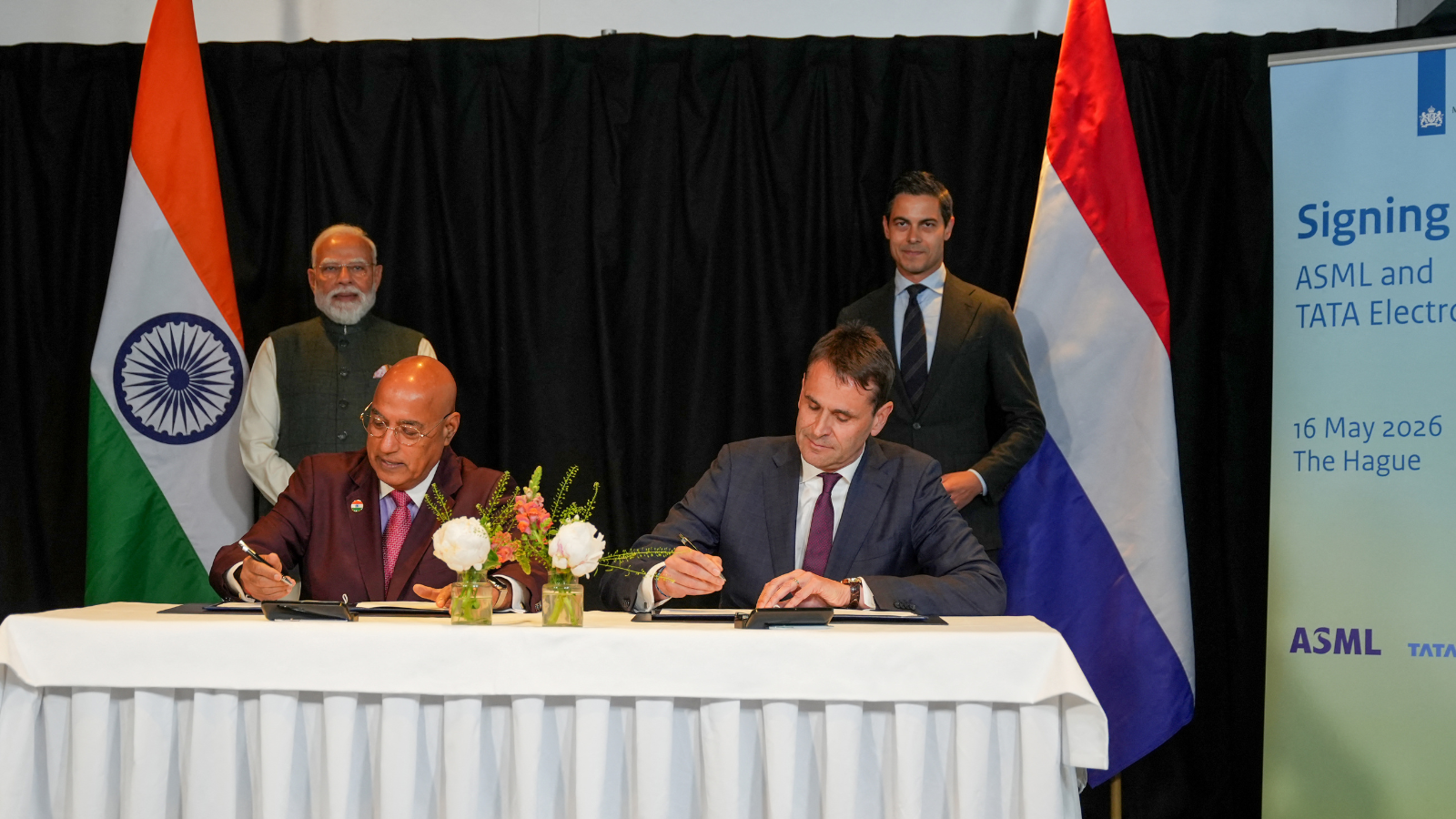
The ASML MoU with Tata Electronics is an indicator of how far the Indian semiconductor ecosystem has come. This ecosystem has been years in the making and represents real commercial logic.

Konark Bhandari

A partnership between India, a country of subcontinental size, and Africa, a continent of fifty-four countries, may seem asymmetric until one notes that both are home to nearly the same number of people—1.4 billion. This essay spells out the existing challenges to the partnership, its optimal potential, and the possible pathways to realize it over the next quarter-century.

Rajiv Bhatia