

Article
Miriam Rajkumar

REQUIRED IMAGE
On Monday July 17, President George W. Bush reversed decades of U.S. nonproliferation policy, stating that India "as a responsible state with advanced nuclear technology, should acquire the same benefits and advantages as other such states," adding that he will "work to achieve full civil nuclear energy cooperation with India as it realizes its goals of promoting nuclear power and achieving energy security." President Bush thus accorded India a much sought-after seat in the "responsible" nuclear club.
This is a sweeping reversal of U.S. and international nuclear policy. While Washington has passed New Delhi’s litmus test on U.S. good intentions, what does this shift mean for U.S. leadership of global nonproliferation? (Read More)
On Monday July 17, President George W. Bush reversed decades of U.S. nonproliferation policy, stating that India "as a responsible state with advanced nuclear technology, should acquire the same benefits and advantages as other such states," adding that he will "work to achieve full civil nuclear energy cooperation with India as it realizes its goals of promoting nuclear power and achieving energy security." President Bush thus accorded India a much sought-after seat in the "responsible" nuclear club.
This is a sweeping reversal of U.S. and international nuclear policy. While Washington has passed New Delhi’s litmus test on U.S. good intentions, what does this shift mean for U.S. leadership of global nonproliferation?
In the joint Indo-U.S. declaration during Indian Prime Minister Manmohan Singh’s U.S. visit, Indians believe that Singh secured a nuclear triumph, with potential for great national benefit at little national cost. "What has been achieved is recognition by the US that, for all practical purposes, India should have the same benefits and rights as a nuclear weapons state," India’s Foreign Secretary Shyam Saran announced. As one commentator writing in the Times of India pointed out, "For India, US backing of its nuclear and space program, subject to sanctions for decades, had become a litmus test of Washington's good intentions."
President Bush announced that he would seek U.S. Congressional approval to adjust domestic legislation and seek to adjust the nuclear regime in order to enable nuclear trade with India, which would include but not be limited to "expeditious consideration of fuel supplies for safeguarded nuclear reactors at Tarapur."
Nuclear Fallout
The declaration reflects the Bush Administration’s general low regard for formal treaties and regimes, and its view that nuclear proliferation is not all bad--and some may even be beneficial. In the long run, these officials argue, a friendly nuclear-India, with a similar (though not identical) strategic vision, could well serve as a counterweight to a potentially unfriendly China. India, which has always disdained the nonproliferation regime, has warmed to Washington’s "good guys, bad guys" vision of a nuclear club.
Working out an agreement to provide India with nuclear power equipment and fuel is not in itself a bad idea. The problem lies in the way both nations are pursuing this deal. India has not committed to fullscope IAEA safeguards, or to restrain development of its nuclear weapons and delivery systems. The agreement appears to reaffirm the notion that nuclear weapons are useful tools to enhance one’s power. The Indo-U.S. joint declaration takes India off the nuclear blacklist, telling other nuclear wannabes that they can develop and even test nuclear weapons and successfully wait out U.S. opposition. Washington’s unilateral willingness to change international rules undermines other critical U.S. nonproliferation goals, could weaken international cooperation and sets a dangerous model that other states might follow.
The Carnegie report Universal Compliance argued in March against this kind of change, contending that "dealing with the reality that India, Israel, and Pakistan possess nuclear weapons does not mean rewarding these three states with new nuclear reactors, as India and, more recently, Pakistan have sought." Instead, the report said, the United States and others should "continue to observe the Nuclear Suppliers Group agreement of 1992 barring reactor sales to recipients operating nuclear facilities that are not under international safeguards. This restriction on nuclear commerce is not a punishment, but a necessary means of upholding the incentives that reward other states for complying with their obligation not to acquire nuclear weapons." The authors further noted, "Were these states to dismantle uranium enrichment and plutonium reprocessing facilities, and place all nuclear reactors under international safeguards, international cooperation in supplying power reactors and fuel cycle services would make sense from a global security standpoint."
The new deal falls far short of that goal. In return for civilian nuclear trade with the United States, India has committed to separate its civilian and military nuclear facilities, declare its civilian facilities with the IAEA and to voluntarily place them under IAEA safeguards. It has also committed to sign and adhere to the Additional Protocol with respect to civilian nuclear facilities; continue its unilateral moratorium on nuclear testing; and work with the United States for the conclusion of a multilateral Fissile Material Cut Off Treaty.
Additionally, India will refrain from transferring enrichment and reprocessing technologies to states that do not already possess them and support international efforts to limit their spread; and ensure that the necessary steps are taken to secure nuclear materials and technology through comprehensive export control legislation and adherence to Missile Technology Control Regime (MTCR) and Nuclear Suppliers Group (NSG) guidelines.
"India - U.S. Joint Statement"
Press Release after Indian Prime Minister Singh's visit to the U.S., 18 July 2005
"India as a New Global Power: An Action Agenda for the United States," Carnegie Report by Ashley J. Tellis, July 2005
"Universal Compliance: A Strategy for Nuclear Security," Carnegie Report, March 2005
India Chapter, Deadly Arsenals: Nuclear, Biological, and Chemical Threats, July 2005
India Map, Deadly Arsenals: Nuclear, Biological, and Chemical Threats, July 2005

Former Associate, Non-Proliferation Project
Recent Work
Miriam Rajkumar
Carnegie India does not take institutional positions on public policy issues; the views represented herein are those of the author(s) and do not necessarily reflect the views of Carnegie, its staff, or its trustees.

The Indian Ocean Region hosts one of the densest concentrations of subsea cables in the world. Yet, despite accounting for a significant share of global internet traffic, India’s participation remains limited.

Charukeshi Bhatt

How is AI reshaping space security, creating governance challenges, and where does international diplomacy stand today?


Tejas Bharadwaj, Almudena Azcárate Ortega

After the chill in ties between 2020 and 2024 that brought India–China relations to their lowest point in several decades, the two countries have engaged each other afresh. This paper argues that there are predominantly four imperatives guiding India’s approach to China, and they exist in an order of priority.

Saheb Singh Chadha

This piece argues that India’s central challenge is not managing a single flashpoint but resolving the underlying tension between expansion and institutional coherency of the BRICS grouping.

Vrinda Sahai
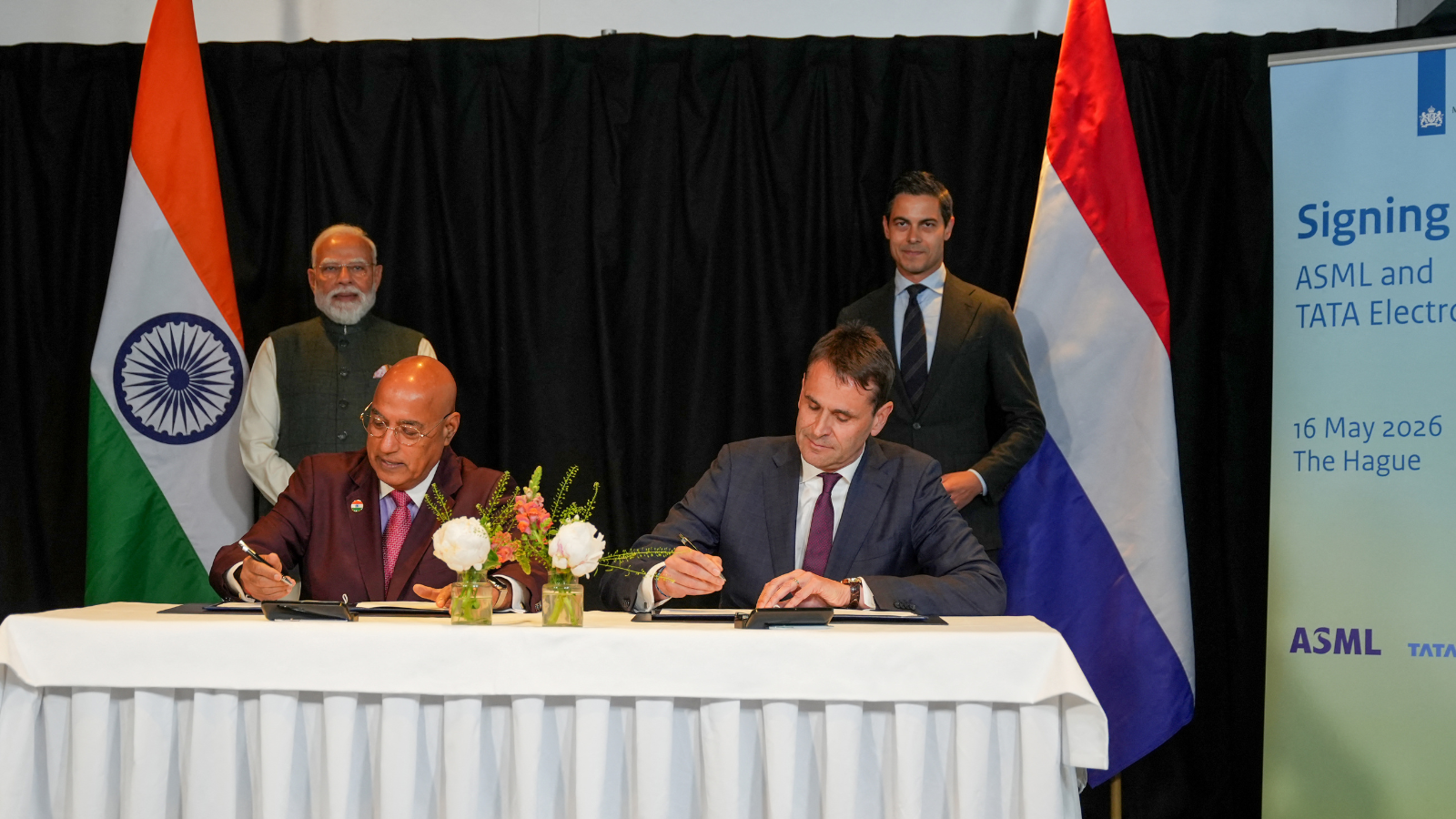
The ASML MoU with Tata Electronics is an indicator of how far the Indian semiconductor ecosystem has come. This ecosystem has been years in the making and represents real commercial logic.

Konark Bhandari