

Commentary
How is AI reshaping space security, creating governance challenges, and where does international diplomacy stand today?
Tejas Bharadwaj, Almudena Azcárate Ortega
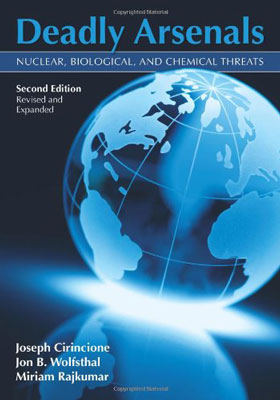
The revised and expanded edition ofDeadly Arsenals provides the most up-to-date and comprehensive assessment available on global proliferation dangers, with a critical assessment of international enforcement efforts.
Source: Washington

The new edition addresses the recent, dramatic developments in Iran, Iraq, Libya, North Korea, and the nuclear black market, analyzing strategic and policy implications.
On July 12, 2005, the authors of this new study presented their findings and then chaired a discussion and debate with experts from the audience. Click here to go to the LIVE AT CARNEGIE site, featuring archived audio and a slideshow presentation with new maps and charts from the book.
About the Authors
Joseph Cirincione previously served as a senior associate and director for Non-Proliferation at the Carnegie Endowment for International Peace, and is coauthor of the major Carnegie report, Universal Compliance: A Strategy for Nuclear Security and editor of Repairing the Regime: Preventing the Spread of Weapons of Mass Destruction (Routledge, 2000).
Jon B. Wolfsthal is former associate and deputy director for non-proliferation at the Carnegie Endowment. He is coauthor of Universal Compliance and coeditor of Nuclear Status Report: Nuclear Weapons, Fissile Material, and Export Controls in the Former Soviet Union (Carnegie/Monterey, 2001).
Miriam Rajkumar is former project associate for nonproliferation at the Carnegie Endowment.
"[A] comprehensive and useful guide to nuclear and CBW proliferation issues, and an essential companion to the SIPRI Yearbook.”
—Pierre-Emmanuel Dupont, Caucasian Review of International Affairs
Former Senior Associate, Director for NonProliferation
Former Nonresident Scholar, Nuclear Policy Program
Jon Wolfsthal was a nonresident scholar with the Nuclear Policy Program.

Former Associate, Non-Proliferation Project
Carnegie India does not take institutional positions on public policy issues; the views represented herein are those of the author(s) and do not necessarily reflect the views of Carnegie, its staff, or its trustees.

How is AI reshaping space security, creating governance challenges, and where does international diplomacy stand today?


Tejas Bharadwaj, Almudena Azcárate Ortega

The U.S.–India semiconductor cooperation story is well-stocked with top-level strategic intent. What remains unresolved, however, are some underlying challenges that will determine whether the cooperation actually functions. Three such friction points stand out.

Shruti Mittal
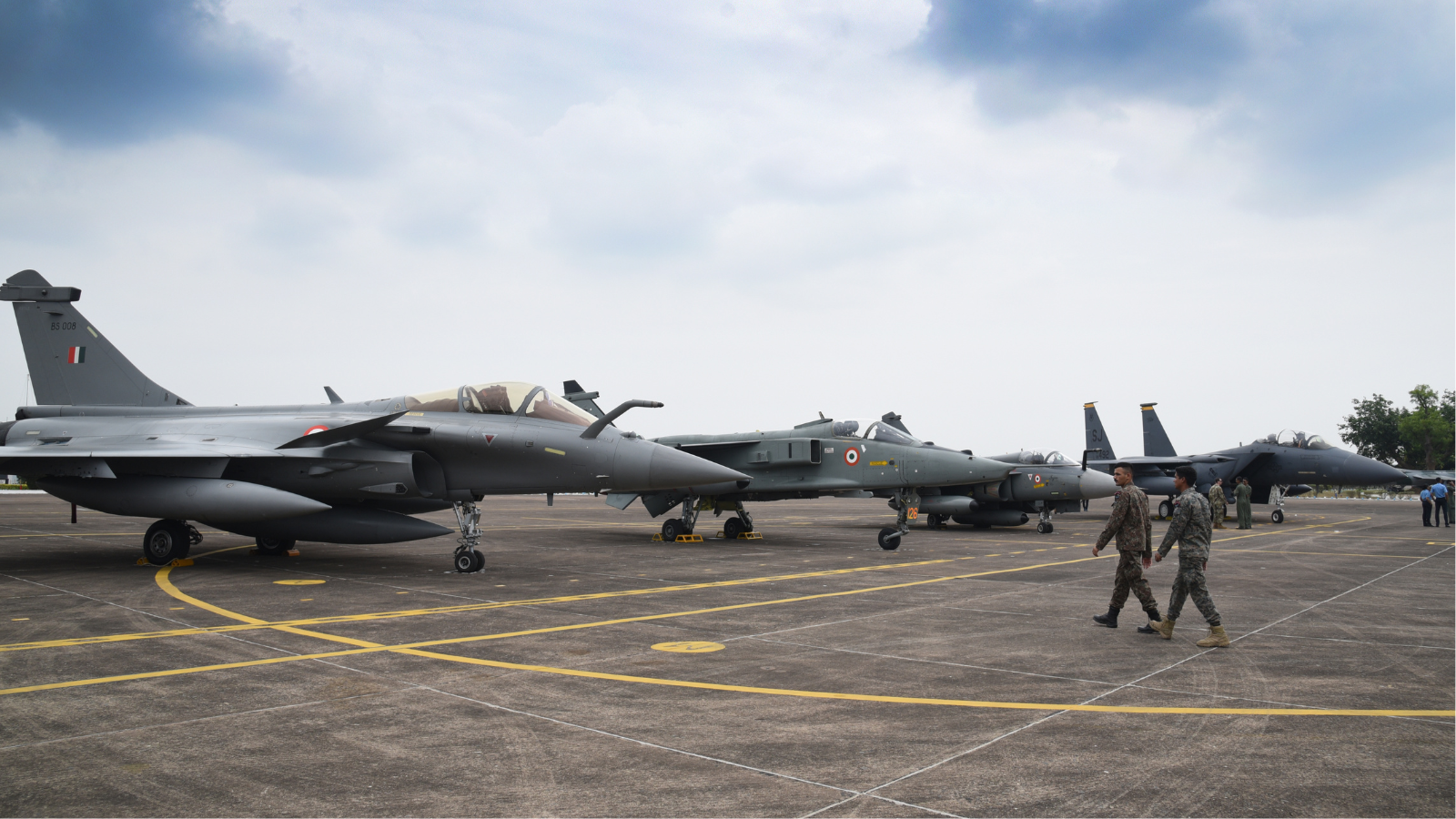
India and the United States are close to concluding a Reciprocal Defense Procurement Agreement (RDPA) that will allow firms from the two countries to sell to each other’s defense establishments more easily. While this may not remedy the specific grievances both sides may have regarding larger bilateral issues, an RDPA could restore some momentum, following the trade deal announcement.

Konark Bhandari

On the last day of the India AI Impact Summit, India signed Pax Silica, a U.S.-led declaration seemingly focused on semiconductors. While India’s accession to the same was not entirely unforeseen, becoming a signatory nation this quickly was not on the cards either.
Konark Bhandari

This piece examines India’s response to U.S. sanctions and tariffs, specifically assessing the immediate market consequences, such as alterations in import costs, and the broader strategic implications for India’s energy security and foreign policy orientation.

Vrinda Sahai