

Commentary
How is AI reshaping space security, creating governance challenges, and where does international diplomacy stand today?
Tejas Bharadwaj, Almudena Azcárate Ortega

REQUIRED IMAGE
One-tenth of America’s electricity comes from fuel made from Russian nuclear warheads. The Megatons to Megawatts program converts highly-enriched uranium in Russian weapons into low-enriched uranium that is used in US civilian nuclear power reactors. The program reached an important milestone in early October - converting 255 metric tons of warhead material, the equivalent of over 10,000 weapons. (Read More)
One-tenth of America’s electricity comes from fuel made from Russian nuclear warheads. The Megatons to Megawatts program converts highly-enriched uranium in Russian weapons into low-enriched uranium that is used in US civilian nuclear power reactors. The program reached an important milestone in early October - converting 255 metric tons of warhead material, the equivalent of over 10,000 weapons.
The goal of Megatons to Megawatts is to complete conversion of 500 metric tons of HEU. The program is set up to be commercially sustainable, thus taxpayers are not burdened with any costs. The nuclear warheads are dismantled, the HEU is diluted in Russia, and then the resulting LEU is purchased by the United States Enrichment Corporation (USEC) and distributed to various power utility customers who then use the fuel to generate electricity. The program is on schedule to complete its mission by 2015.
In addition, USEC has teamed up with the US Department of Energy for the conversion and sale to reactors of 64 metric tons of excess US military HEU. The US Megatons to Megawatts program is scheduled for completion in 2006. The LEU fuel converted from US weapons is enough to power a 1,000-megawatt reactor for about 52 years, generating enough electricity for a city the size of Boston for 43 years.
The Carnegie report Universal Compliance notes that the targeted Russian fissile material that has yet to be down-blended “remain[s] in weapon-usable form, to say nothing of the remaining Russian stockpile – which may amount to an additional 500 metric tons under uncertain security.” The report recommends that “downblending needs to be accelerated to ensure the fastest possible elimination of this material. Russia and the United States should agree to double the pace from 30 to 60 metric tons of HEU per year.”
Megatons to Megawatts website
Universal Compliance: A Strategy for Nuclear Security, Carnegie Report, March 2005
Ben Bain
Former Junior Fellow, Nonproliferation Project
Carnegie India does not take institutional positions on public policy issues; the views represented herein are those of the author(s) and do not necessarily reflect the views of Carnegie, its staff, or its trustees.

How is AI reshaping space security, creating governance challenges, and where does international diplomacy stand today?


Tejas Bharadwaj, Almudena Azcárate Ortega

This piece argues that India’s central challenge is not managing a single flashpoint but resolving the underlying tension between expansion and institutional coherency of the BRICS grouping.

Vrinda Sahai

The U.S.–India semiconductor cooperation story is well-stocked with top-level strategic intent. What remains unresolved, however, are some underlying challenges that will determine whether the cooperation actually functions. Three such friction points stand out.

Shruti Mittal
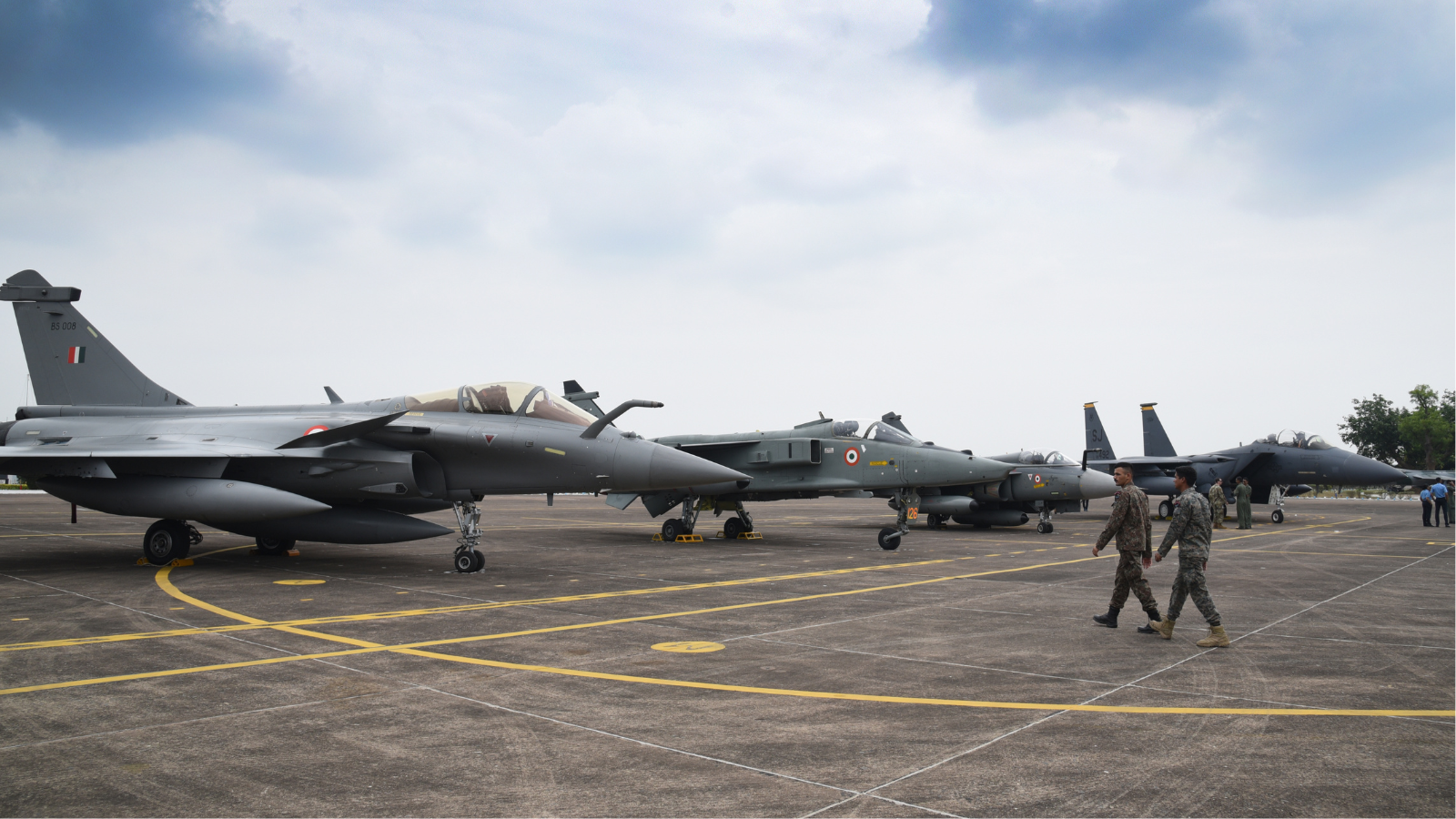
India and the United States are close to concluding a Reciprocal Defense Procurement Agreement (RDPA) that will allow firms from the two countries to sell to each other’s defense establishments more easily. While this may not remedy the specific grievances both sides may have regarding larger bilateral issues, an RDPA could restore some momentum, following the trade deal announcement.

Konark Bhandari

On the last day of the India AI Impact Summit, India signed Pax Silica, a U.S.-led declaration seemingly focused on semiconductors. While India’s accession to the same was not entirely unforeseen, becoming a signatory nation this quickly was not on the cards either.
Konark Bhandari