• Research
  • About
  • Experts
Carnegie India logoCarnegie lettermark logo
REQUIRED IMAGE

REQUIRED IMAGE

Paper
Malcolm H. Kerr Carnegie Middle East Center

Salafism and Radical Politics in Postconflict Algeria

Since the civil war of the 1990s, Algeria’s government has given moderate Islamist parties only a superficial role in politics. The resulting rise of Salafism, which rejects the country’s political system, reveals the need for Algeria to increase political transparency and participation and engage its citizens to discourage radicalization outside the political system.

Link Copied
By Amel Boubekeur
Published on Oct 20, 2008

Additional Links

Salafism and Radical Politics in Algeria - English (PDF)Salafism and Radical Politics in Algeria - Arabic (PDF)

Since the civil war of the 1990s, Algeria’s government has given moderate Islamist parties only a superficial role in politics. Consequently, support for Algerian Salafism, which rejects the country’s political system, has increased, creating for its followers a separate Islamic way of life without engagement in politics or confrontation with the army.  In a new paper, Amel Boubekeur examines how the rise of Salafism indicates the need for Algeria to increase political transparency and participation and engage its citizens, particularly the young, to discourage radicalization outside the political system.

Violence continues to plague the country despite security measures, enacted at the expense of civil liberties. By cancelling elections and outlawing the radical Islamist party Islamic Salvation Front (FIS) in 1992, the Algerian government effectively pushed radicals out of the political system. In turn, many turned to terrorist groups such as al-Qaeda in the Islamic Maghreb to advance their agenda, while others joined movements rejecting participatory politics and preserving radicalism, such as Da’wa Salafism.
 
Key Conclusions:
  • Da’wa Salafism, currently the most popular Salafi movement, refuses to recognize a secular political system and encourages its followers to re-Islamize society outside the framework of a political party. The success of this movement signals the growing disinterest among young people toward more moderate Islamist parties and their fake participatory strategies.
  • The development of Da’wa Salafism is due in large part to Algeria’s recent economic boom. Benefiting greatly from the oil rent through various business networks, Da’wa Salafists adopt a neutral attitude toward the state which, in turn, tolerates them—contradicting the premise that Islamic radicalization is linked to economic depression. 
  • The detachment of Da’wa Salafism has allowed many former FIS militants to reintegrate within civil society. However, it has not provided a complete solution against terrorist violence, or an opportunity to reintegrate repentant terrorists and radicals into a democratic political system. 
  • Since 9/11, the United States has considered Algeria an important partner in the fight against terrorism. However, this legitimacy has also allowed the government to continually postpone any normalization or pluralization in the political field. The evolution of Algerian Salafism reveals a need within the international community to rethink the place of radical movements in democracy promotion, and focus on bringing radicals—not just moderates—into the political system.
     
  • The Algerian government should empower civil societies, promote the integration of Salafi members into democratic institutions and political parties, make the reconciliation process more transparent, and promote new forms of political legitimacy which are not based on violence and religion.
Boubekeur concludes:
 
“Social stability and national cohesion are challenged because the Algerian people still do not have real opportunities to engage in a process of dialogue uniting civil, political, and military actors. With their own relationship to the state, Algerian forms of Salafism reveal the deep need to switch from the security-oriented politics that has been in force for sixteen years to new modes of participatory politics.”
 
Amel Boubekeur is the head of the Islam and Europe programme at the Centre for European Policy Studies, Brussels and a research fellow at the École des Hautes Études en Sciences Sociales and the École Normale Supérieure, Paris. Her research focuses on North African politics, Euro–Arab relations, and Islam in Europe.

About the Author

Amel Boubekeur

Former Resident Scholar, Middle East Center

Boubekeur was an associate scholar at the Carnegie Middle East Center. Her research focuses on Maghreb country politics, Euro–Arab relations, and Islam in Europe.

    Recent Work

  • Article
    The Tunisian Elections: International Community Must Insist on Moving Beyond Façade Democracy

      Amel Boubekeur

  • Article
    Morocco: The Emergence of a New Palace Party

      Amel Boubekeur

Amel Boubekeur
Former Resident Scholar, Middle East Center
Amel Boubekeur
MaghrebAlgeriaNorth AfricaPolitical ReformDemocracy

Carnegie India does not take institutional positions on public policy issues; the views represented herein are those of the author(s) and do not necessarily reflect the views of Carnegie, its staff, or its trustees.

More Work from Carnegie India

  • Article
    A Path Out of Tunisia’s Economic Crisis

    President Kais Saied has won a second term in office, but his country is facing a host of problems that necessitate urgent reforms, above all preventing the possibility of a financial meltdown. 

      Ishac Diwan, Hachemi Alaya, Hamza Meddeb

  • REQUIRED IMAGE
    Commentary
    Is U.S. Foreign Policy Too Hostile to China?

    Experts weigh in on whether the United States is too hostile toward China.

      Stephen Wertheim, Evan S. Medeiros, Vijay Gokhale
  • Paper
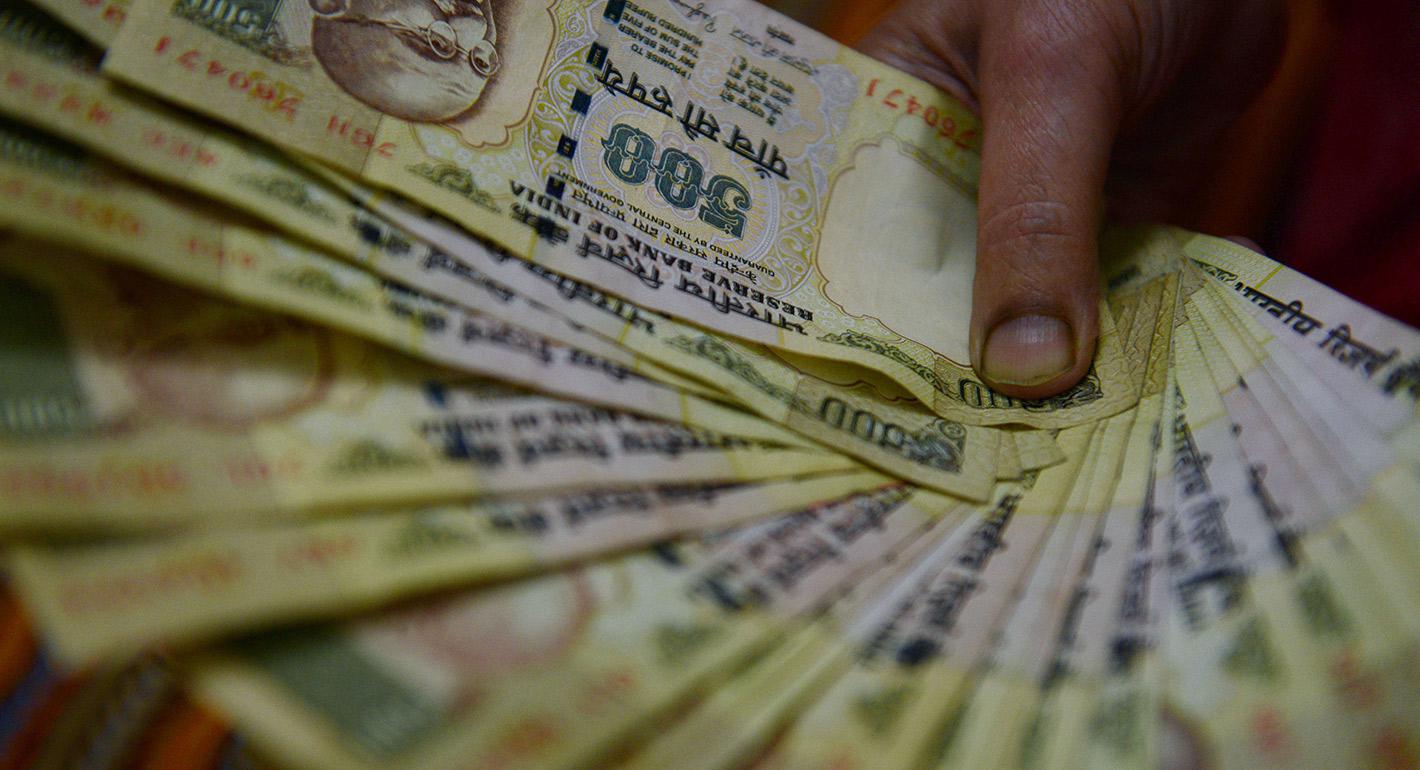
    India’s Sustained Economic Recovery Will Require Changes to Its Bankruptcy Law

    As India’s economy recovers from the coronavirus pandemic, Indian businesses need efficient financial structures to regain their ground. Key reforms to India’s Insolvency and Bankruptcy Code could fill these gaps.

      Anirudh Burman

  • Paper
    Cross-Border Data Access for Law Enforcement: What Are India’s Strategic Options?

    Access to cross-border data is an integral piece of the law enforcement puzzle. India is well placed to lead the discussions on international data agreements subject to undertaking necessary surveillance reforms.

      Smriti Parsheera, Prateek Jha
  • Article
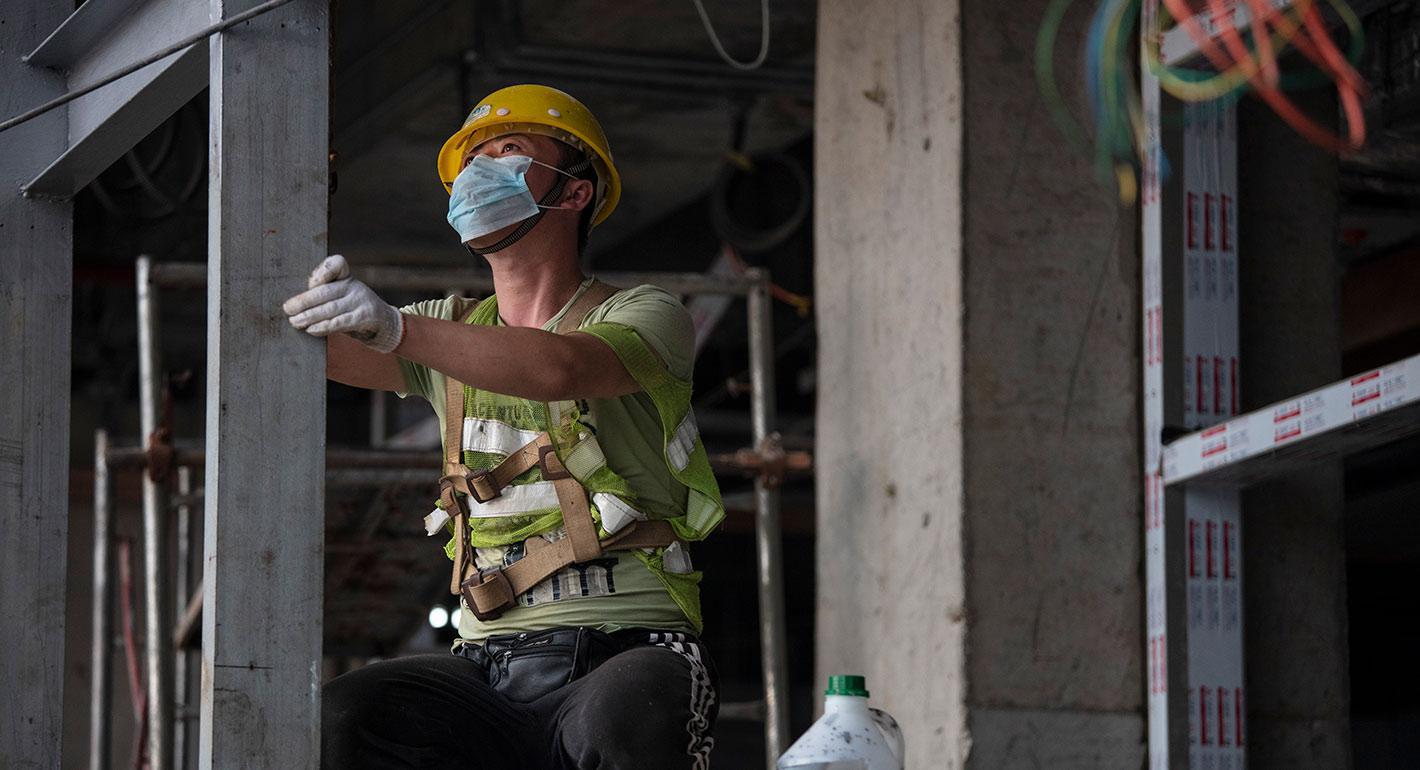
    The BRI in Post-Coronavirus South Asia

    After the coronavirus pandemic wanes, how will China’s reorientation of the Belt and Road Initiative to address global health concerns influence its relationships with South Asian countries?
      Deep Pal, Rahul Bhatia

Get more news and analysis from
Carnegie India
Carnegie India logo, white
Unit C-4, 5, 6, EdenparkShaheed Jeet Singh MargNew Delhi – 110016, IndiaPhone: 011-40078687
  • Research
  • About
  • Experts
  • Projects
  • Events
  • Contact
  • Careers
  • Privacy
  • For Media
Get more news and analysis from
Carnegie India
© 2026 Carnegie Endowment for International Peace. All rights reserved.