

Article
Marina Ottaway, Omar Hossino
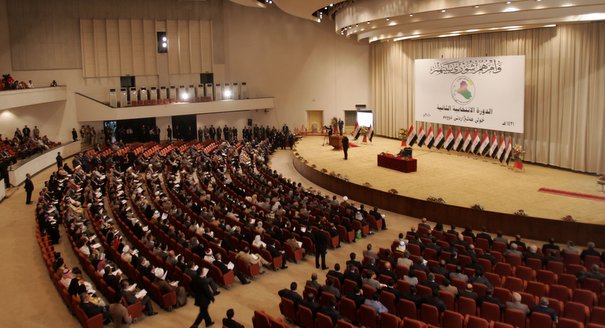
Source: Getty
Some analysts have suggested that the 2010 elections are being contested on a non-sectarian basis, or a less sectarian basis than the 2005 elections. But party alliances are organized predominately on an ethnic or confessional basis.
Some analysts have suggested that the 2010 elections are being contested on a non-sectarian basis, or at least a less sectarian basis than the 2005 elections. Indeed, the idea that confessionalism and sectarianism are decreasing in Iraq has been gaining acceptance since the 2009 provincial elections.
The reality is more complicated. It is true that all major electoral alliances—with the exception of the Kurdish one—include parties and individuals representing a variety of ethnic or confessional groups. But the parties that enter into those alliances are organized predominately on an ethnic or confessional basis. Furthermore, the so-called non-confessional alliances usually contain a dominant party or parties clearly identified with one group, plus a number of minor organizations with a different identity.
Thus, Prime Minister Nouri al-Maliki’s Rule of Law Coalition is dominated by Dawa, an important Shi’i organization, and a number of Sunni and Kurdish organizations that are much less well established in their respective communities. For example, Kurds in the Rule of Law coalition are not represented by a major organization, but by a rather obscure one that draws support mostly from the minority of Kurds who are Shi’a. Similarly, the Iraqi National Alliance, which includes all major Shi’i parties except Dawa, is also reaching out to other groups, but remains predominantly a Shi’i alliance.
So far, no alliance has emerged that brings together major Shi’i, Sunni, and Kurdish parties.
[T]here is a widespread expectation that the alliances now being formed will not survive after the elections.
There are two notable exceptions to this pattern of lopsided non-confessional alliances. Kurds are explicitly playing the ethnic card, and appealing to Kurdish voters; and the secular Iraqi National Movement has brought together well-known figures from both the Shi’i and the Sunni spectrum, including former prime minister Iyad Allawi, Iraqi Front for National Dialogue head Saleh al-Mutlaq, parliamentary speaker Mahmoud al-Mashhadani, and Vice President Tareq al-Hashemi. Yet this seems an alliance of convenience by people dissatisfied with previous associations, rather than a new political grouping whose members share a common and lasting agenda.
That is why there is a widespread expectation that the alliances now being formed will not survive after the elections. Even if some do, it is difficult to see how uneasy groupings of organizations and individuals playing their disparate confessional cards can result in a non-sectarian outcome.

Former Senior Associate, Middle East Program
Before joining the Endowment, Ottaway carried out research in Africa and in the Middle East for many years and taught at the University of Addis Ababa, the University of Zambia, the American University in Cairo, and the University of the Witwatersrand in South Africa.
Recent Work
Marina Ottaway, Omar Hossino
Marina Ottaway
Carnegie India does not take institutional positions on public policy issues; the views represented herein are those of the author(s) and do not necessarily reflect the views of Carnegie, its staff, or its trustees.

Experts weigh in on whether the United States is too hostile toward China.


Stephen Wertheim, Evan S. Medeiros, Vijay Gokhale
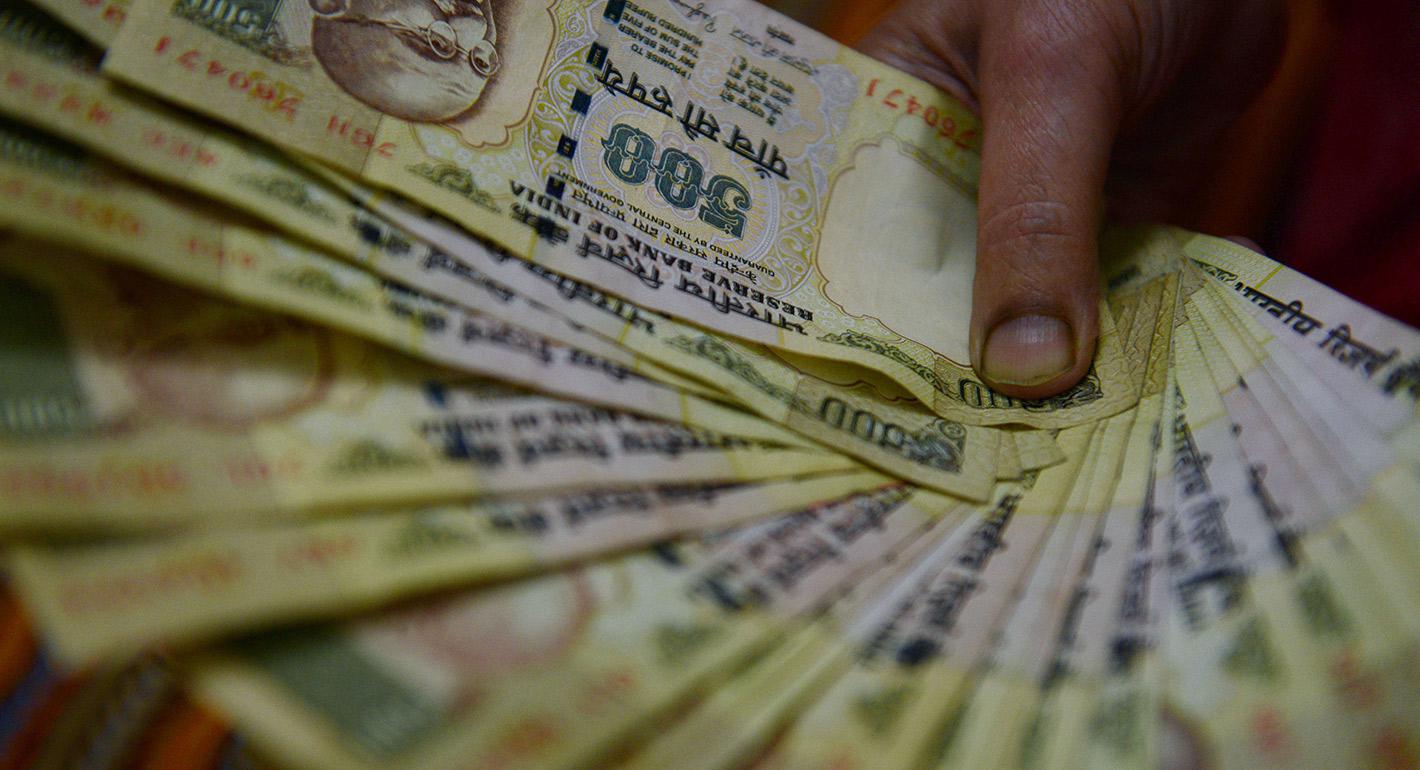
As India’s economy recovers from the coronavirus pandemic, Indian businesses need efficient financial structures to regain their ground. Key reforms to India’s Insolvency and Bankruptcy Code could fill these gaps.

Anirudh Burman

Access to cross-border data is an integral piece of the law enforcement puzzle. India is well placed to lead the discussions on international data agreements subject to undertaking necessary surveillance reforms.
Smriti Parsheera, Prateek Jha
After the coronavirus pandemic wanes, how will China’s reorientation of the Belt and Road Initiative to address global health concerns influence its relationships with South Asian countries?

Deep Pal, Rahul Bhatia
Early in the outbreak, government researchers forecast several high-risk scenarios that were downplayed or ignored in public messaging.
Gautam I. Menon