

Commentary
Dmitri Trenin
Source: Getty
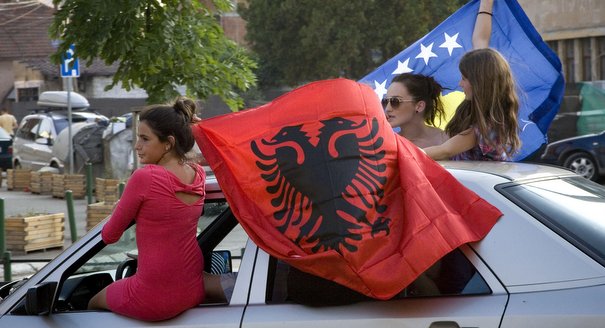
The Hague ruling on Kosovo's independence indirectly strengthens the position of other self-proclaimed states—from Abkhazia and South Ossetia, to Nagorno-Karabakh and North Cyprus. However, legal rulings do not negate the need to find a political solution.
The International Court of Justice in The Hague has handed down its judgment: no one can stop a territory from declaring independence. However, this ruling does not make the self-proclaimed Republic of Kosovo, recognized by almost 70 countries, legal. The old conflict between the inviolability of borders and nations’ right to self-determination remains alive and well.
The ruling in effect supports the position of Pristina rather than Belgrade, and both capitals are well aware of this. Indirectly, The Hague ruling also strengthens the position of other self-proclaimed states—from Abkhazia and South Ossetia, to Nagorno-Karabakh and North Cyprus. The argument that Kosovo was a unique case, vigorously advanced by Western countries, is looking increasingly vulnerable.
But legal reasoning does not negate the need to find a political solution. In Kosovo’s case, it is obvious that the Kosovars cannot be persuaded to remain within the fold of a Serbian state. The reverse is also true: preserving the Serbian enclave in the north of Kosovo does not make the new state any more stable. Granting the northern districts the right to self-determination and at the same time guaranteeing access to Serbian holy places in other parts of the small country could be the price of a compromise between Belgrade and Pristina.
A similar model could be applied to Abkhazia. Like the Serbs and Kosovars, the Georgians and Abkhazians have a hard time living within a single country. Abkhazia is unlikely to voluntarily return to Georgia, but as part of a settlement deal with Tbilisi, it could give up the Gali district, which is home to tens of thousands of Georgians. An agreement would need to be reached at the same time on the Inguri hydropower station, which supplies the republic’s electricity.
Unlike coastal Abkhazia with its great tourism potential, South Ossetia looks unlikely to be viable as an independent state. But at the same time, if a return to Georgia might have been perfectly realistic before 2004, it is hard to imagine now. A merger with North Ossetia― in other words, joining the Russian Federation―would have negative consequences, above all for Russia itself. The solution here could be the “Andorra model” in which South Ossetia 1) remains a separate political entity with all of the distinguished attributes, 2) restores political links with Georgia, whose authorities gain partial sovereignty over the territory, which Georgia considers its own, thus strengthening the country’s military security, and 3) acquires recognized protection from Russia, which remains as guarantor of the Ossetian people’s security. At the same time, South Ossetia’s borders would be adjusted to put Georgian villages inside Georgian territory insofar as possible, while preserving a compact South Ossetian territory.
The solution in the Transniester case seems to be taking the form of a federal system within Moldova with sufficient guarantees to replace the symbolic Russian force in the region with an international police force, with Russia and Ukraine both taking part.
Finally, there is the most complicated case of all, that of Nagorno-Karabakh. This case could be settled by diplomatic means, and probably only on the basis of an exchange of territories. The only alternative to diplomacy here is war, which would cause countless new misfortunes and bring no definitive settlement.
Before addressing all of these issues, however, the international community will first have to tackle the problem of Sudan, whose southern provinces intend to declare independence in 2011, regardless of what the International Court of Justice says.
Former Director, Carnegie Moscow Center
Trenin was director of the Carnegie Moscow Center from 2008 to early 2022.
Recent Work
Dmitri Trenin
Dmitri Trenin
Carnegie India does not take institutional positions on public policy issues; the views represented herein are those of the author(s) and do not necessarily reflect the views of Carnegie, its staff, or its trustees.

This piece argues that India’s central challenge is not managing a single flashpoint but resolving the underlying tension between expansion and institutional coherency of the BRICS grouping.

Vrinda Sahai
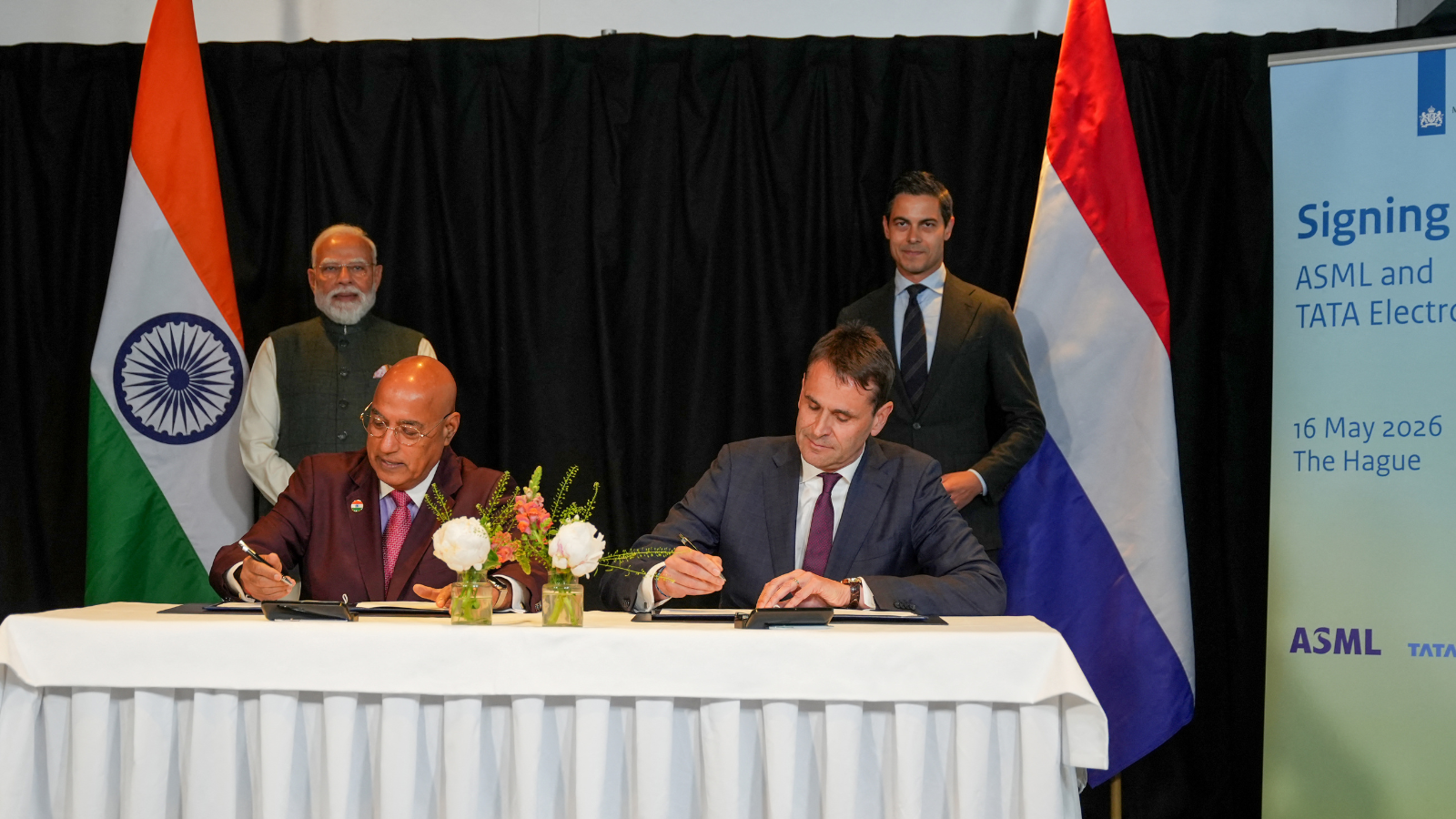
The ASML MoU with Tata Electronics is an indicator of how far the Indian semiconductor ecosystem has come. This ecosystem has been years in the making and represents real commercial logic.

Konark Bhandari

The India–EU Free Trade Agreement (FTA) is shaping up to be one of the most consequential trade negotiations, both economically and strategically. But, what’s in the agreement, what’s missing, and what will determine its success in the years ahead
Vrinda Sahai, Nicolas Köhler-Suzuki
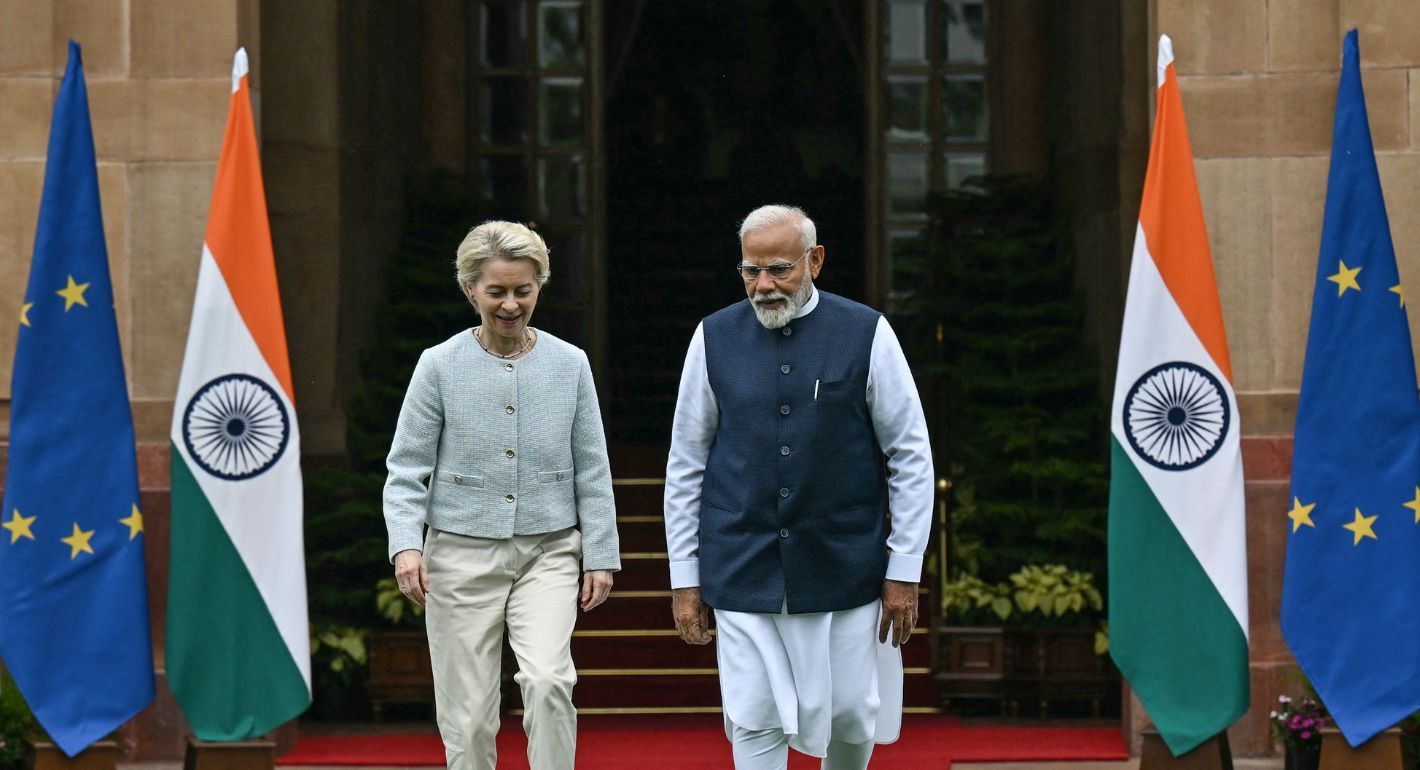
This article argues that the geopolitical circumstances have never been more conducive, not merely for the early conclusion of the free trade agreement (FTA) between India and the EU, but also for crafting a substantive and comprehensive strategic partnership.
Mohan Kumar
The war in Ukraine has demonstrated that India needs to establish a strong domestic space economy in order to weather geopolitical storms.
Konark Bhandari