

Q&A
- +1
Sheena Chestnut Greitens, Oriana Skylar Mastro, Yukon Huang, …
Source: Getty
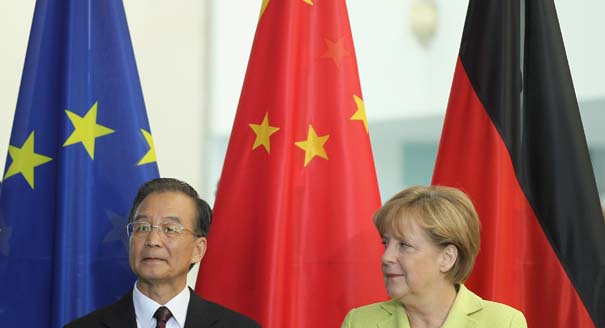
As China’s largest trading partner, the European Union can play an important role in ensuring that competing interests don’t exacerbate tensions—instead, shared interests should strengthen Europe’s relations with China.
China recently surpassed Japan to become the second largest economy and is now the world’s assembly plant. Its share of trade to GDP surged from 10 percent in 1979 to over 70 percent today. The country’s continued development will have implications for the world, but China faces tough challenges in lifting millions more out of poverty. As China’s largest trading partner, the European Union can play an important role in ensuring that competing interests don’t exacerbate tensions—instead, shared interests should strengthen Europe’s relations with China.
China’s rise—and that of Asia more generally—has created a triangular power relationship between North America, Europe, and Asia. But China is unique because it produces goods at both ends of the technology spectrum—it has more poor than all of Africa and a middle class larger than any nation in the Organisation for Economic Co-operation and Development. In debates between the developed and the developing world, Beijing often finds itself straddling the interests of many but not fully aligned with either side.
While the West increasingly sees China as a global economic leader, China still sees itself as having a per capita income one tenth that of richer developed countries. The former shapes perspectives outside of China, but the latter drives policies within China.
China’s policies are dominated by the desire to sustain the rapid growth needed to bring two hundred million poor into the modern economy. This singular objective puts pressure on commodity markets, drives efforts to increase exports, and puts pressures on environmental safeguards. And it feeds tensions in global politics and often puts China at odds with Western interests. Yet China’s sheer size is changing the rules of globalization and is the critical country for a prosperous international economy. This is apparent from the impact China’s stimulus package is having on the revival of global growth.
There are four key challenges that China faces as it tries to maintain high levels of growth and all of them are relevant to Europe. Foremost, Beijing is concerned about the vulnerabilities in the global economy and the possibility that adverse implications will curtail the country’s development. Second, the country must deal with the sustainability of its growth. Rising income inequalities threaten social stability and environmental degradation could negate future improvements in living standards. Third, China needs to address its trade imbalances as the issue is both a political liability and it distorts domestic objectives. And fourth, China finds itself unavoidably drawn into contentious issues, for which neutrality is no longer possible, despite lingering reluctance to engage in the global political arena.
Europe must look for opportunities to work with China on these issues in ways that do not exacerbate tensions but actually strengthen partnerships. This is possible if Europe favors approaches that reflect shared interests over competing ones. EU-China goals will not always be in harmony, but differences can be narrowed and there are ways for Europe to engage China on each of its four objectives.
First, China’s growth aspirations are driven by the desire to escape the so-called “middle-income trap” and the key lies in developing a knowledge or technology-based economy. This means that efforts by Western technology companies to deepen their presence in China will inevitably conflict with Beijing’s desire to promote its own technology. In other areas, however, Western interests are more in line with China’s and there are possibilities for cooperation. This is seen by the relentless sales of mass consumption items in foreign outlets and the near total dominance by European products at high-end shopping malls.
Second, environmental sustainability is a mutual concern and the potential for collaboration is vast as China is aggressively developing green technologies. Beijing is making more and more difficult decisions as evidenced by recent actions to close small industrial firms producing heavy pollution and its investment of $38 billion in renewable energy initiatives last year. China, however, has failed to use pricing incentives, enforce existing regulations designed to improve energy efficiency, and adequately improve urban transportation. In providing viable alternatives and establishing joint ventures, Europe—even more than the United States—can help to improve China’s policies.
Third, Europe is likely to become as aggressive as the United States is in pressuring China to reduce its large trade surpluses. The singular attention to China’s exchange rate, however, is not helpful—in part because a major adjustment will not do the trick by itself. Encouraging China to establish a healthier balance between consumption and investment would be more productive as this is a shared interest of both sides. More attention to promoting urbanization and developing the service industry offers a path to constructive engagement.
And finally, China’s economic objectives dominate its global strategy, but a growing self-confidence will encourage elements within its political and security apparatus to become more aggressive in protecting the country’s core interests. Europe should encourage China to become a responsible stakeholder in the global community and emphasize that it’s more productive to manage—rather than trying to compete—shared interests on transnational issues.
Overall, while there are areas where tensions will inevitably escalate, there are even more possibilities to work together on issues that are important to both China and Europe. If Europe devotes enough attention to these shared interests, it can play a role in China’s future development that rivals that of the United States.

Senior Fellow, Asia Program
Huang is a senior fellow in the Carnegie Asia Program where his research focuses on China’s economy and its regional and global impact.
Recent Work


Sheena Chestnut Greitens, Oriana Skylar Mastro, Yukon Huang, …


Yukon Huang, Isaac B. Kardon, Matt Sheehan
Carnegie India does not take institutional positions on public policy issues; the views represented herein are those of the author(s) and do not necessarily reflect the views of Carnegie, its staff, or its trustees.

After the chill in ties between 2020 and 2024 that brought India–China relations to their lowest point in several decades, the two countries have engaged each other afresh. This paper argues that there are predominantly four imperatives guiding India’s approach to China, and they exist in an order of priority.

Saheb Singh Chadha

This piece argues that India’s central challenge is not managing a single flashpoint but resolving the underlying tension between expansion and institutional coherency of the BRICS grouping.

Vrinda Sahai
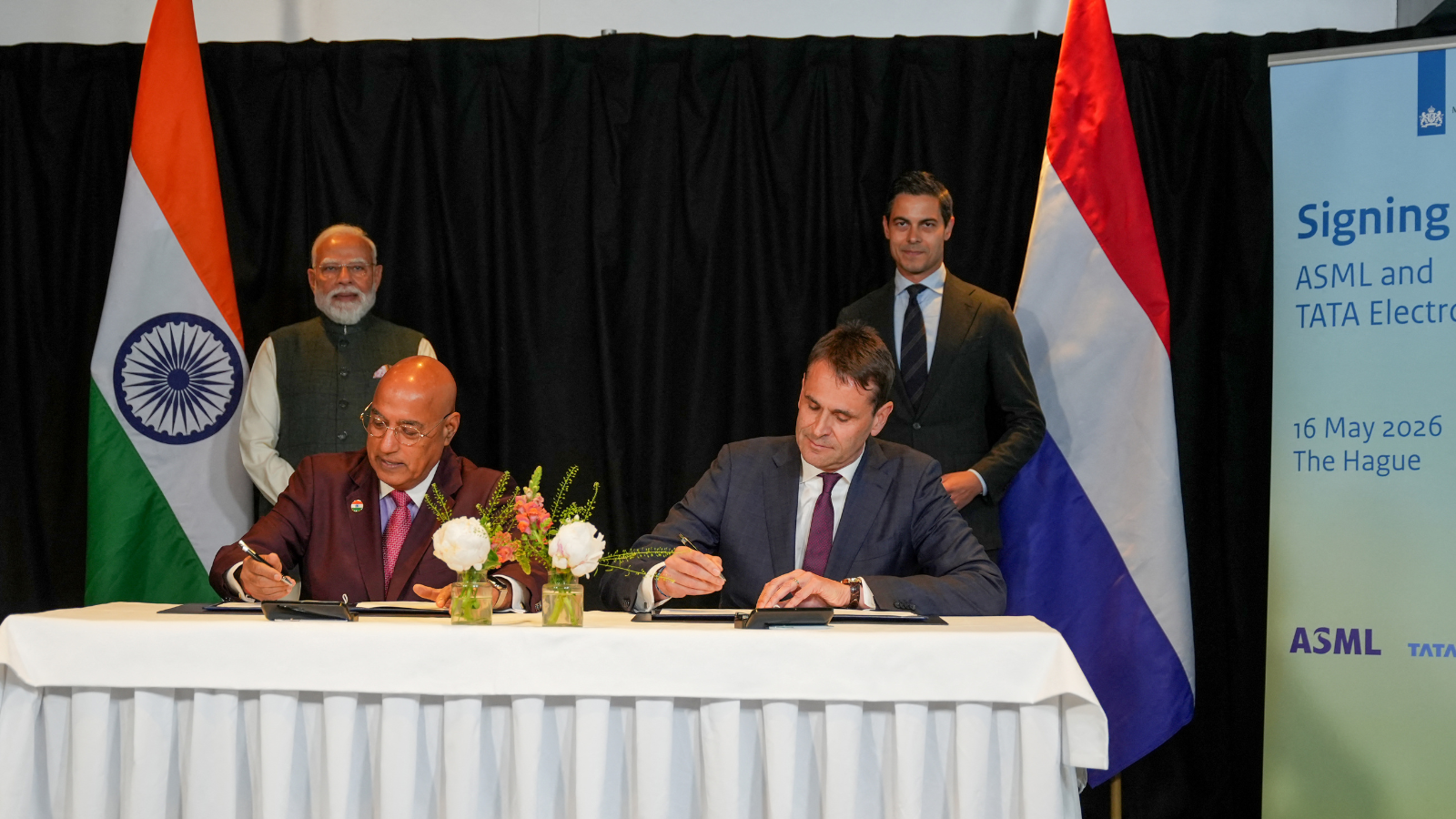
The ASML MoU with Tata Electronics is an indicator of how far the Indian semiconductor ecosystem has come. This ecosystem has been years in the making and represents real commercial logic.

Konark Bhandari

A partnership between India, a country of subcontinental size, and Africa, a continent of fifty-four countries, may seem asymmetric until one notes that both are home to nearly the same number of people—1.4 billion. This essay spells out the existing challenges to the partnership, its optimal potential, and the possible pathways to realize it over the next quarter-century.

Rajiv Bhatia

The India–EU Free Trade Agreement (FTA) is shaping up to be one of the most consequential trade negotiations, both economically and strategically. But, what’s in the agreement, what’s missing, and what will determine its success in the years ahead
Vrinda Sahai, Nicolas Köhler-Suzuki