Among the intriguing scenes playing out in the lead-up to the November 28 parliamentary elections has been the throngs of would-be candidates vying for nominations from the ruling National Democratic Party (NDP). More than 3,000 members have reportedly expressed interest in the 444 seats open to both genders, a ratio of more than six to one. The 64 women’s seats are even more hotly contested, with some 1,000 women reportedly applying—fifteen for every seat.
The party was due to unveil its selections in the coming days, but has put off the announcement several times—likely a sign of the difficulties of concluding the process. The party also pushed back its annual convention, when it was expected to announce its parliamentary candidates and platform, from November 8-10 to December 25-26. Party leaders are apparently concerned that those passed over for nomination will use the convention to criticize the party.
Why do so many members want to run as NDP candidates, if the party is as unpopular as some observers say it is? What does this vigorous, even unruly internal competition portend for the party and for the future parliament? Will the NDP avoid a repeat of 2000 and 2005, when hundreds of its members ran—and won—as independents against NDP candidates? And, if this occurs again, why can’t the NDP impose internal discipline?
The NDP Selection Process
NDP candidates seem to apply in such large numbers for personal and political reasons, as well as procedural ones. On a personal level, parliamentary membership conveys significant prestige and presents an opportunity to make contacts that might be useful in business or professional advancement. This is especially true if one is a member of the NDP, with its direct affiliation with the presidency. If a potential MP is interested in obtaining services or other benefits for his or her constituents, membership in the ruling party (as opposed to the opposition) also offers advantages.
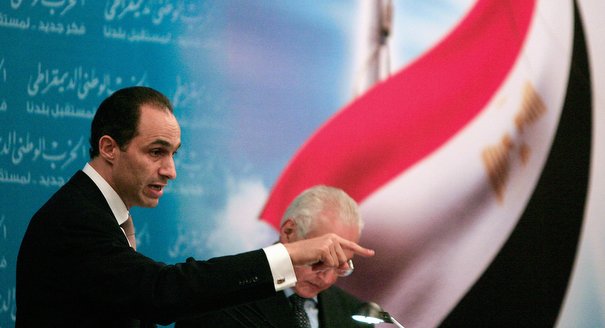
On the procedural level, the process initiated by Organizational Affairs Secretary Ahmad Ezz in recent years to build a broad network of support for Gamal Mubarak has likely created the impression that new opportunities for advancement exist within the party. Forces competing within the party include pro-security versus pro-business elements, as well as representatives of well-known families that have long sought positions within the NDP versus the young or mid-career technocrats who joined the party recently.
The efforts by Gamal Mubarak, Ezz, and others to make the NDP look and function more like a political party and less like a patronage distribution network also have complicated the selection of parliamentary candidates. The NDP now has a rather impenetrable three-tier process that begins with primary elections in which approximately 2.5 million members are eligible to vote. Unlike primary elections in other countries, however, these votes do not actually determine which candidates will run on the party’s ticket. Primary results are combined with NDP polling data for a second stage of consideration, and then submitted to the party leadership for the final—and probably the only meaningful—decision.
So, although the party is far more modern and bureaucratic in its operations now than in the past, one wonders whether the end result will really reflect a more open and transparent competition within the NDP. How different will the results be from past years, when party bosses Yusuf Wali, Safwat Sharif, and Kamal al-Shazli simply made their selections to balance the different constituencies represented within the NDP, including state bureaucrats, pro-security elements, representatives of prominent families (especially in rural areas), and business people?
With all of the maneuvering within the NDP, it is unclear whether the party can move beyond the embarrassment of the 2000 and 2005 elections, when it was beaten by its own renegade members and forced to integrate them back into the party to achieve the desired two-thirds parliamentary majority. In 2000, only 145 NDP party candidates won seats, compared to the 166 members who quit the party to run as independents, defeated the NDP candidates, then rejoined. In 2005, the same scene was repeated, with 170 NDP candidates winning versus 218 independents, all of whom rejoined the party.
Party leaders have recently signaled their determination to pre-empt the possibility of parliamentary bids by renegade members by trying to extract pledges from them in advance that they will not run as independents if the party does not nominate them. Leaders even hinted that they will find ways to block these types of candidacies, although it is unclear whether they can put this into practice.
The Challenge of Independent Candidates
The issue of independent candidates has many implications for the NDP. First, it indicates a serious failure of cohesion and discipline within the party. Despite repeated threats that they will not be taken back, members feel free to quit, run against the NDP, and rejoin the party later. Additionally, many of those independents also clearly draw support from certain NDP leaders who were displeased with the party’s selection of candidates.
Second, it suggests that either the NDP leadership does not really know who is electable or, perhaps more accurately, that electability is not a major consideration in candidate selection and that loyalty to a certain faction within the party might be much more important. Third, the phenomenon of independents further damages the party’s image in the eyes of many Egyptians. In several cases in 2000 and 2005, the competition between NDP candidates and independents resulted in ugly media campaigns or vicious conflicts at the local level, adding to widespread doubts about the party.
The presence of renegade NDP members elected to the People’s Assembly in 2005 also had at least one important effect on the party’s political reform agenda. The policy secretariat tried to change the electoral system to return Egypt to a party list system or to a type of mixed system where most members of parliament were elected by party list but a smaller number of seats were open to independents. The initiative was clearly an effort to shut out the Muslim Brotherhood, which runs candidates as independents, as well as to impose discipline within the NDP.
But renegade NDP members elected as independents made clear they would not support the measure in parliament—probably because they had little trust that NDP leaders would nominate them in future elections. Thus, an initiative by the NDP—or at least by a certain faction within it—to strengthen political parties failed due to weakness within the party itself.
Clearly the project of turning the NDP into a true political party—rather than a very large group of people seeking to hitch their individual wagons to the president’s star—is still a work in progress. This month’s parliamentary elections—both the outcome of competition between NDP candidates and independents, and the leadership’s handling of renegade members afterward—will show how much the party has progressed, if at all, since 2005.