

Commentary
Nathan J. Brown
Source: Getty
The deep and broad popular consensus to maintain the Jordanian monarchy is based less on the people's loyalty to Hashimites and more on their suspicions of each other.
“For though he was master of the world, he was not quite sure what to do next. But he would think of something.”
—Arthur C. Clarke, 2001: A Space Odyssey
It is difficult to overstate either the depth of political despair that afflicted many Arab societies before the Egyptian revolution or the sense since President Hosni Mubarak’s forced resignation that the world has changed in some fundamental and positive—even exhilarating—ways. On a recent trip I spoke to Jordanians and Palestinians across the political spectrum and across generations and found excitement that was broad and deep but still tinged with realism. Nobody was blind to the sharply limited nature thus far of structural change in Egypt, nor was anyone under the illusion that all obstacles to political change in the region have suddenly disintegrated.
Eventually there will, of course, be many who will be disappointed and disillusioned; prosaic politics, with all its frustrations, compromises, and venalities, will return. But for now, the metaphors favored in everyday conversation about politics (and most everyday conversations—even those I overheard in restaurants, coffee shops, and on the streets—are currently about nothing but politics) draw on dramatic images: awakening from slumber; dawning of a new day; or the entry of the people as actors in making their own futures.
While some of the optimism is infectious, it cannot supplant the need for clear thinking about the future. I hope it does not seem churlish to be more restrained about the possibilities than the inspirational images offered by many observers in the region. I make no claim to a comprehensive analysis in these essays. Instead, I offer a collection of observations about three particular areas I was able to probe on my trip: Jordanian politics; Islamist movements; and Palestinian politics.
In all three areas, significant change is possible. And while revolutionary change seems unlikely, it cannot be ruled out. For the first time in many years, the forces of change are strong and will likely create effects difficult to foresee. For now, the idea that the future may not be precisely like the past and that politics is no longer futile is oxygen enough for many in the region.
Jordan’s political system will likely weather the current storm, but it is finally clear that there is a storm within the country. The regime’s reaction thus far has been at best uncertain.1
The profound political gulf between rulers and the societies they govern, characteristic of many Arab states, has come into sharp relief in Jordan. Economic grievances—that the state fails to provide for its citizens and that its policies are more responsive to the interests of powerful individuals than the society they are supposed to serve—blend easily into political grievances about the lack of accountability and the deafness of power holders to popular needs. In confronting these complaints (which are not wholly new), the regime no longer has a clear constituency: East Bank Jordanians who resent the Palestinian majority and previously more dependable tribal leaders—who have felt a strong bond with the monarchy—now complain as loudly as groups who have long been less loyal to the system. (The recent decision of some tribal leaders to express their grievances to a New York Times reporter caused particular discomfort for a monarchy accustomed to favorable foreign press.)
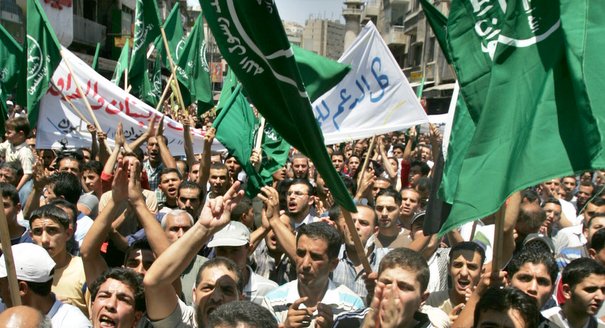
Many of the complaints center on corruption. It is difficult on a superficial visit to assess the validity of these claims but it is even harder to ignore their frequency and volume. Of course, the written record does not always reflect the depth of dissatisfaction in a direct way. Amman is now festooned with banners proclaiming the loyalty of specific tribes to the Hashimites and the newspapers are filled with advertisements carrying a similar message. What is good business for the newspaper industry signals bad news for the monarchy, however. The advertisements and banners clearly protest too much. In any personal conversation—even in a public location—talk of corruption and alienation is routine.
And the criticism is startlingly personal. The circle around the king and the king himself are hardly immune from disapproval; indeed, they are routinely reported to be not simply tolerant of corruption but deeply complicit in it. It is common to hear Jordanians say they do not wish to abolish the monarchy while pointedly (and often explicitly) failing to express the same feeling about the current occupant of the throne.
But if there is an air of crisis, there is little hint of revolution. The regime has three assets that the Egyptian regime either never had or squandered when it did.
First, the basic political structures of the system have been warped, but not beyond repair. In the 2000s, the Egyptian regime shut any liberalizing opening in the political system and was remarkably shameless both in the way it wrote rules and the rapidity with which it broke them. The Jordanian regime can be harsh but it does not display the daily thuggishness of its late Egyptian cousin; the political system has never run on the astounding sycophancy that slowly twisted far too many talented but ambitious Egyptians into unprincipled hacks.
In Jordan, those who serve the regime have to hold their tongues but they are not asked to sell their souls. Establishment press is restrained and staid but it is not Orwellian. Elections have been manipulated and the parliament marginalized, but the Jordanian regime has known shame or at least shown it recognizes there are limits. Thus the demands of the opposition are not to wipe the system aside and change it but to revive and reform it. For instance, electoral law reform is very much the subject of continuous discussion.
Second, while the top figures in the regime are isolated and aloof, they are not as impervious as the Egyptian leadership proved in Mubarak’s final days. While the response to the dissatisfaction has been neither consistent nor effective, it has not been meaningless. In recent days, the king has allowed a new government to form that, while hardly containing fresh faces, has offered up different policies. It has quickly turned against some of the neoliberal economic policies of the previous government (though it is hardly clear whether Jordan’s economic future is best secured by a return to a more protective past). And the new prime minister has at least offered some significant political reforms, most notably promising to amend the law of public assembly and (remarkably) to allow teachers to form a union. (Since a teacher’s union is expected to be a very fruitful recruiting ground for Islamists, it seems unlikely that the latter pledge will be honored.)
Third, as deeply as Jordanians are alienated from their rulers, they are just as deeply fearful of each other. In a society in which citizens cannot choose a soccer team to support without betraying their origin (East Bank Jordanians versus Palestinians) and all too often coming to blows, any political change is evaluated on Jordanian-Palestinian lines. A common platform of political reform is difficult to develop in such a context. While Egyptians shouted “Leave!” and “Get out!” to their president, Jordanians are far more likely to fear what would come next if their king abdicated. An Islamist firebrand told me directly that he is now pulling his rhetorical punches because he does not want to create another Lebanon.
A truly democratic electoral system and a cabinet that was selected by a parliamentary majority, for instance, would deliver the kingdom into Palestinian hands. Jordanians who wish to move in such a direction—and they are now numerous—recognize that they have to step carefully. In such a context, the deep and broad consensus to maintain the monarchy is easy to explain: it is based less on Jordanians’ loyalty to Hashimites and more on their suspicions of each other.
The writer has just returned from a trip to Jordan and Palestine. This is the first in a three-part commentary reflecting on the political realities he observed while in the region. Read Nathan J. Brown's analysis of the situation in Palestine and of Islamist movements in the wake of the unrest in the region.
1 For recent background on the Jordanian political (and economic) crisis, see Laurie A. Brand, “Why Jordan Isn’t Tunisia,” and Sean L. Yom, “Don’t Forget About Jordan,” both on Foreign Policy’s Middle East Channel.

Nonresident Senior Fellow, Middle East Program
Nathan J. Brown, a professor of political science and international affairs at George Washington University, is a distinguished scholar and author of nine books on Arab politics and governance, as well as editor of five books.
Recent Work
Nathan J. Brown
Nathan J. Brown
Carnegie India does not take institutional positions on public policy issues; the views represented herein are those of the author(s) and do not necessarily reflect the views of Carnegie, its staff, or its trustees.
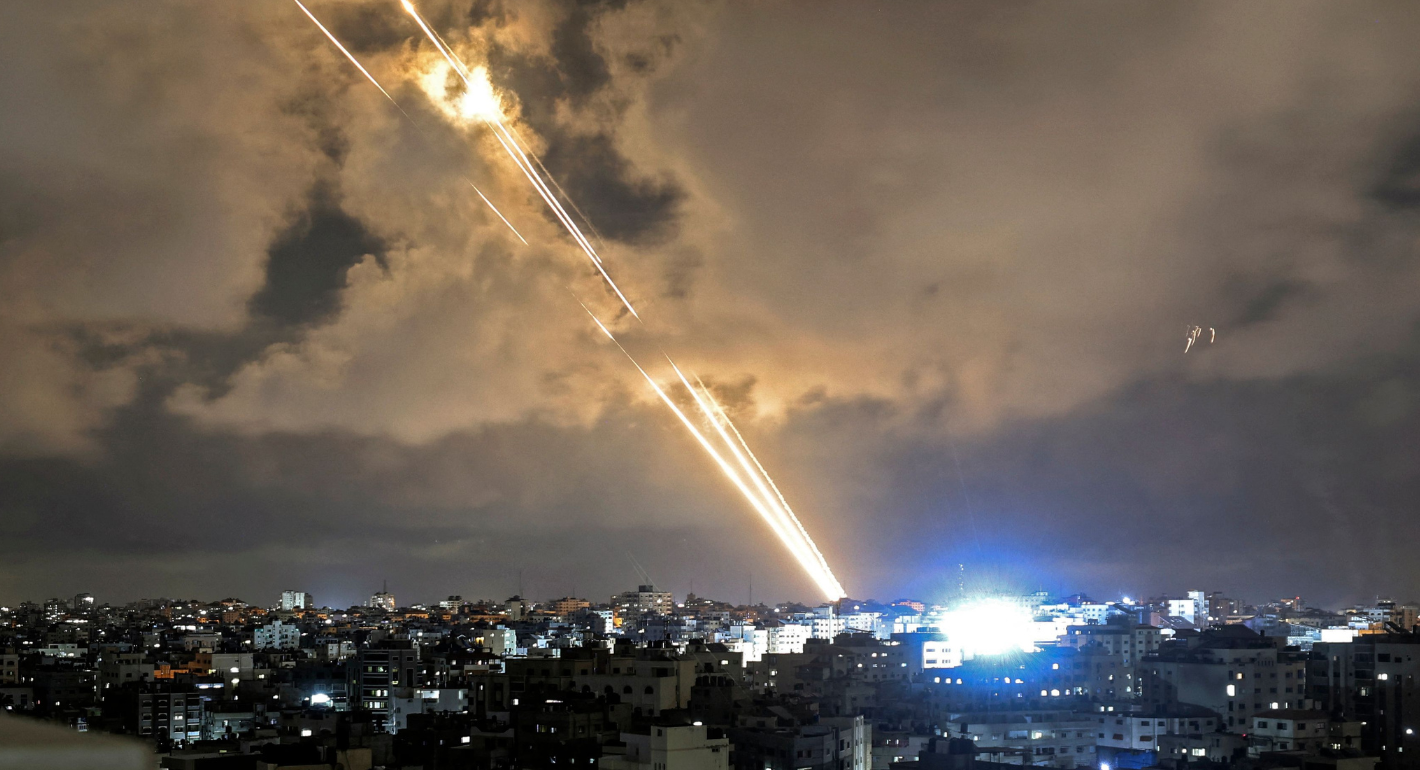
An Israeli response to Iran’s October 1 attack is imminent. The key question is of its intensity and potential fallout, both within Iran, in terms of nuclear security policy changes, and across the broader region. The coming days are likely to reshape West Asia irreversibly.

Gaddam Dharmendra

As India’s economy recovers from the coronavirus pandemic, Indian businesses need efficient financial structures to regain their ground. Key reforms to India’s Insolvency and Bankruptcy Code could fill these gaps.

Anirudh Burman

Access to cross-border data is an integral piece of the law enforcement puzzle. India is well placed to lead the discussions on international data agreements subject to undertaking necessary surveillance reforms.

Smriti Parsheera, Prateek Jha
After the coronavirus pandemic wanes, how will China’s reorientation of the Belt and Road Initiative to address global health concerns influence its relationships with South Asian countries?


Deep Pal, Rahul Bhatia
Early in the outbreak, government researchers forecast several high-risk scenarios that were downplayed or ignored in public messaging.
Gautam I. Menon