

Other
Michael D. Swaine
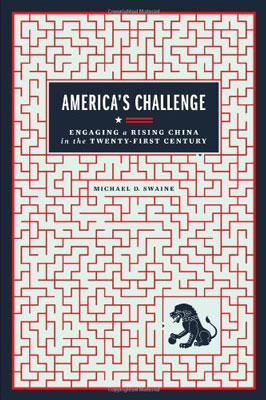
As the world’s predominant political, economic, and military force, the United States faces a significant challenge in responding to China’s rising power and influence, especially in Asia. This challenge will require more effective U.S. policies and a reassessment of America’s fundamental strategic assumptions and relationships.
Source: Washington
The emergence of China on the world scene constitutes the most significant event in world politics since the end of World War II. Given its size, location, dynamism, and unconventional approach to many global issues, a rapidly growing China will reshape the global distribution of power and major issues confronting the international community.
As the world’s predominant political, economic, and military force, the United States faces a significant challenge in responding to China’s rising power and influence, especially in Asia. This challenge will require more effective U.S. policies and a reassessment of America’s fundamental strategic assumptions and relationships.
Offering a fresh perspective on current and near-term U.S. policy toward China, Michael Swaine examines the basic beliefs behind U.S.-China relations, recent policy practices by both countries, and the future trends most likely to affect U.S. policy. American leaders, he concludes, must develop policies to sustain America’s economic and technological prowess and improve the U.S. strategic position. Otherwise, Washington will have a hard time maintaining a stabilizing presence in East Asia, shaping regional and Chinese strategic perceptions, and managing key policy issues.
"As Washington gropes for a new paradigm to structure this all-important bilateral relationship, diplomats, military strategists, and concerned citizens on both sides of the Pacific would do well to reflect carefully on Michael Swaine’s new treatise, which is a masterpiece that will set the standard in the field of policy analysis for decades to come.
"The fact that the book covers issues as disparate as naval strategy, trade negotiations, and energy cooperation—handling each of these complex topics and many others with admirable sophistication—is a tribute to the wide experience, intellectual depth, and solid research of the author. In this respect, the book is without peer."
— Lyle Goldstein, Naval War College
“China’s rise presents America with its biggest foreign policy challenge. This book comprehensively and deftly lays out the considerations relevant to wise policy formulation. Swaine offers analysis and recommendations in a manner that both informs and enlightens. It will be an invaluable resource for policymakers, concerned citizens, and students.”
— J. Stapleton Roy, former U.S. ambassador to China
“For the last two decades Michael Swaine has provided some of the most enlightening and accurate views of Chinese thought. Here he engineers a convincing logic of the need to reassess our strategy in the U.S.-China relationship. His recommendations lay the foundation for the necessary debate.”
— Joseph W. Prueher, former U.S. ambassador to China, former commander, U.S. Pacific Command, and James Schlesinger Distinguished Professor at the Miller Center, University of Virginia
“A significant and needed contribution to the literature on U.S.-China relations. Some conclusions are striking and will prove controversial.”
— Aaron L. Friedberg, Professor at Princeton University and former deputy assistant to the vice president for national security affairs
“Swaine’s comprehensive, intensively researched analysis of trends in U.S.-China relations and sophisticated judgments on the opportunities, pitfalls, and prospects for American China policy deserve wide attention.”
— Alice Miller, Research Fellow, Hoover Institution, Stanford University
“This book is unusually important—a ‘must-read’ by specialists who are concerned with U.S.-China relations.”
— Robert Sutter, Visiting Professor of Asian Studies at the School of Foreign Service, Georgetown University
“Swaine comprehensively reviews the U.S.-Chinese relationship, which he sees as marked by an awkward combination of suspicion and interdependence."
— Andrew J. Nathan, Foreign Affairs

Former Senior Fellow, Asia Program
Swaine was a senior fellow at the Carnegie Endowment for International Peace and one of the most prominent American analysts in Chinese security studies.
Recent Work
Michael D. Swaine
Michael D. Swaine
Carnegie India does not take institutional positions on public policy issues; the views represented herein are those of the author(s) and do not necessarily reflect the views of Carnegie, its staff, or its trustees.

How is AI reshaping space security, creating governance challenges, and where does international diplomacy stand today?


Tejas Bharadwaj, Almudena Azcárate Ortega

After the chill in ties between 2020 and 2024 that brought India–China relations to their lowest point in several decades, the two countries have engaged each other afresh. This paper argues that there are predominantly four imperatives guiding India’s approach to China, and they exist in an order of priority.

Saheb Singh Chadha

This piece argues that India’s central challenge is not managing a single flashpoint but resolving the underlying tension between expansion and institutional coherency of the BRICS grouping.

Vrinda Sahai

A partnership between India, a country of subcontinental size, and Africa, a continent of fifty-four countries, may seem asymmetric until one notes that both are home to nearly the same number of people—1.4 billion. This essay spells out the existing challenges to the partnership, its optimal potential, and the possible pathways to realize it over the next quarter-century.

Rajiv Bhatia

The U.S.–India semiconductor cooperation story is well-stocked with top-level strategic intent. What remains unresolved, however, are some underlying challenges that will determine whether the cooperation actually functions. Three such friction points stand out.

Shruti Mittal