

Commentary
Alexey Malashenko
Source: Getty
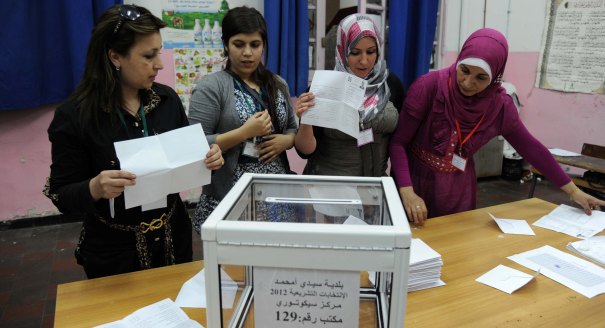
The Islamists’ defeat in Algeria’s recent parliamentary elections is a product of the pragmatism of the ruling Algerian elite and shows that the regime is sensitive to society’s demands. The results are likely an exception to the trend of rising Islamist influence in the Arab world.
The Islamists suffered a resounding defeat in Algeria’s recent parliamentary elections, but the result is not necessarily indicative of broader trends in the Arab world. The Islamist Green Algeria Alliance, made up of three political parties—the Movement of Society for Peace, the Movement for National Reform (Islah), and the Islamic Renaissance Movement (Ennahda)—won only 48 out of 462 seats in parliament in the May 10 elections. Meanwhile, the ruling National Liberation Front, with its secular platform, won 220 seats, and its ally, the Democratic National Rally, took 68 seats.
Many had predicted success for the Green Alliance. So why did political Islam’s march suddenly come to a halt, and what does the alliance’s failure say about the Islamist trend in the region?
Key to understanding this outcome is remembering that the Islamists have already won an election in Algeria—and that ended badly. In 1991, the Islamic Salvation Front won the first round of parliamentary elections, and the secular authorities, shaken by the turn of events, cancelled the second round and declared emergency law. The country sank into a civil war that continued until 2002 and killed as many as 200,000 people.The Islamists were ruthless in their dealings with both their opponents and the civilian population. Having tasted the religious radicals’ ferocity once, society does not want to put power in their hands now.
In addition, Algeria is not a “president-for-life,” authoritarian, family-dominated regime. That model is typical of the majority of the Arab states, and those kinds of regimes have transformed many other countries into their “private property.” But the Algerian establishment has always been relatively pluralistic, flexible, and sensitive to society’s needs. During the Arab Spring, the authorities lowered food prices and upped the pace of housing construction to ease the social tension that had been on the rise—especially at the start of 2011. This perhaps helped Algeria avoid cataclysms of the type that befell its neighbors. The regime, headed since 1999 by President Abdelaziz Bouteflika, an experienced politician, is always a step ahead of events and has been winning so far.
The Islamists say they lost the election because the authorities used state administrative resources to get the upper hand. It is telling though that they did not succeed in organizing mass protests against the election results.
The idea sometimes put forward that secular nationalism is what preserves Algeria from the “Islamist menace” is very debatable. Islamism and nationalism exist in parallel. It is worth remembering that Algeria’s liberation movement against France’s rule was referred to as a jihad, and even the cheap cigarettes subsequently distributed to Algerian soldiers were dubbed “mujahideen.”
What is saving Algeria is not secular nationalism, but the pragmatism and moderate appetites of its ruling elite, which could provide an example some post-Soviet regimes in Central Asia—and elsewhere—would do well to study.
It is, however, still too early to draw any general conclusions for the Arab world from Algeria’s election. Seen against the general rise in Islamist influence, the success of Algeria’s secular parties looks like an exception. A strengthening of political Islam’s position following the Arab Spring looks to be the dominant trend. And that trend is likely to continue going forward.
At the same time, though, the Arab community is increasingly wary of Islamic radicals, and resistance to them will increase. The outcome of the Egyptian presidential election (occurring at the time of writing), specifically the share of votes the Islamist candidates receive, will provide a clearer picture of the respective strength of the Islamists and their opponents in the region. It will offer a glimpse into the path Arab countries and the Muslim world in general will follow.

Former Scholar in Residence, Religion, Society, and Security Program
Malashenko is a former chair of the Carnegie Moscow Center’s Religion, Society, and Security Program.
Recent Work
Alexey Malashenko
Alexey Malashenko
Carnegie India does not take institutional positions on public policy issues; the views represented herein are those of the author(s) and do not necessarily reflect the views of Carnegie, its staff, or its trustees.

As India’s economy recovers from the coronavirus pandemic, Indian businesses need efficient financial structures to regain their ground. Key reforms to India’s Insolvency and Bankruptcy Code could fill these gaps.

Anirudh Burman

Access to cross-border data is an integral piece of the law enforcement puzzle. India is well placed to lead the discussions on international data agreements subject to undertaking necessary surveillance reforms.

Smriti Parsheera, Prateek Jha
After the coronavirus pandemic wanes, how will China’s reorientation of the Belt and Road Initiative to address global health concerns influence its relationships with South Asian countries?

Deep Pal, Rahul Bhatia
Early in the outbreak, government researchers forecast several high-risk scenarios that were downplayed or ignored in public messaging.
Gautam I. Menon
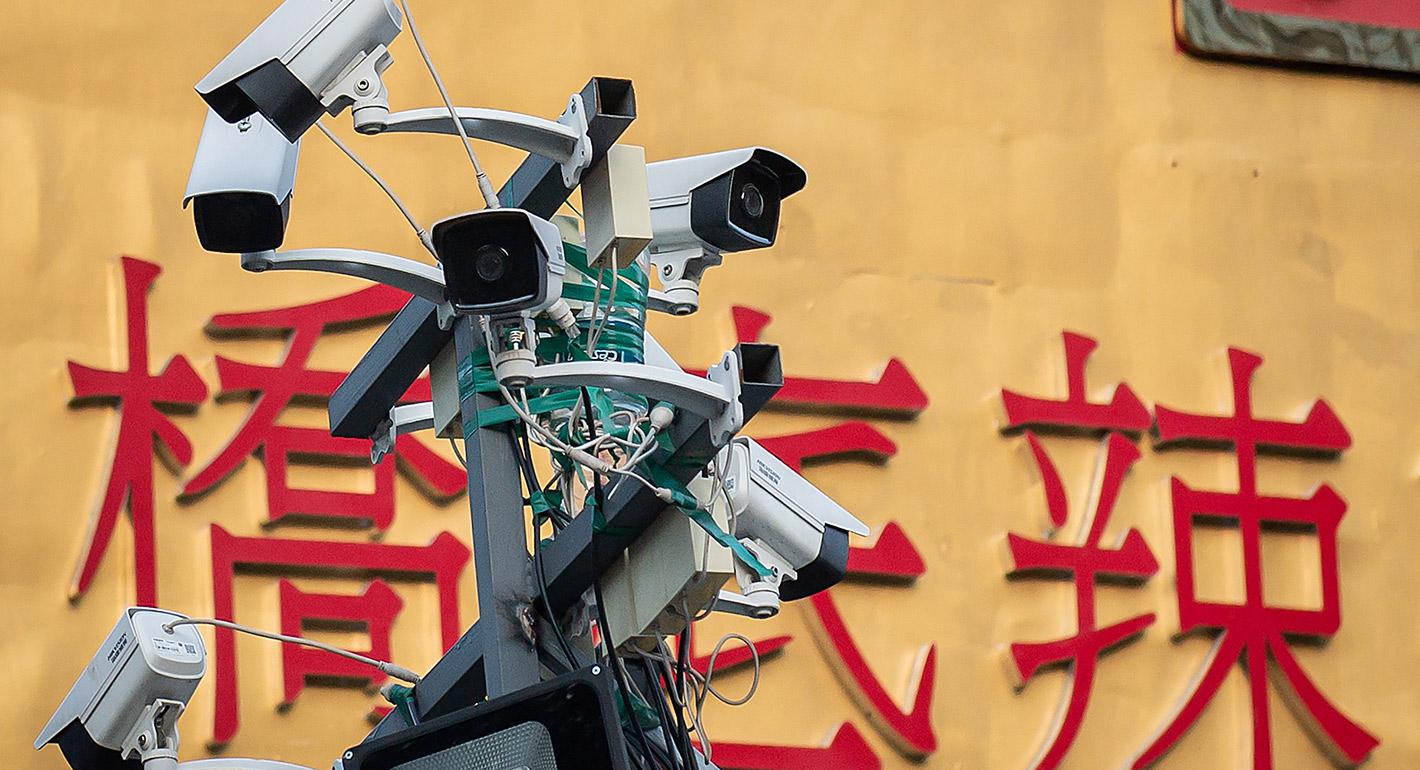
Governments around the world are turning to new forms of digital surveillance to monitor the spread of the coronavirus, though they are mostly using existing laws to do so.
Anirudh Burman