

Commentary
Dmitri Trenin
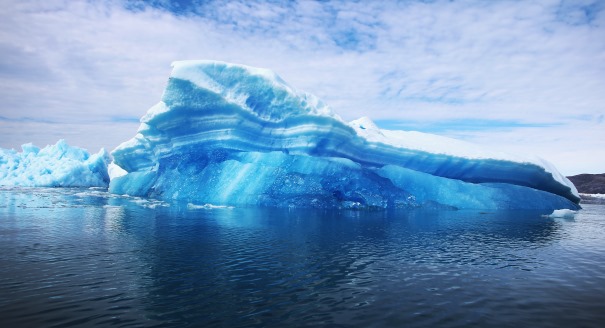
Source: Getty
An overview of the five most pressing issues in the Arctic reveals that a number of factors in the region may help mitigate and regulate competition and promote cooperation.
The Arctic is the most graphic example of climate change impacting geopolitics. A whole vast region, previously permanently icebound, is opening up for commercial navigation and energy exploration. The international community stands before a range of new opportunities, but it is also faced with a series of issues waiting to be resolved. The question now is whether these challenges will promote global cooperation or foster dangerous competition in the Arctic.
The key players in the region — the five littoral nations of Canada, Denmark, Norway, Russia, and the United States as well as the nearby states of Finland, Iceland, and Sweden — are attempting to navigate the new opportunities in the Arctic. But tensions among these stakeholders threatened to come to a head in 2007 when a team of Russian explorers planted a Russian flag on the Arctic seabed at the North Pole. This symbolic act spurred lingering competition among the littoral states, which have been backing their national claims in the Arctic by beefing up their assets in the region, including, for some, military forces.Yet despite the heightened competition, no new cold war has broken out. Rather, dialogue on differences and cooperation on issues of common concern have taken center stage.
And this situation may well be sustainable. An overview of the five most pressing issues in the region reveals that a number of factors in the Arctic — from the harshness of the climate to the location of the resources — may help mitigate and regulate competition and promote cooperation. If the key stakeholders can take advantage of this opportunity to organize international relations in the Arctic on the basis of cooperation and international law, they could in effect form a security community that has the potential to improve relations between all Arctic nations.
At this point, there are no active border disputes in the Arctic. In 1990, the Soviet Union and the United States signed an agreement on their boundary in the Bering Sea. While the Russian parliament has not ratified this agreement, it is being honored by both countries. In 2010, Russia and Norway split the difference in a forty-year-long dispute over their maritime borders in the Barents Sea, equally dividing an area that both countries had claimed.
All five littoral nations have exclusive economic zones that extend 200 nautical miles from their coastlines. In recent years, however, Canada, Denmark, and Russia have come up with claims that would expand the boundaries of their continental shelves, extending their current exclusive economic zones. Norway and the United States do not have such claims.
The procedure for studying and resolving these claims is regulated by the UN’s Commission on the Limits of the Continental Shelf. This procedure is meticulous and tedious, and it takes a lot of time before a decision is made. Where the rival claims intersect (and they do), the claimants will need to decide the boundaries among or between them. Only then will international recognition of those boundaries follow. All claimants have agreed to this procedure, and there is no reason to suppose that one of them would want to withdraw from it.
Expectations of an oil and gas bonanza in the Arctic have proved to be outsized and have been scaled down. The Arctic certainly does contain some oil and gas, but the harshness of the climate — global warming notwithstanding — makes the cost of exploiting these energy deposits very high.
The long saga of the Shtokman gas field in the Barents Sea is illustrative in this regard. Russia has been attempting to develop this giant gas field for years, but the logistical and financial challenges of accessing Shtokman’s energy resources have caused a series of delays. The emergence of shale gas and unconventional oil complicate the situation further by pushing down the price of natural gas.
The technological challenges of extracting oil and gas in the region have prompted Russia to collaborate with U.S. and European companies in its Arctic energy endeavors. In 2012, Russia’s state-owned Rosneft oil company struck a deal with ExxonMobil, a U.S. company, to begin joint Arctic exploration projects.
So, a scramble for resources in the Arctic is unlikely anytime soon, especially given that up to 90 percent of the known deposits lie well within the undisputed boundaries and are controlled by the littoral states.
As the polar ice cap recedes, seasonal navigation in the Arctic becomes more realistic. This development raises the issue of the legal status of straits along the Northern Sea Route, which runs along Russia’s Arctic coast, and in the Northwest Passage off Canada’s northern coast. Russia and Canada will press hard to protect their national interests with regard to these passages, but eventually the status of the Northern Sea Route and the Northwest Passage will have to be resolved through a legal process.
As Russia adjusts to the implications of the opening of its formerly securely frozen northern facade, it will have to get used to much more traffic along its northernmost shores. But Moscow will also learn to benefit from this change. Opening the Northern Sea Route for international navigation will require concomitant infrastructure creation, a major stimulus for developing Russia’s far north.
The Arctic has recently seen the rise of regional multilateralism. This trend has been represented by such fora as the Arctic Council, comprised of the eight Arctic nations as well as several observer states, and the Barents Euro-Arctic Council, a platform for intergovernmental cooperation in the region.
Russia has been an active participant in the councils’ deliberations, viewing these bodies as giving Moscow an equal say with the United States and other Western countries in the affairs of the region. At the same time, Russia has been seeking to protect the primacy of the interests of the five littoral states, firmly rejecting attempts to denote the Arctic as a global commons.
Indeed, multilateralism in the Arctic is not strictly equal, and there is a hierarchy of nations seeking to participate in the Arctic community. The region is open to all for navigation, but countries’ rights and privileges vary depending on whether they are littoral states and thus full members of the Arctic regime or outsiders that come to the region’s councils as observers. Countries like China, Japan, and India, all of which have expressed an interest in the Arctic, must cooperate with the region’s “inner circle” of littoral states and with the three others in the vicinity to be able, for example, to exploit the Arctic’s energy resources. And the nations in this inner circle are unlikely to allow this situation to be overturned.
The military importance of the Arctic has decreased significantly in the two decades since the end of the Cold War. However, the region is still very important to Russia, whose potent Northern Fleet is based off the northwestern Kola Peninsula. It is also important to the United States, which sees the Arctic as a potential sea and air approach to Russia’s strategic assets.
Moreover, the opening up of the Arctic raises strategic questions about protecting littoral states’ national sovereignty, economic interests, and sea-lanes. The harsh climate of the area makes military personnel indispensable for a range of missions, including search and rescue. Thus, a somewhat higher degree of regional military presence and an expanded military infrastructure are to be expected.
This expanded presence, however, does not constitute the militarization of the Arctic. Improving communication among the relevant military headquarters and increasing collaboration among the military forces themselves, including by means of joint exercises, will help emphasize this point.
If the Arctic nations continue to prioritize cooperation as they navigate these five key issues, diplomacy and the legal process stand a good chance of becoming the only accepted instruments for dealing with conflicts and differences among nation states in the region. This would turn the Arctic’s five littoral states and their three closest neighbors into a de facto security community. This development would be particularly important for Moscow, as it would have a major positive impact on relations between Russia and the seven other countries, which include the United States and several of its allies.
But this result is not a foregone conclusion. Relevant governments will need to work hard to enhance mutual trust through practical cooperation, cultivate the habit of solving differences through negotiations or arbitration, and empower regional multilateral institutions. They will also need to ensure high levels of transparency and candor in their dealings with one another.
These achievements will not be easy, especially given the current level of tension in Russian-Western relations. Yet they are not impossible, and the benefits of creating a cooperative, peaceful environment in the Arctic may be worth the difficulties.
Former Director, Carnegie Moscow Center
Trenin was director of the Carnegie Moscow Center from 2008 to early 2022.
Recent Work
Dmitri Trenin
Dmitri Trenin
Carnegie India does not take institutional positions on public policy issues; the views represented herein are those of the author(s) and do not necessarily reflect the views of Carnegie, its staff, or its trustees.

How is AI reshaping space security, creating governance challenges, and where does international diplomacy stand today?


Tejas Bharadwaj, Almudena Azcárate Ortega

After the chill in ties between 2020 and 2024 that brought India–China relations to their lowest point in several decades, the two countries have engaged each other afresh. This paper argues that there are predominantly four imperatives guiding India’s approach to China, and they exist in an order of priority.

Saheb Singh Chadha

This piece argues that India’s central challenge is not managing a single flashpoint but resolving the underlying tension between expansion and institutional coherency of the BRICS grouping.

Vrinda Sahai

A partnership between India, a country of subcontinental size, and Africa, a continent of fifty-four countries, may seem asymmetric until one notes that both are home to nearly the same number of people—1.4 billion. This essay spells out the existing challenges to the partnership, its optimal potential, and the possible pathways to realize it over the next quarter-century.

Rajiv Bhatia

The U.S.–India semiconductor cooperation story is well-stocked with top-level strategic intent. What remains unresolved, however, are some underlying challenges that will determine whether the cooperation actually functions. Three such friction points stand out.

Shruti Mittal