

Commentary
Ankit Panda
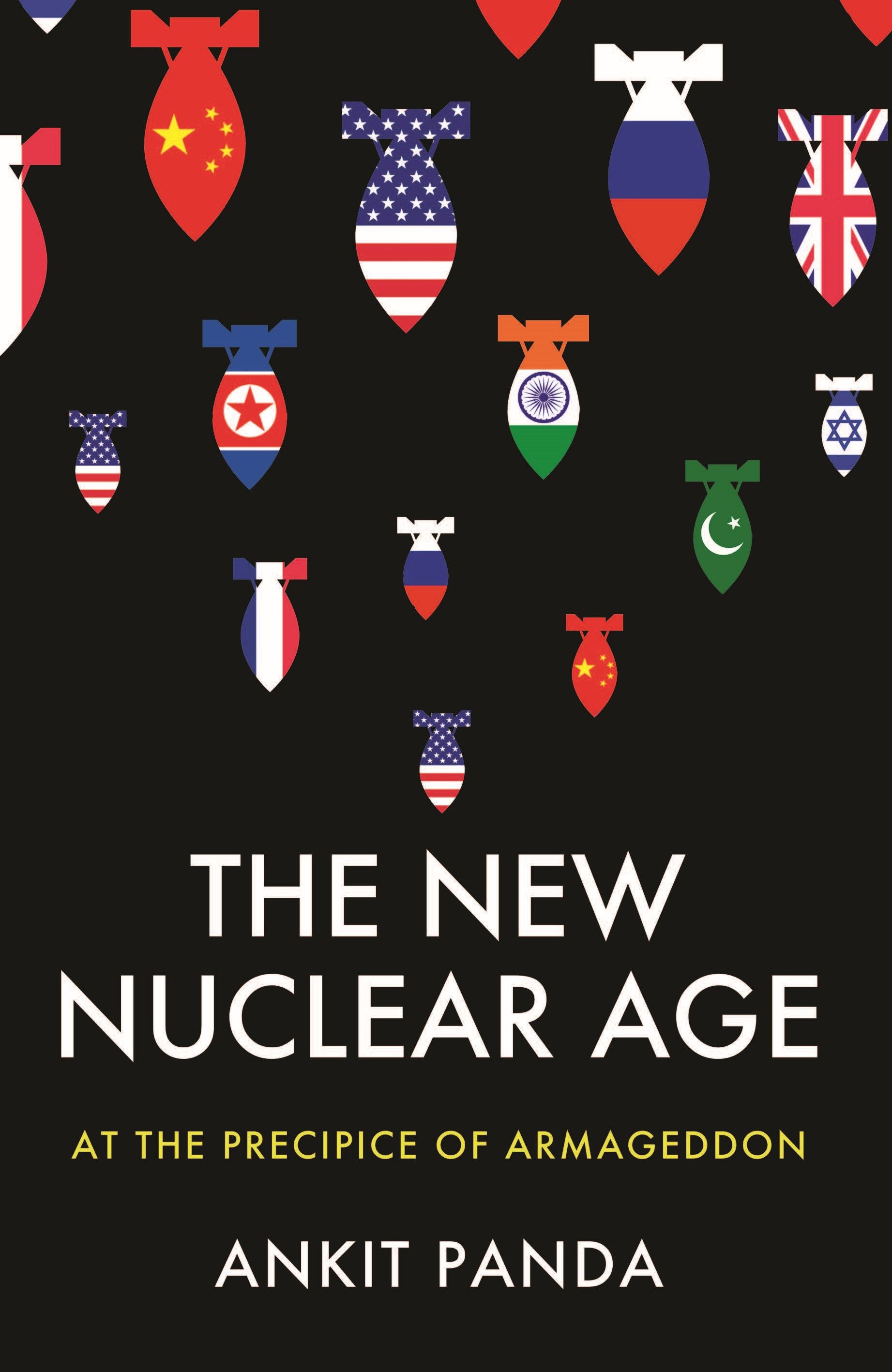
Managing the risks of a nuclear confrontation will require new urgency and thinking to pull the world back from the precipice of global catastrophe.
The world is entering a new nuclear age. Nuclear weapons are returning to the fore of international statecraft in ways unseen since the Cold War. With major powers like Russia issuing threats of nuclear strikes, China and North Korea continuing to grow their arsenals, and new prospects for proliferation from the Middle East to East Asia, the world has been thrust into a new era of heightened nuclear risk.
In this incisive book, international security expert Ankit Panda explores the enduring and emerging factors that are contributing to this new nuclear age. From strained great power ties to complex multipolar dynamics and the precipitous decline of arms control, he shows how our coexistence with the bomb is becoming more complicated and perilous. The prospect of nuclear escalation is again shaping how political decision-makers and military establishments around the world think and act. But unlike the peril of the Cold War, a greater number of nuclear players and a plethora of new technologies, including AI and exotic new weapons, make the search for stability far from straightforward. Managing the risks of a nuclear confrontation, he argues, will require new urgency and thinking to pull us back from the precipice of global catastrophe.
“As the United States stumbles into a new era of nuclear deterrence, one marked by arms races with Russia and China as well as a nuclear stand-off with North Korea and possibly Iran, Ankit Panda offers an essential guide to how we might escape catastrophe – as well as how we might not.”
—Jeffrey Lewis, Middlebury Institute of International Studies
“The emerging nuclear age is an unprecedented challenge whose geopolitical and technological characteristics have never simultaneously crashed together as they currently do. In this absolute must-read, Panda masterfully illuminates the scope of this new nuclear age and what the United States can do to help manage and mitigate its enormous risks.”
—Vipin Narang, Massachusetts Institute of Technology
“Russia threatens nuclear use. China remains opaque. Other states could start nuclear war. What are practitioners and scholars to do? They can start by reading Ankit Panda’s thoughtful and insightful The New Nuclear Age. They won’t be sorry.”
—Linton Brooks, Former U.S. Under Secretary of Energy for Nuclear Security and chief U.S. negotiator for the START Treaty
“A cogent exploration of the relevant issues, from the threat environment to the future potential of arms control and verification tools. It will stir welcome discussion and debate – much needed as we face up to the danger of an all-out nuclear arms race.”
—Rose Gottemoeller, former U.S. Under Secretary of State for Arms Control and International Security and former Deputy Secretary General of NATO
“A comprehensive deep dive into the complex dynamics of nuclear competition in an increasingly contested international security environment. Readers have much to learn from its detailed analysis, expert insights and creative recommendations for managing challenges and opportunities in the new nuclear age.”
—Jennifer Kavanagh, Senior Fellow & Director of Military Analysis, Defense Priorities
“Ankit Panda artfully dissects Mutual Assured Destruction in the context of today’s greatest challenges: Russia’s war on Ukraine, the emerging tri-polarity in nuclear deterrence, and the evolving technological landscape. This book seeks to answer the pressing questions any researcher of global security confronts today, offering fresh insights into the future of deterrence strategy in a rapidly changing world.”
—Polina Sinovets, Head of Odesa Center for Nonproliferation, Odesa I. I. Mechnikov National University, Ukraine
“The New Nuclear Age offers a comprehensive look at the wide range of nuclear challenges facing the world in the 21st century. Panda points out that many of today’s so-called ‘new nuclear threats’ are in fact not new at all. His book offers a sobering reminder that we must understand the lessons of the last nuclear age before we can confront the problems of the next one. An essential guide to the ways in which nuclear weapons shape world politics today.”
—Todd S. Sechser, University of Virginia
“An expert guide to the significant and worrying challenges of the Third Nuclear Age: a new period in our nuclear history where the threats posed by nuclear weapons have returned to the center stage of global politics.”
—Andrew Futter, University of Leicester
“Ankit Panda’s The New Nuclear Age impresses with its meticulous research, incisive analysis and chilling relevance. This sobering yet accessible work delivers a stark message: relying on nuclear deterrence in today’s ‘third nuclear age’ is the worst option, except for all the others… a must-read.”
—Survival
“This timely book delves into a host of issues connected to nuclear weapons, with conclusions that are, to say the least, disturbing. … A cogent, careful look at a crucial challenge.”
—Kirkus Reviews
“important and timely”
—The Irish Times

Stanton Senior Fellow in the Nuclear Policy Program at the Carnegie Endowment for International Peace
Ankit Panda is the Stanton Senior Fellow in the Nuclear Policy Program at the Carnegie Endowment for International Peace.
Recent Work
Ankit Panda
Frank Aum, Ankit Panda
Carnegie India does not take institutional positions on public policy issues; the views represented herein are those of the author(s) and do not necessarily reflect the views of Carnegie, its staff, or its trustees.

This piece argues that the present Indian strategy, based on opportunistic diversification and utilization of limited strategic reserves, remains inadequate when confronting supply disruptions. It evaluates India’s options in the short, medium, and long terms.

Vrinda Sahai

This piece examines India’s response to U.S. sanctions and tariffs, specifically assessing the immediate market consequences, such as alterations in import costs, and the broader strategic implications for India’s energy security and foreign policy orientation.
Vrinda Sahai
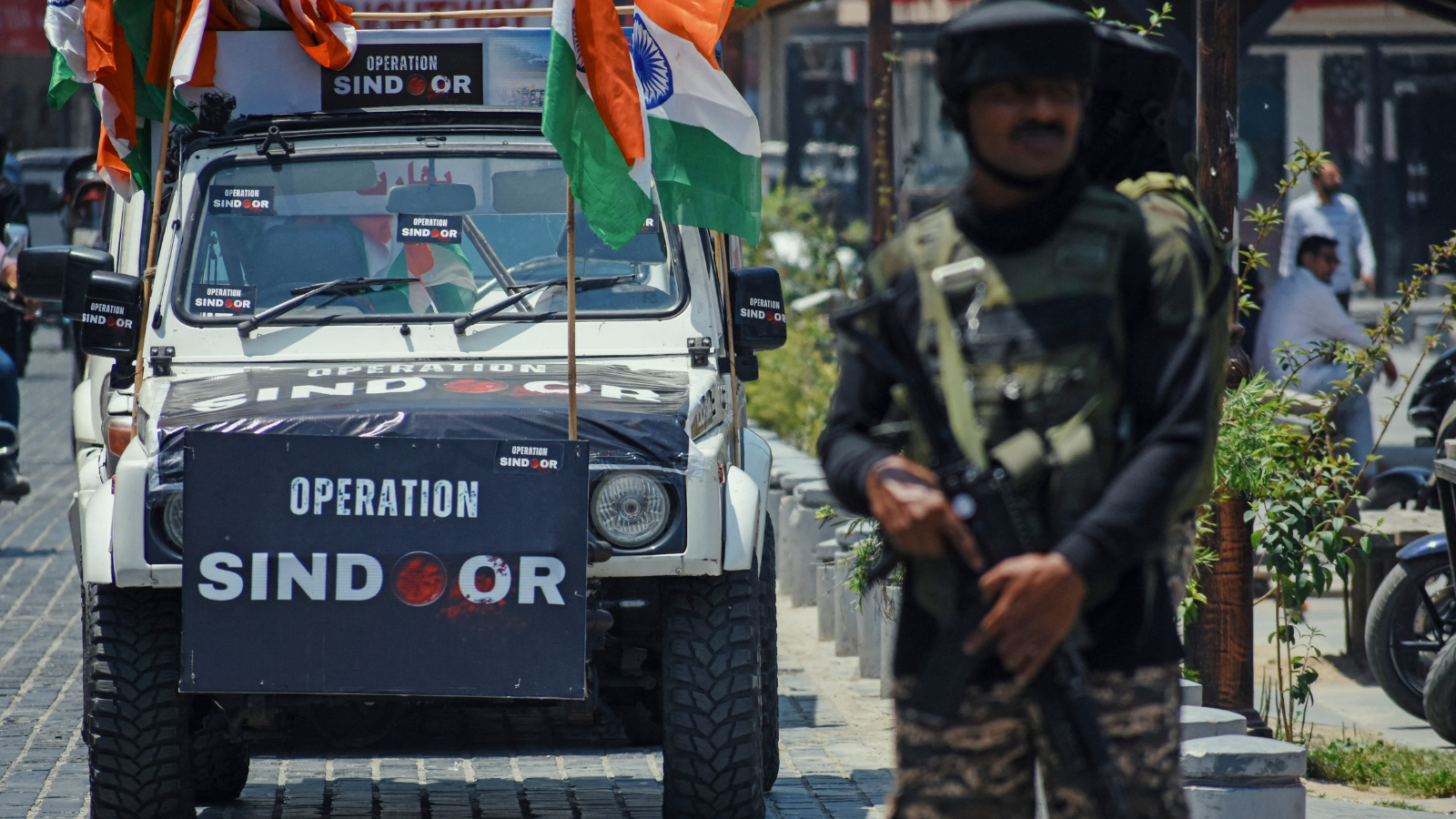
The India-Pakistan conflict that played out between May 6 and May 10, 2025, offers several military lessons. This article presents key takeaways from Operation Sindoor and breaks down how India’s preparations shaped the outcome and what more is needed to strengthen future readiness.

Dinakar Peri
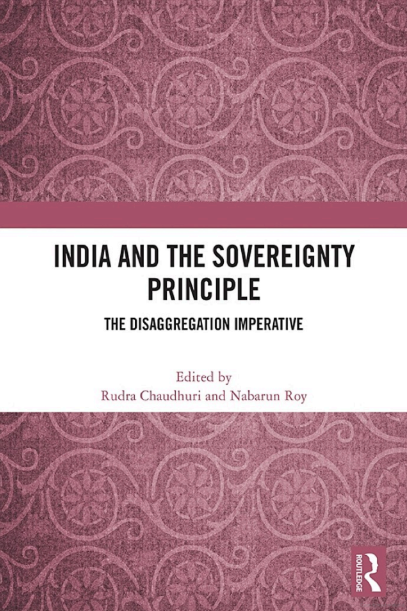
This book offers a comprehensive analysis of India's evolving relationship with sovereignty in a complex global order. Moving beyond conventional narratives, it examines how the sovereignty principle shapes India's behavior across four critical domains—from traditional military power to contemporary data governance.

Rudra Chaudhuri, Nabarun Roy

This article examines the scale and impact of Chinese IUU fishing operations globally and identifies the nature of the challenge posed by IUU fishing in the Indian Ocean Region (IOR). It also investigates why existing maritime law and international frameworks have struggled to address this growing threat.


Ajay Kumar, Charukeshi Bhatt