

Article
Frederic Wehrey, Charles H. Johnson
{
  "authors": [
    "Frederic Wehrey"
  ],
  "type": "commentary",
  "blog": "Diwan",
  "centerAffiliationAll": "",
  "centers": [
    "Carnegie Endowment for International Peace"
  ],
  "collections": [],
  "englishNewsletterAll": "",
  "nonEnglishNewsletterAll": "",
  "primaryCenter": "Carnegie Endowment for International Peace",
  "programAffiliation": "",
  "programs": [],
  "projects": [],
  "regions": [
    "Gulf",
    "Syria"
  ],
  "topics": []
}
Source: Getty
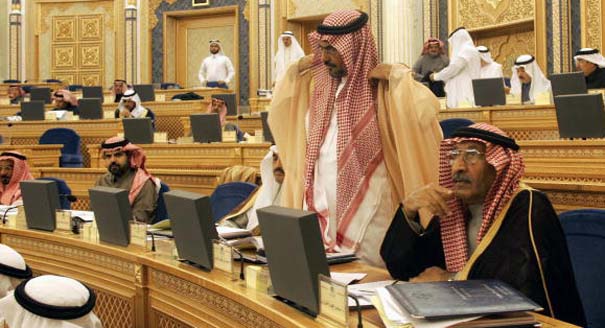
In the wake of stern warnings of greater unilateralism from Saudi officials and commentators, many observers have been left wondering about the future course of Saudi strategy in Syria.
In the wake of Prince Bandar’s announcement of Saudi Arabia’s desire to curtail cooperation with the United States and the stern warnings of greater unilateralism from Saudi officials and commenatators, many observers have been left wondering about the future course of Saudi strategy in Syria. In truth, it is doubtful that the Saudi leadership ever envisioned a realistic end-state for the country. The Kingdom has been extremely adept at articulating what it doesn’t want: a rump state beholden to Iran, the ascendance of Qatari-backed Brotherhood factions, and the rise of al-Qaeda in Syria, which could attract and radicalize young Saudi volunteers and turn them against the Kingdom. It has been less explicit in proposing a realistic political alternative to Assad.
Instead, Saudi policy appeared to be proceeding in fits and starts, following multiple trajectories through a web of local intermediaries based in Lebanon, Turkey, and Jordan. Like a gambler hedging her bets, the Saudis have so-far placed most of their chips in the U.S. corner but have also spread their options as a form of liability control. The apparent Saudi role in backing the creation of the Jaysh Islam is but one example of this trend: the umbrella gathering of local Salafi groups is intended as bulwark against the growth of the al-Qaeda affiliated Islamic State of Iraq and Syria (ISIS ) and Jabhat al-Nusra, but it also siphons off support from Washington’s preferred clients in the Higher Military Council. At the same time, Saudi Arabia appears to be seeking a “Sisi” option in Syria: an authoritarian, Sunni-led military state in which the former regime’s security apparatus is preserved but without Assad and his Alawite core. In the wake of Bandar’s announcement, we can probably expect more of this diversification, which may have the effect of further fracturing the Syrian opposition.
It is also important to note that the Kingdom may not be acting as a completely rational, coherent actor on foreign policy toward Syria—or other regional portfolios for that matter. Intra-royal competition and princely one- upmanship can produce uneven policies and radical shifts. In addition, Saudi clerics, ranging from the enormously popular Sahwa cleric Salman al-Awda to more hardline clerics like Muhammad al-Arife and the notorious takfiri figure Nasir al-Umar, have put pressure on the al-Saud to intervene in Syria; Saudi engagement in the country may be calculated in part to assuage the concerns of conservative clerics who have already challenged Abdallah’s reform initiatives at home, particularly on women’s rights. Although the Saudi regime has cracked down on non-official charities and clerical donations, volunteers and money are still flowing in, often circuitously through Kuwait.
Indeed, it is on the domestic front and the domestic spillover from Syria where the greatest clash with U.S. interests may occur. The domestic blowback from Saudi Arabia’s Syria policy—and policies of the broader Arab Gulf —is often neglected. The Syria war has become a useful distraction against more pressing demands for internal reform. Clerical figures in Saudi Arabia, Bahrain, and Kuwait, often lacking in formal pedigrees, have raised their profile and rallied constituents by exploiting the Syria war’s sectarian dimension. Reform activists, particularly Shi’a activists in Bahrain and Eastern Saudi Arabia, report increasing tensions with Sunnis as a result of the Syria war’s echo effect and, in some cases, deliberate government policies to incite sectarian vitriol.
Senior Fellow, Middle East Program
Frederic Wehrey is a senior fellow in the Middle East Program at the Carnegie Endowment for International Peace, where his research focuses on governance, conflict, and security in Libya, North Africa, and the Persian Gulf.
Recent Work
Frederic Wehrey, Charles H. Johnson
Frederic Wehrey, Charles H. Johnson

Middle Eastern states should welcome an accelerated U.S. disengagement from their region.

Michael Young

The accord represents a pivotal moment in the region to avert a security vacuum in the Gulf.


Azeema Cheema, Mohanad Hage Ali
In an interview, Sohaib Jawhar analyzes the profound changes in the ties between the neighboring countries.
Michael Young
Any move by the United States to make good on Trump’s suggestion that Washington persuade Damascus to confront Hezbollah militarily would have catastrophic consequences.

Kheder Khaddour
In an interview, Elizabeth Thompson recalls how the country formulated a liberal constitution in 1920, before being denied by France and Britain.
Michael Young