

Paper
Raphaël Lefèvre
{
  "authors": [
    "Raphaël Lefèvre"
  ],
  "type": "commentary",
  "blog": "Diwan",
  "centerAffiliationAll": "",
  "centers": [
    "Carnegie Endowment for International Peace",
    "Malcolm H. Kerr Carnegie Middle East Center"
  ],
  "collections": [],
  "englishNewsletterAll": "",
  "nonEnglishNewsletterAll": "",
  "primaryCenter": "Malcolm H. Kerr Carnegie Middle East Center",
  "programAffiliation": "",
  "programs": [],
  "projects": [],
  "regions": [
    "Middle East",
    "Lebanon",
    "Syria"
  ],
  "topics": []
}
Source: Getty
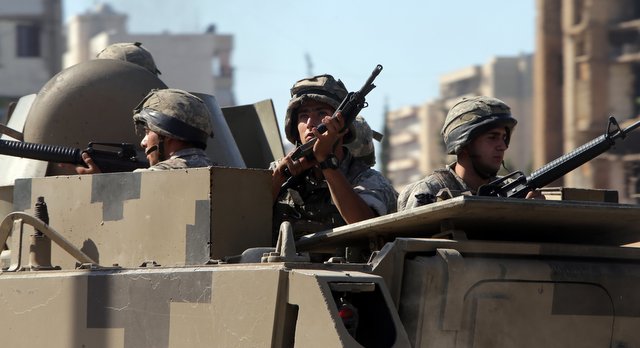
The northern Lebanese port city of Tripoli is home to several Sunni Islamist groups that support the Assad regime and Syrian patronage has given them access to funds, weapons, and political connections.
Now troubled by growing internal violence, the northern Lebanese port city of Tripoli has long been known as a stronghold of Sunni politics and a haven for both Lebanese and Syrian Islamist factions. Most of these factions are fiercely hostile to the Alawite-dominated regime of President Bashar al-Assad in next door Syria, not least because of its support for the Islamist’s Shia and Alawite rivals in Lebanon.
But Tripoli is a complex city, and Lebanese politics have always been about more than sectarian loyalties. In fact, Tripoli is also home to several Sunni Islamist groups that support the Syrian regime. This has made them unpopular with many of their fellow Sunnis in Lebanon, where Sunni-Shia tension is a major factor in politics, but Syrian patronage has also given them access to funds, weapons, and political connections.
As communal relations continue to sour in Lebanon, and with the Syrian civil war beginning to spill across the border, this minority of pro-Assad Sunni Islamists is starting to feel the heat. Over the past few months, leading figures have been assassinated, and the continuous shootings and grenade attacks against these groups threaten to destabilize the city.
Some of Assad’s Sunni allies in Tripoli are well-known figures, often prominent in a certain area of the city. They include the Islamic preachers Hashem Minkara, Bilal Shaaban, and Mustafa Malas as well as the heads of powerful clans like the Mori, Nashar, and Aswad families.
They are, of course, a diverse bunch. Some run ideological Islamist organizations that seem to genuinely sympathize with the Hezbollah-led “resistance” against Israel and have connected with the Syrian and Iranian governments in this way. Others are simply pragmatic politicians or clan figures, paid and armed to support the pro-Assad camp in Lebanon.
Historically, there has been little effective coordination within the pro-Assad Sunni camp—and it would in fact take a Shia intervention to sort things out. In spring 2005, Syria withdrew its army from Lebanon after nearly three decades of intervention and occupation. This forced the Syrian army’s local Shia ally, the Iran-backed Hezbollah, to quickly intensify its contacts with other Assad-backed groups in Lebanon in order to push back against newly empowered anti-Assad Sunni forces.
One way of doing this was to help reorganize the pro-Assad camp in Tripoli, an overwhelmingly Sunni town where Hezbollah itself has no real presence. By providing resources and mediation, Hezbollah finally managed to gather most of Tripoli’s pro-Assad groups under one umbrella, thereby bringing some much-needed cohesion to the pro-Assad Sunni camp in Lebanon.
Given the preeminence of Hezbollah within the pro-Assad movement in Tripoli, critics often dismiss all of Tripoli’s pro-Assad Islamists as uneducated militiamen who are on Hezbollah’s payroll. “There, people are poor—they can be bought,” I was told by a high-ranking member of Lebanon’s largest Sunni party, the Future Movement, which is hostile to the Assad regime.
But even though some low-level recruits may be involved with these groups only for the money, many members argue that their alliance with Assad is a pragmatic political choice—and one perfectly in line with Islamic doctrine. For them, it is a question of Muslim solidarity in the face of Israeli and Western hostility and of averting fitna, meaning internal discord within Islam. Often, they will couch their narrative in terms of “the resistance” and “Islamic unity.” As a high-ranking member of the Islamic Unification Movement, a pro-Assad Islamist group also known as Tawhid, recently told me: “We’re simply against all forms of fitna within the Sunni community or between Sunnis and Shiites as this will eventually benefit Israel.”
A further look of this survey of the pro-Assad Sunni movements in northern Lebanon will be published tomorrow. In the meantime, don’t miss Raphaël Lefèvre’s previous articles about the Syria-related unrest in Tripoli:
Power Struggles Among the Alawites in Lebanon, Part I
Power Struggles Among the Alawites in Lebanon, Part II
How the War in Syria Empowers Lebanese Jihadism

Former Nonresident Scholar, Middle East Center
Raphaël Lefèvre was a nonresident scholar at the Carnegie Middle East Center, where his research focuses on Sunni Islamist movements in Lebanon.
Recent Work
Raphaël Lefèvre
Raphaël Lefèvre
Carnegie does not take institutional positions on public policy issues; the views represented herein are those of the author(s) and do not necessarily reflect the views of Carnegie, its staff, or its trustees.

As the U.S. stumbles in its war with Iran, we are likely to see an acceleration of its disengagement from the region.

Michael Young

The accord represents a pivotal moment in the region to avert a security vacuum in the Gulf.


Azeema Cheema, Mohanad Hage Ali
In an interview, Jason Burke discusses his sweeping account of the “revolutionists” who so shaped the 1970s and early 1980s.
Michael Young
Lying at the heart of Lebanon’s dysfunction is an inability to secure accountability and institutional legitimacy.

Maha Yahya
In an interview, Sohaib Jawhar analyzes the profound changes in the ties between the neighboring countries.
Michael Young