

Commentary
Azeema Cheema, Mohanad Hage Ali
{
  "authors": [
    "Mohanad Hage Ali"
  ],
  "type": "commentary",
  "blog": "Diwan",
  "centerAffiliationAll": "dc",
  "centers": [
    "Carnegie Endowment for International Peace",
    "Malcolm H. Kerr Carnegie Middle East Center"
  ],
  "collections": [
    "Three Question Time"
  ],
  "englishNewsletterAll": "menaTransitions",
  "nonEnglishNewsletterAll": "",
  "primaryCenter": "Malcolm H. Kerr Carnegie Middle East Center",
  "programAffiliation": "MEP",
  "programs": [
    "Middle East"
  ],
  "projects": [],
  "regions": [
    "Gulf",
    "Saudi Arabia",
    "United Arab Emirates",
    "Middle East"
  ],
  "topics": [
    "Political Reform"
  ]
}
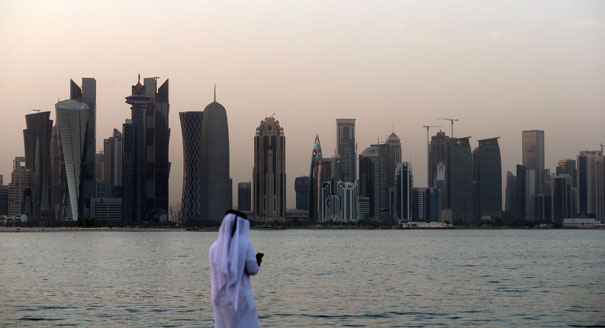
Source: Getty
Journalist Jihad al-Zein says the Arabs want to tame Qatar, but that the Gulf Cooperation Council will survive.
Jihad al-Zein is the opinion editor of the Lebanese daily Al-Nahar, where he is also a regular columnist. A longtime observer of regional politics, particularly of Turkey and Iran, he turned his opinion page into one of the premier outlets for regional opinion at the time when the newspaper was still run by the late publisher and owner Ghassan Tueni.
Diwan asked Zein to comment on the ongoing Qatar crisis, in particular whether it signaled the end of the Gulf Cooperation Council, and what the implications of the crisis are for Al-Jazeera, Qatar’s principal satellite news channel. The interview was conducted on July 10.

Deputy Director for Research, Malcolm H. Kerr Carnegie Middle East Center
Mohanad Hage Ali is the deputy director for research at the Malcolm H. Kerr Carnegie Middle East Center.
Recent Work

Azeema Cheema, Mohanad Hage Ali
Mohanad Hage Ali
Carnegie does not take institutional positions on public policy issues; the views represented herein are those of the author(s) and do not necessarily reflect the views of Carnegie, its staff, or its trustees.

As the U.S. stumbles in its war with Iran, we are likely to see an acceleration of its disengagement from the region.

Michael Young

Huawei pushed hard to enter the Egyptian data centers market, until the Americans made a better offer.

Angie Omar

Middle Eastern states should welcome an accelerated U.S. disengagement from their region.
Michael Young

The accord represents a pivotal moment in the region to avert a security vacuum in the Gulf.
Azeema Cheema, Mohanad Hage Ali
In an interview, Jason Burke discusses his sweeping account of the “revolutionists” who so shaped the 1970s and early 1980s.
Michael Young