

Commentary
Michael Young
{
  "authors": [
    "Michael Young"
  ],
  "type": "commentary",
  "blog": "Diwan",
  "centerAffiliationAll": "dc",
  "centers": [
    "Carnegie Endowment for International Peace",
    "Malcolm H. Kerr Carnegie Middle East Center"
  ],
  "collections": [
    "Inquiring Minds"
  ],
  "englishNewsletterAll": "menaTransitions",
  "nonEnglishNewsletterAll": "",
  "primaryCenter": "Malcolm H. Kerr Carnegie Middle East Center",
  "programAffiliation": "MEP",
  "programs": [
    "Middle East"
  ],
  "projects": [],
  "regions": [
    "Levant",
    "Lebanon",
    "Syria",
    "Palestine",
    "North America",
    "United States",
    "Middle East",
    "Israel"
  ],
  "topics": [
    "Political Reform"
  ]
}
Source: Getty
A regular survey of experts on matters relating to Middle Eastern and North African politics and security.
William Shawcross | Writer and author of Deliver us from Evil: Warlords, Peacekeepers and a World of Endless Conflict (2000)
The United Nations ought to be able to play a constructive part in the tangled context of the Middle East. Kofi Annan, the secretary general at the time of the millennium, certainly tried his best. He had noted, in September 1999, in a talk on humanitarian intervention, that the notion of state sovereignty, which is central to the whole concept of the UN, was being redefined by the forces of globalization and international cooperation.
Yet in the Middle East we’ve seen a paradox: even as conflicts in states have drawn in multiple outside actors in a remarkable breakdown of sovereignty, arguments in favor of respecting sovereignty have prevailed at the UN. Regimes, especially the one in Syria, have been able to slaughter their population at will, protected by patrons in the Security Council using the sovereignty argument to defend them. So the vision Annan described for the UN has been thwarted, with the organization having become neutralized on the very basis used to establish the organization in the first place.
At the turn of the century, we thought a new global architecture was being built on the post-World War II international system. But we didn’t know what the final structure would be, even if we had hope that humanitarian intervention would prevail. Today, the Middle East has proven the contrary and the region has dashed humanitarian aims, while the impunity of dictators prevails in many places. That is worse than sad.
Beyond that, a serious handicap faced by the organization in attempting any wise intervention is the hostility shown towards Israel by the UN General Assembly and such agencies as the Human Rights Commission. Until the obsession with alleged Israeli crimes is balanced by an ability to examine and denounce those thought to have been committed by Israel’s neighbors and enemies, the UN can never be an effective broker.
Edward Mortimer | Distinguished fellow, All Souls College, University of Oxford, and until January 2007 the director of communications in the Executive Office of the United Nations Secretary-General
Yes, the UN will continue to have a humanitarian role, even though this may be increasingly difficult to perform, given that parties to conflict seem less and less inclined to respect international humanitarian law or to accept the impartiality and immunity of relief workers. The organization will probably also continue to be assigned a political role, being at least formally charged with seeking a peaceful political solution to conflicts.
However, its ability to perform this role will continue to be restricted, not so much by the polarization among parties within the Middle East as by that among the five permanent members of the Security Council, or the “P5.” The UN’s authority derives ultimately from the council’s power to enforce its decisions by imposing sanctions and, in extreme cases, by authorizing military intervention. But each of the permanent members can veto any resolution with which it disagrees. Therefore, so long as the polarization within the Middle East is reflected among the P5, with the United States broadly supporting Sunni regimes while Russia backs Iran and the regime in Syria, the ability of the UN to resolve conflicts will be severely limited.
Chibli Mallat | International lawyer, professor of law, and author, most notably, of Introduction to Middle Eastern Law (2007) and Philosophy of Nonviolence: Revolution, Constitutionalism, and Justice beyond the Middle East (2015)
The United Nations has missed the boat in the greatest opportunity that the Middle East has faced this decade: Ending the dictatorship in Syria and, more generally, in other countries affected by the Arab Spring.
As the Syrian president increasingly rolls back the territory that had been captured by his opponents, we should expect bouts of large-scale violence in the region as frustrated societies continue to suffer from restored authoritarianism. The UN secretariat must first take stock of this reality and brace for the worst, including recognizing its own increasing marginalization. Considering the personality of the heads of state in the United States, Russia, and China, standing up for basic political decency will be hindered by a callous set of world leaders.
Since the only UN calling that makes any difference in the Middle East is the defense of human rights, this battle will also involve keeping the pursuit of human rights alive and meaningful against all odds. The UN Secretariat will need to mobilize human rights agents, organizations, and individuals, with a simple message: Hold on to the principles of human rights and democracy with all the means at your disposal.
Should it want to be more creative, the UN Secretariat could conceive and push an agenda of nonviolence, inspired from the high moments of the Middle Eastern revolutions in 2011, as the marker of a different philosophy for world change.

Editor, Diwan, Senior Editor, Malcolm H. Kerr Carnegie Middle East Center
Michael Young is the editor of Diwan and a senior editor at the Malcolm H. Kerr Carnegie Middle East Center.
Recent Work
Michael Young
Michael Young
Carnegie does not take institutional positions on public policy issues; the views represented herein are those of the author(s) and do not necessarily reflect the views of Carnegie, its staff, or its trustees.
While armed forces commander Rudolph Haykal’s caution is understandable, he is in a position to act, and must.
Michael Young
In an interview, Hamidreza Azizi discusses how Tehran has adapted in real time to the conflict with the United States and Israel.
Michael Young
The simple conclusion is that the scheme will bring neither peace nor prosperity, but will institutionalize devastation.

Nathan J. Brown
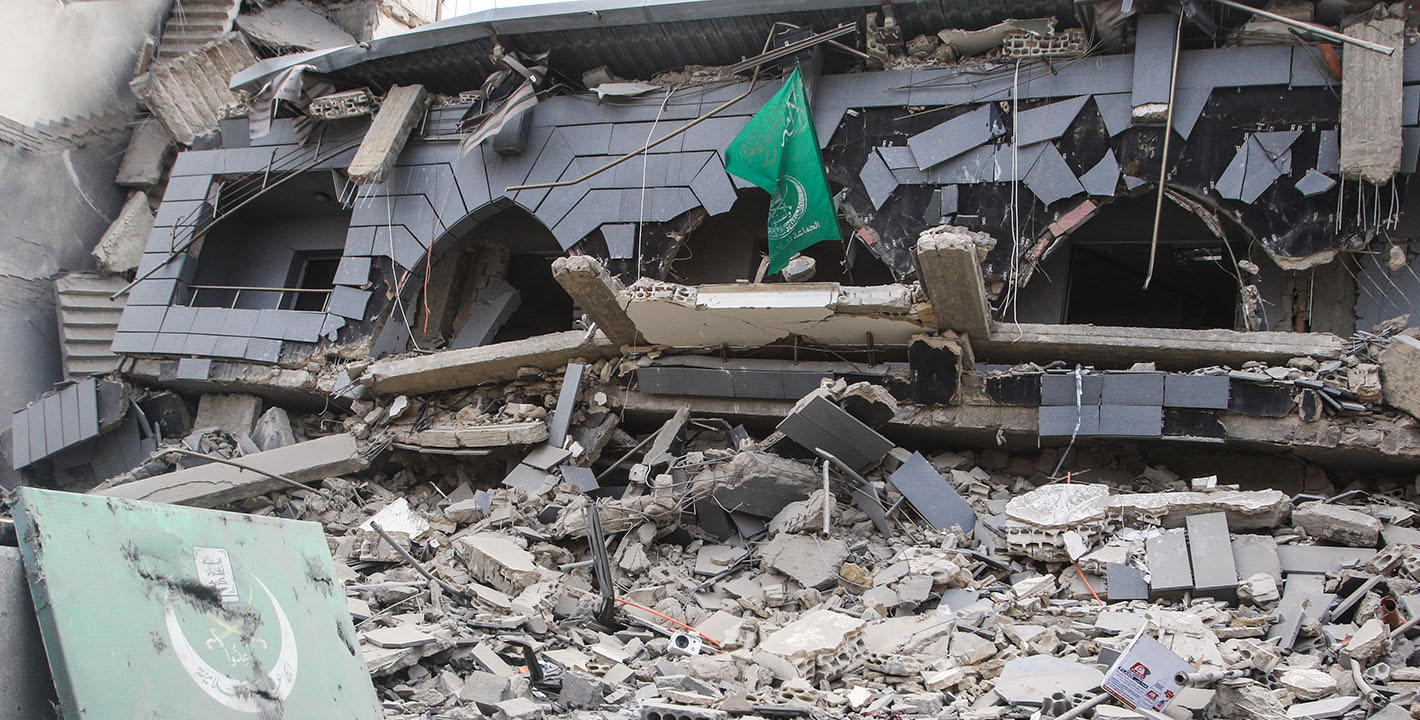
The Jamaa al-Islamiyya is the local Lebanese dimension of a broader struggle involving rival regional powers.

Issam Kayssi
In an interview, Roger Diwan discusses where the global economy may be going in the third week of the U.S.-Israeli war with Iran.
Nur Arafeh