

Article
Dalia Ghanem
{
  "authors": [
    "Dalia Ghanem"
  ],
  "type": "commentary",
  "blog": "Diwan",
  "centerAffiliationAll": "dc",
  "centers": [
    "Carnegie Endowment for International Peace",
    "Malcolm H. Kerr Carnegie Middle East Center"
  ],
  "collections": [
    "Political Islam"
  ],
  "englishNewsletterAll": "menaTransitions",
  "nonEnglishNewsletterAll": "",
  "primaryCenter": "Malcolm H. Kerr Carnegie Middle East Center",
  "programAffiliation": "MEP",
  "programs": [
    "Middle East"
  ],
  "projects": [],
  "regions": [
    "Maghreb",
    "North Africa",
    "Algeria"
  ],
  "topics": [
    "Political Reform"
  ]
}
Source: Getty
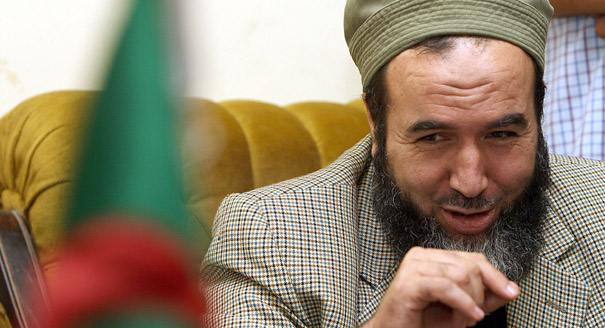
Algeria has successfully adopted both a soft and a hard approach for bringing former Islamist combatants in from the cold.
Algeria has a long history of fighting jihadism and has done so since the 1990s. During the civil conflict during that decade, the heavy-handed repression of the security forces contributed greatly to the radicalization of thousands of people, especially youths.
However, the authorities shifted strategy when they understood that a military solution to jihadism was not enough by itself. They adopted more conciliatory methods since that time, including a truce, a reconciliation process, demobilization and rehabilitation programs, as well as investing in development. Today, Algeria, with its combination of a soft and hard approach, provides a successful example of how to neutralize jihadism.
In 1995, Algeria returned to a pluralistic political process, one allowing for the reintegration of all parties into political life, with the exception of the radical Islamic Salvation Front (FIS). This gave Islamists a peaceful opening to express their views, as an alternative to violence. Even if the election results never constituted a fundamental challenge to the Algerian leadership, non-violent Islamists were able to reclaim the FIS electorate as well as all those disappointed by the violence of the armed groups during the civil war.
This process helped restore to a certain extent Algerians’ faith and trust in their leaders. In addition, some leading Islamist political figures, such as Abassi Madani, were released from prison and the presidency put in place a clemency law in which it called on “the misguided of the nation” to reintegrate society. Between 1995 and 1996 some 2,000 fighters were disarmed and demobilized. Secret lines of communication were opened between the Algerian army and the Islamic Salvation Army (AIS), the military branch of the FIS. The national emir of the AIS, Madani Mezrag, was sufficiently influential to convince some 7,000 of his fighters and other small groups to lay down their weapons.
Significantly, a “civil concord law” was passed by a wide margin of 98.6 percent in a 1999 referendum. It granted conditional amnesty to members of armed groups who surrendered in the limited timeframe specified by the law. Fighters were eligible for amnesty only if they hadn’t been involved in rape, massacres, or in setting off bombs in public places. For those who committed such crimes, they benefited from reduced prison sentences, but not a full amnesty. In practice, because of the great difficulty of collecting evidence against the large number of combatants who had participated in the war, the law effectively pardoned a vast majority of those who voluntarily laid down their arms.
In 2005 Algeria also adopted the Charter for Peace and National Reconciliation. The charter contained the same measures as the civil concord law, in addition to the exemption from prosecution of members of the security forces and pro-government militias. Central to the charter was that all Algerians were victims of the war equally and that no trials were to be held for members of the security forces or Islamist militants who had repented. This was aimed at encouraging and sustaining the demobilization of those who still needed to be convinced to lay down their weapons.
Essential to the success of the disengagement policy were the efforts to legitimize the demobilization and reconciliation process among former jihadists. Indeed, they were given a voice by being encouraged to speak publicly about their experiences in the armed groups and the reasons for their engagement and ultimately for their decision to stop. During these testimonies former militants insisted on the negative aspects of their time in combat and on the extreme violence that was directed against fellow Algerians. Their testimonies were broadcast on television on an almost daily basis during primetime hours. The families of fighters still in the field were also engaged, calling on their “sons” to return home.
Whether these “confessions” were sincere or not was irrelevant. What was certain, however, is that the involvement of former fighters and their calls for an end to violence and for reconciliation helped “humanize” those who had fought against the state. It also helped raise awareness about violent radicalization and its consequences, preventing others from joining the fight while inspiring some to leave the armed groups and accept the truce.
In addition, many leading Islamist figures, such as former FIS leaders Rabeh Kébir and Abdelkrim Ghemati, or former AIS emir for the region of Larb‘a, Mustapha Kertali, endorsed the reconciliation policy and helped in its success by making regular appeals to jihadists still in their hideouts to surrender and return to their communities and society. Some, such as the former leader of the Salafi Group for Teaching and Combat, Hassan Hattab, not only spoke out against the violence, but former jihadists like him also cooperated with the security forces in intelligence gathering and helped to foil attacks. Former fighters were also offered medical and psychological support to cope with their trauma, as well as weapons to protect themselves and their relatives against retaliation from families of victims or from jihadi groups. Yet, this was not always enough. In several cases, former Islamist militants, among them Abdelhak Layada, Ali Merad, Mustapha Kertali, and Chernouha Hicham, were targeted, injured, or killed in attacks.
Financial compensation was also provided by the state to a broad category of people described as “victims of the national tragedy.” This included families of the victims and the missing and families of perpetrators of crimes. Members of armed groups victimized by state violence were also included—receiving up to $15,000 dollars according to my research in 2008.
Those who repented were also rehabilitated through entrepreneurial activities. Social enterprises, industries, and public companies helped in this regard. Former fighters who were unemployed prior to their engagement in jihadi groups were offered new professional opportunities, while others were reintegrated into their previous positions.
Professional rehabilitation was crucial to the militants’ reintegration into society as it provided them with a sense of belonging and purpose, pride and dignity, as well as a sense of citizenship. It also gave those who had laid down their weapons material and psychological incentives to do so. Financial compensation and job opportunities were intended to limit economic hardship and deter recidivism. The government’s initiatives deprived jihadis of a potential recruitment pool by offering an alternative to jihadism.
The Algerian approach helped in ending the country’s conflict, reintegrating some 15,000 former fighters into society. However, there is no ideal template or program for the demobilization and rehabilitation of jihadists. The Algerian experience may not necessarily work elsewhere, as every country has its own specificities and challenges. Yet, thinking about the Algerian experience is a useful starting point for developing disengagement initiatives elsewhere. If one lesson needs to be learned from the Algerian experience, it is that a military response is not sufficient on its own. Jihadism is above all a social phenomenon, and therefore a failure to engage with it on a social level may ensure it comes back in some form.
Former Senior Resident Scholar, Malcolm H. Kerr Carnegie Middle East Center
Dalia Ghanem was a senior resident scholar at the Malcolm H. Kerr Carnegie Middle East Center in Beirut, where her research focuses on Algeria’s political, economic, social, and security developments. Her research also examines political violence, radicalization, civil-military relationships, transborder dynamics, and gender.
Recent Work
Dalia Ghanem


Frances Z. Brown, Judy Dempsey, Dalia Ghanem, …
Carnegie does not take institutional positions on public policy issues; the views represented herein are those of the author(s) and do not necessarily reflect the views of Carnegie, its staff, or its trustees.
This will be the region’s most representative tournament, amid broad changes in its footballing landscape.
Issam Kayssi
The recent African Cup of Nations tournament in Morocco touched on issues that largely transcended the sport.

Issam Kayssi, Yasmine Zarhloule
Mustaqbal Misr has expanded its portfolio with remarkable speed, but a lack of transparency remains.

Yezid Sayigh
The burden of environmental degradation is felt not only through physical labor but also emotional and social loss.
Yasmine Zarhloule, Ella Williams
The country’s youthful protest movement is seeking economic improvement, social justice, and just a little hope.
Yasmine Zarhloule