

Commentary
Michael Young
{
  "authors": [
    "Michael Young"
  ],
  "type": "commentary",
  "blog": "Diwan",
  "centerAffiliationAll": "dc",
  "centers": [
    "Carnegie Endowment for International Peace",
    "Malcolm H. Kerr Carnegie Middle East Center"
  ],
  "collections": [
    "Inquiring Minds",
    "Political Islam"
  ],
  "englishNewsletterAll": "menaTransitions",
  "nonEnglishNewsletterAll": "",
  "primaryCenter": "Malcolm H. Kerr Carnegie Middle East Center",
  "programAffiliation": "MEP",
  "programs": [
    "Middle East"
  ],
  "projects": [],
  "regions": [
    "Türkiye",
    "Syria",
    "Middle East",
    "Levant"
  ],
  "topics": [
    "Political Reform"
  ]
}
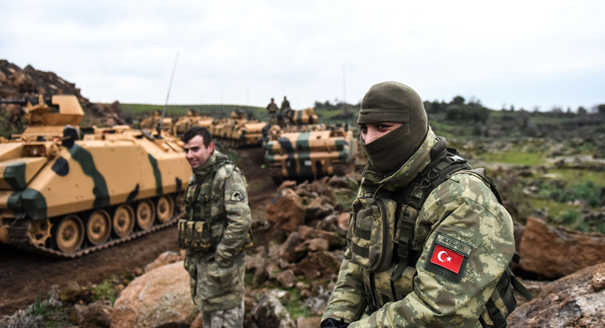
Source: Getty
A regular survey of experts on matters relating to Middle Eastern and North African politics and security.
Soner Cagaptay | Director of the Turkish Research Program at the Washington Institute for Near East Policy
It’s simplistic to cast Turkey’s Afrin operation, taking place west of the Euphrates River in Syria, as opposed to the United States. Washington has no ties with the People’s Protection Units, or YPG, in Afrin, or a presence there. Russia has been the protector of the YPG in Afrin, and Turkey’s operation is born out of a deal between Russian President Vladimir Putin and Turkish President Recep Tayyip Erdogan. The United States is only watching it. In 2016, in a similar deal involving the YPG west of the Euphrates, Putin gave Erdogan Jarablus in return for eastern Aleppo. Now, Putin is handing (some parts of) Afrin to Erdogan on a silver platter in return for Erdogan’s acquiescing to future advances in Idlib by the Assad regime, backed by Russia. However, the broader issue of U.S. cooperation with the YPG east of the Euphrates will remain a key sticking point in U.S.-Turkish ties.
Noah Bonsey | Senior analyst in the Middle East and North Africa Program at the International Crisis Group
Tensions between Turkey and the United States were bound to escalate as the war against the Islamic State winds down. Ankara is incensed with the extent to which U.S. support has empowered the People’s Protection Units (YPG), even as the Kurdistan Workers Party, or PKK, to which the YPG is deeply tied, continues an insurgency inside Turkey.
Understandably, Turkey has demanded that its NATO ally end support for its adversary, now that major offensives against the Islamic State have concluded. Washington, also understandably, has decided not to do that. It recognizes that a precipitous withdrawal could plunge northeast Syria into a new war and leave space for a jihadi resurgence. It also hopes that its continued role on the ground will improve its leverage to push for a political transition in Syria and contain Iranian influence.
The restrained U.S. reaction to Turkey’s Afrin offensive highlights the policy conundrum Washington faces, as it is caught between two allies it cannot afford to lose. Ironically, its best chance of escaping this bind may lie in addressing the very YPG-PKK connection that it has heretofore downplayed, and pressing the PKK to decide whether it is willing to halt its active insurgency in Turkey in exchange for protecting much of what it has built in Syria. If the answer to that question is “no,” it’s hard to see how the U.S. can sustain its current position.
Galip Dalay | Research director at the Al-Sharq Forum, senior associate fellow at the Al-Jazeera Center for Studies
Unless there is a major change of course either in U.S. or Turkish foreign policy in Syria, relations between Washington and Ankara will deteriorate further. During the initial phase of the Arab uprisings, Turkey’s major complaint with regard to the United States was related to its inaction toward regime change in Syria. However, in recent years Turkish discontent has been focused on U.S. policy toward the Democratic Union Party (PYD), a Syrian Kurdish party affiliated with the Kurdistan Workers Party, which Turkey considers a terrorist organization, within the framework of the war against the Islamic State. There is a growing gap between Turkish and American perceptions of threats and the way to deal with them in Syria.
Since early 2015, the PYD’s armed wing, the Peoples Protection Units, or YPG, has increasingly become Washington’s primary local partner in the fight against the Islamic State. Turkey’s concern about this was aggravated after the collapse of its domestic peace process with the Kurds in 2015. Yet Turkey still hoped that once the Islamic State was defeated in Syria, U.S. interest in Syria’s Kurds would wane. However, the recent U.S. decision to form a 30,000-strong border protection force in Syria, whose backbone would be the YPG-dominated Syrian Democratic Forces, dispelled any expectation of a U.S. change of heart.
Turkey sees U.S.-Syrian Kurdish relations evolving into a more strategic and durable partnership, rather than just being a marriage of convenience. Washington’s open-ended commitment to maintaining a military force in Syria was seen in this light. This led Turkey to explore other options much more vigorously, particularly with Russia. Turkey’s ongoing Afrin operation is a case in point. Friction between Turkey and the U.S. in Syria will worsen in 2018.
Mahir Zeynalov | Chief editor of the Globe Post
As allies, there have been few differences, if any, that the United States and Turkey have not managed to work out. But nowhere have such differences presented themselves as insurmountably as in Syria. Throughout the seven years of the civil war there, Turkey and the United States have almost always clashed over priorities and strategies.
Washington is so focused on its narrow strategy of eliminating the Islamic State in Syria, that it has ignored the grievances of its ally Turkey. Continued support for Syrian Kurdish militants, despite Ankara’s repeated pleas, has slowly eroded trust between the two allies. Sensing a golden opportunity to drive a wedge between the two countries, Russia has been exploiting their widely diverging interests in Syria to push Washington and Ankara apart. As part of this plan, Moscow, albeit reluctantly, gave the green light for Turkey’s military campaign in Afrin. Turkish President Recep Tayyip Erdogan now understands that, unlike the United States, Russia is the real dealmaker in Syria. Unless Washington rapidly patches things up with Turkey, the Afrin campaign might be the last straw.

Editor, Diwan, Senior Editor, Malcolm H. Kerr Carnegie Middle East Center
Michael Young is the editor of Diwan and a senior editor at the Malcolm H. Kerr Carnegie Middle East Center.
Recent Work
Michael Young
Michael Young
Carnegie does not take institutional positions on public policy issues; the views represented herein are those of the author(s) and do not necessarily reflect the views of Carnegie, its staff, or its trustees.
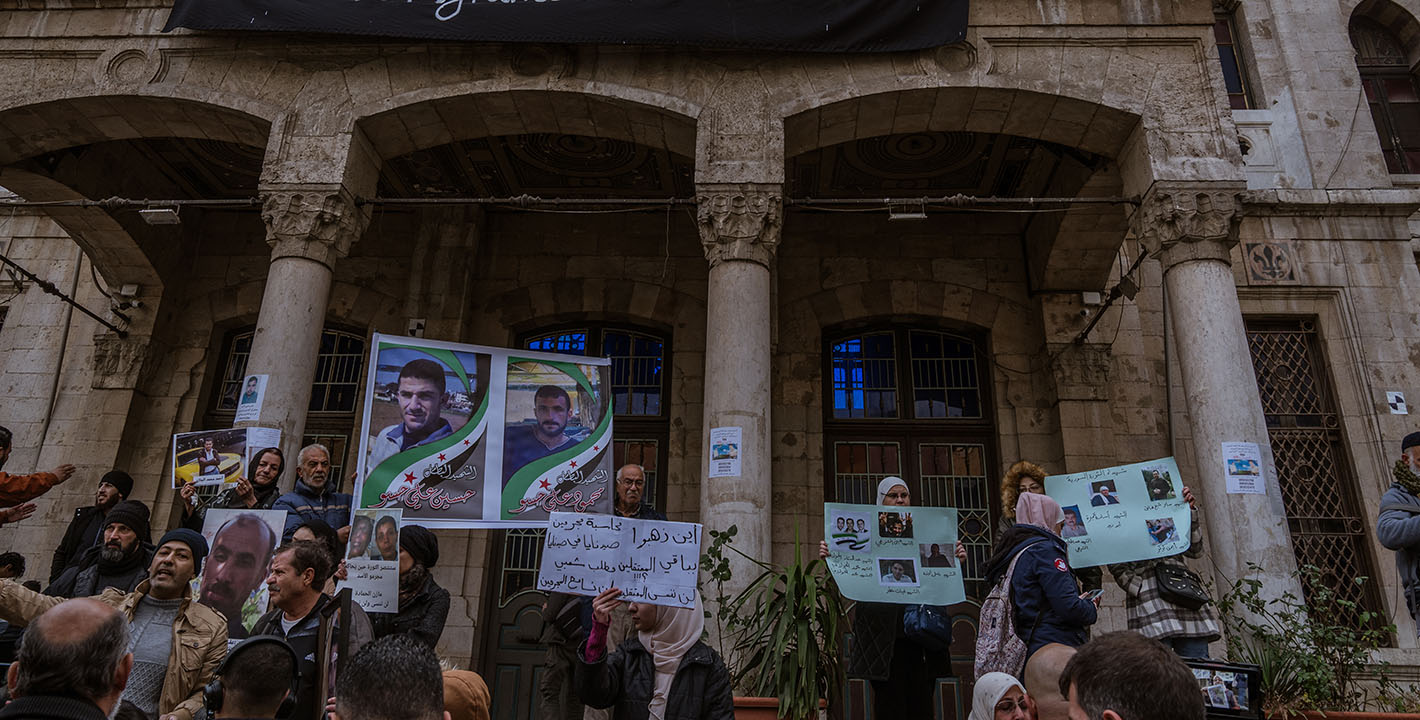
Reconciliation councils are emerging throughout the country to mediate in intracommunal disputes, many from the war years.
Natacha Danon
As the U.S.-led Coalition withdraws, the Kurds’ reliance on Baghdad, and on themselves, will only increase.
Wladimir van Wilgenburg

As the U.S. stumbles in its war with Iran, we are likely to see an acceleration of its disengagement from the region.
Michael Young
The Zaidi government’s objective to collect weapons is constrained by regional conflict, but it can take certain measures at home.
Ali Al-Mawlawi

The accord represents a pivotal moment in the region to avert a security vacuum in the Gulf.


Azeema Cheema, Mohanad Hage Ali