

Commentary
As talks begin between Washington and Tehran, Beirut has an opening to advance a regional plan for the party’s disarmament.
Michael Young
{
  "authors": [
    "Olivia Shabb"
  ],
  "type": "commentary",
  "blog": "Diwan",
  "centerAffiliationAll": "dc",
  "centers": [
    "Carnegie Endowment for International Peace",
    "Malcolm H. Kerr Carnegie Middle East Center"
  ],
  "collections": [
    "Diwan Dispatches",
    "Decoding Lebanon"
  ],
  "englishNewsletterAll": "menaTransitions",
  "nonEnglishNewsletterAll": "",
  "primaryCenter": "Malcolm H. Kerr Carnegie Middle East Center",
  "programAffiliation": "MEP",
  "programs": [
    "Middle East"
  ],
  "projects": [],
  "regions": [
    "Levant",
    "Lebanon",
    "Middle East"
  ],
  "topics": [
    "Political Reform",
    "Economy"
  ]
}
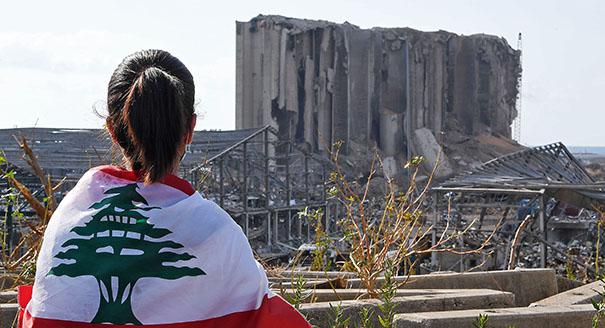
Source: Getty
On Lebanon’s Independence Day, the question has meaning for a population whose leaders are masters of the meaningless.
Our daughter recently came home from daycare with a Lebanese flag drawn to the best of her two-year-old’s artistic ability. The red strips at the top and bottom consisted of glued-on shreds of papier-mâché, and the cedar in the middle was a broad stroke of green paint sprinkled with gold glitter.
I might have been endeared by this work of unwitting patriotism, had I not wondered what kind of allegiance my daughter was practicing, and on what grounds? What does it mean to teach love of country in a Lebanon that gives so little love to its own citizens, that offers closed horizons to those children rehearsing distorted versions of its national anthem in their preschools?
If November 22, Lebanese Independence Day, is tolerated annually thanks to a hefty dose of sarcasm, this year is different. This year, the hurt and disappointment are too fresh, too deep, too frequent, and too consequential to be neutralized with cursory defense mechanisms. If political and financial bankruptcy, intimidation and tear gas, unconstitutional kidnappings, threats of civil war, the mobilization of civilians against each other, and the impoverishment of the population are not violations enough of our right to life, then the explosion of August 4 sealed the deal. In times of so-called peace, we were living, working, bickering, baking, sending kids to school, making love, poring over projects atop thousands of tons of ammonium nitrate waiting to rip through us. And when they did, destroying the lives of those who died and survived alike, we received neither an apology nor an explanation from the authorities. Lebanon’s leaders preferred to rely on collective amnesia to wash away the disaster, as they did with memories of the country’s civil war between 1975 and 1990.
The picture has long been clear. We, the Lebanese, are in an abusive, life-threatening relationship with the so-called leaders of a certified failed state who are incapable of either governing or engaging in dialogue. So what does this make the Lebanese flag?
Is it a romanticized token of the strained relationship that exists between citizen and country? And might it draw some of its romance from this very tension, being something to hold onto as the country itself escapes our grip?
Is it a stubborn denial of the ways in which our tribalism bleeds into our patriotism, killing the possibility of a healthy nationalism, if such a thing can even be envisaged? Or is it an expression of hope that a healthy nationalism can one day be embodied by this symbol that flutters at some ill-defined finish line in the future?
Is the flag a fig leaf that the ruling class uses to hide its moral vulgarity and justify its nepotism, corruption, opportunism, violence, lawlessness, and obstinate grasp on power, despite a flagrant lack of qualifications? Is it a familiar prop in the background of nearly every political speech or interview to gaslight the audience for feeling underserved, persecuted, insulted?
Or does the flag in fact belong to each and every one of us, an endless cloth on which to lay out our dreams like a picnic so that we can share and taste offerings of a brighter future—an inclusive future, a conscientious future, a future of political, humanitarian, and environmental accountability; a future of transparency and humility; of competent public systems and services; a future in which influence is earned rather than bought or inherited; a future of problem-solving and innovation, human protection and investment, dialogue and inclusivity; a future that resembles us and expands us. A future that honors life, and that cares for us and for our children.
Likely, a flag is all and none of the above. It is a symbol, like any other symbol, to be claimed and shared in the interests of building a broader culture. And in fact, since our last Independence Day, the uprising of the Lebanese that began on October 17, 2019, has done just that. With the flag as our only message, our only weapon, it has been a year of saying: This flag belongs to those who dare to dream of a country. And so it will be, regardless of whether one floats it from their balcony or sews it onto their broken, expatriated heart.
I put my daughter’s flag up on the refrigerator, and I urge her to love it. To love it in a way that honors her and everything she might dream of in herself and in her country, but also in a way that teaches her to hold love accountable rather than become its hostage. And I urge her to keep sprinkling glitter on her exploratory brushstrokes, because we will need that spirit when it comes time to build a country.
*Olivia Shabb is a clinical psychologist in Beirut.
Olivia Shabb
Carnegie does not take institutional positions on public policy issues; the views represented herein are those of the author(s) and do not necessarily reflect the views of Carnegie, its staff, or its trustees.
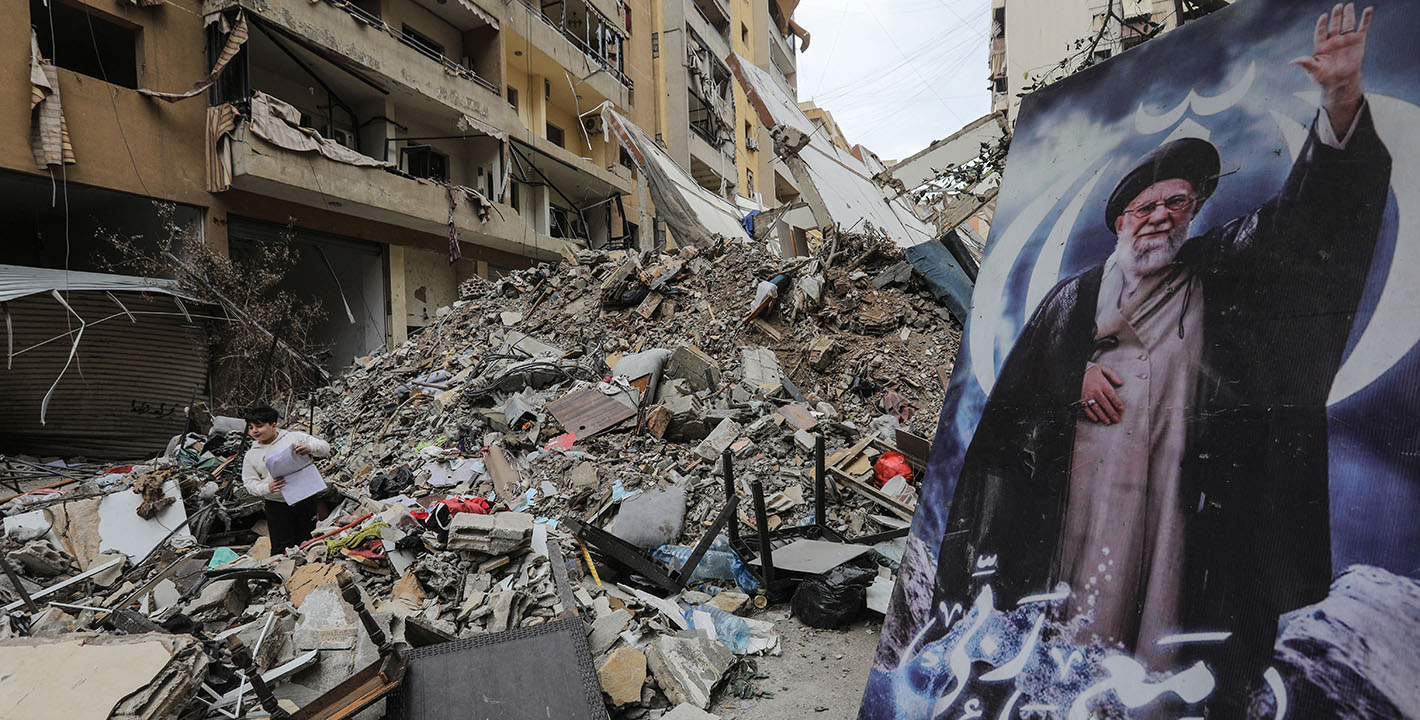
As talks begin between Washington and Tehran, Beirut has an opening to advance a regional plan for the party’s disarmament.

Michael Young
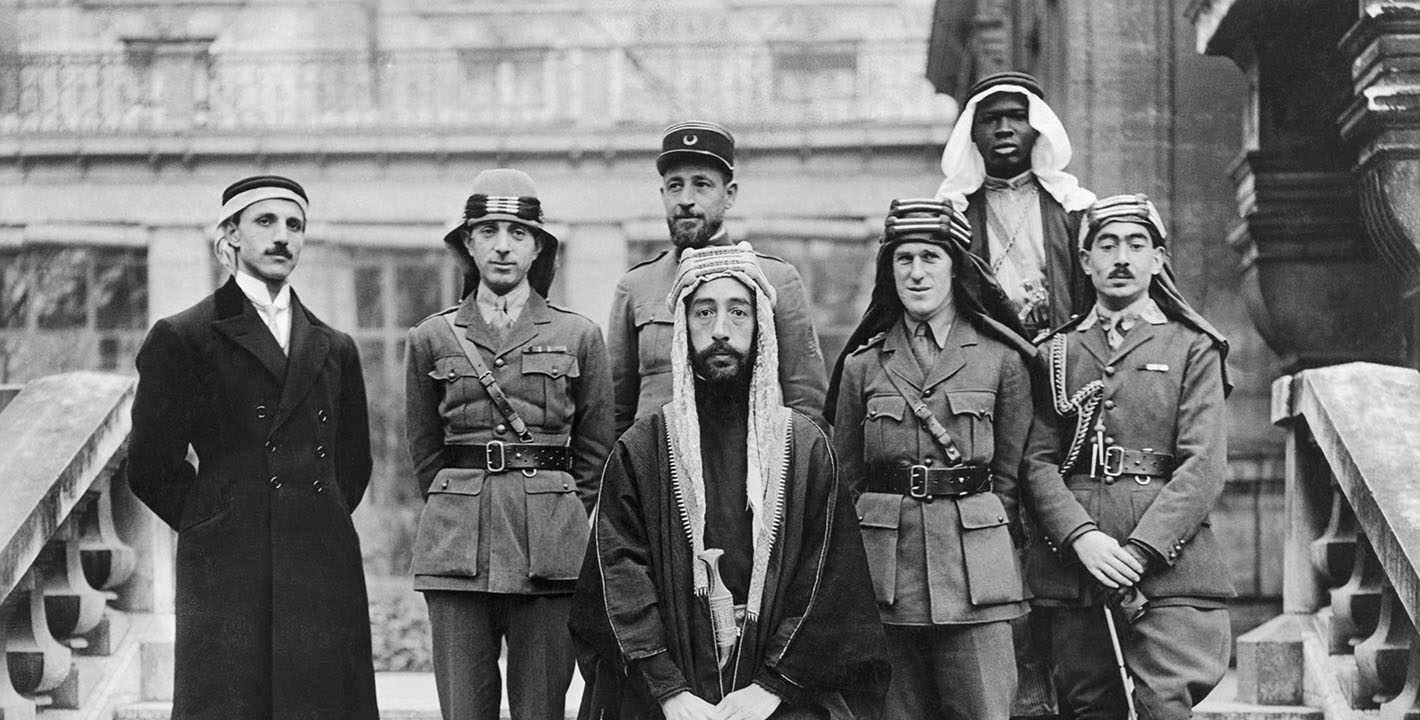
In an interview, Elizabeth Thompson recalls how the country formulated a liberal constitution in 1920, before being denied by France and Britain.
Michael Young
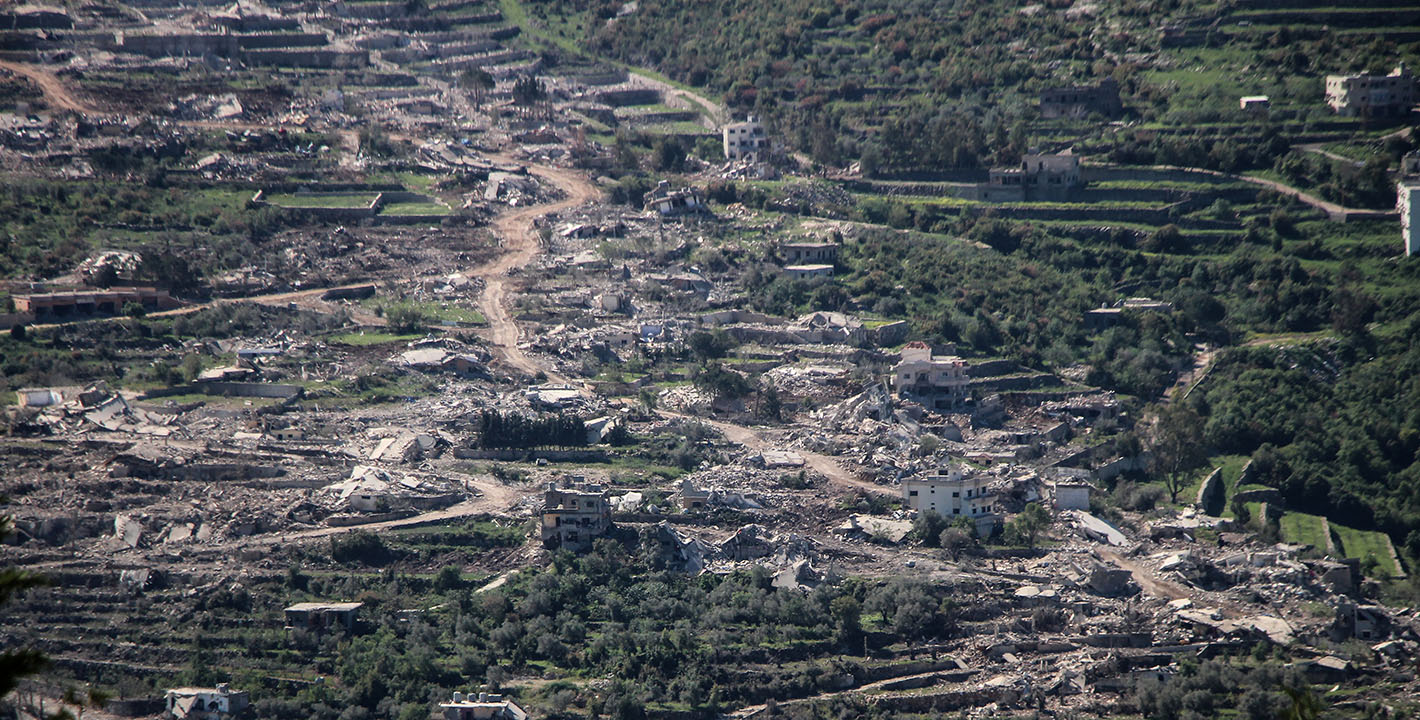
As negotiations with Iran and Lebanon continue, chaos is at the heart of the Netanyahu government’s calculations.
Michael Young
Trade statistics show why Amman has more reason than Damascus to welcome the improvement in bilateral commerce.

Armenak Tokmajyan
Adversaries are to be degraded so deeply, that reconstitution becomes difficult or impossible.

Nathan J. Brown