

Commentary
Michael Young
{
  "authors": [
    "Michael Young"
  ],
  "type": "commentary",
  "blog": "Diwan",
  "centerAffiliationAll": "dc",
  "centers": [
    "Carnegie Endowment for International Peace",
    "Malcolm H. Kerr Carnegie Middle East Center"
  ],
  "collections": [
    "Coronavirus"
  ],
  "englishNewsletterAll": "menaTransitions",
  "nonEnglishNewsletterAll": "",
  "primaryCenter": "Malcolm H. Kerr Carnegie Middle East Center",
  "programAffiliation": "MEP",
  "programs": [
    "Middle East"
  ],
  "projects": [],
  "regions": [
    "Egypt",
    "North Africa"
  ],
  "topics": [
    "Political Reform"
  ]
}
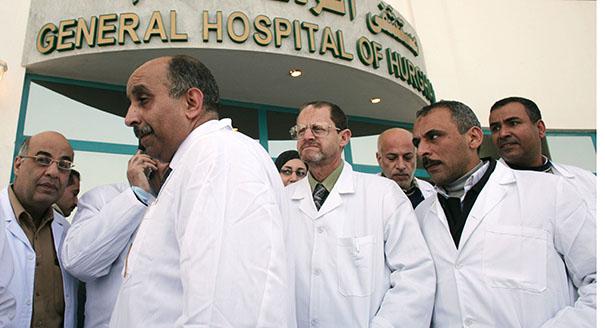
Source: Getty
In an interview, Sherif Mohyeldeen discusses the challenges of healthcare in Egypt’s border areas.
Sherif Mohyeldeen is a nonresident scholar at the Carnegie Middle East Center, where he focuses on Egypt and North Africa. Recently, he wrote an article for Carnegie on healthcare in Egypt titled, “Healthcare in Egypt’s Border Regions: When Money is Not Enough.” The article is part of a larger project on which Carnegie is working on borders, with support from the X Border Local Research Network and funded by the United Kingdom’s Foreign Commonwealth and Development Office. Diwan interviewed Mohyeldeen in early December to discuss his article.
Michael Young: You recently published a Carnegie article on healthcare in Egypt’s border regions. What is your main argument?
Sherif Mohyeldeen: My main argument is that there are two contrary narratives regarding the state of health services in Egypt’s border areas. The first is widespread among local border communities, who point to a history of state neglect and complain that the quality of health services in border areas is inadequate. The second is the state’s narrative, which holds that health services are excellent in border areas. The truth lies somewhere in between. When health services have not been up to par, the main reason for this appears to have been mismanagement rather than intentional neglect.
MY: How accurate is it to say that border communities are marginalized when it comes to healthcare?
SM: It is true that the quality of health services has been wanting among border communities. Yet the state has also spent considerable amounts of money on health services in general since the revolution of 2011, and on new health facilities in border regions specifically. It is also currently introducing a universal healthcare system throughout Egypt, and in an initial phase it is improving health infrastructure in six governorates, all on the periphery of the state, at a cost of EGP23.5 billion Egyptian pounds ($1.5 billion).
The problem is that despite increased expenditures, there are factors that have continued to make for inadequate health services. So even if the authorities seek to avoid the marginalization of border areas, local populations feel differently. This should push the Egyptian authorities to better address local dissatisfaction.
MY: What are the main problems you’ve seen that are preventing quality medical care in border areas?
SM: The absence of the qualified doctors is the major issue. There are several reasons for this. First, the number of doctors working for national hospitals and government clinics under the authority of the Health Ministry is dropping. That is because doctors prefer to move to the private sector or emigrate to countries such as Saudi Arabia, Germany, and the United Kingdom.
Second, a majority of doctors serving in border regions are part of the semi-mandatory Takleef system, in which graduates of medical faculties must work for a year or two in hospitals or clinics under the Health Ministry to be able to enter the public sector. Many of them prefer to serve in health facilities in border areas because salaries are relatively higher. But there is a price to pay in that they have less opportunities to train with noted doctors, who tend to work in Egypt’s main cities. That is why doctors in border regions have less qualifications and experience to deal with serious cases in border areas. Thus, while the state may be trying to avoid marginalizing border areas by ensuring that doctors serve there for a time, local communities complain that there is inadequate monitoring to ensure that the doctors treating them are doing so properly
MY: How has the Egyptian state managed the Covid-19 crisis in border areas?
SM: It has done so by shutting down border crossings and imposing curfews and lockdowns. The fact that most border areas are less populated than the cities of the Nile Valley make them theoretically less vulnerable to Covid-19. Yet in August of this year, the inhabitants of Shalateen, the largest town in the Halayeb Triangle on the Egyptian-Sudanese border, repeatedly appealed to the Egyptian government for help, complaining that “medical negligence” was responsible for a rise in infections and deaths. The Shalateen hospital had purchased new ventilators to treat patients with Covid-19, but there were no qualified doctors to operate the equipment, so patients were left to die unnecessarily. This is an example of how a lack of competent doctors can have fatal consequences.
MY: Some health facilities in border areas have been successful, one of them being the Aswan Heart Center, which you mention in your article. What is it about such facilities that has allowed them to succeed, and how might they represent a model for government-managed facilities?
SM: The Aswan Heart Center has been successful in dealing with the common healthcare challenges in border areas. It has provided an excellent environment for doctors, allowing them to settle and work for years in the center in Aswan in southern Egypt. Unlike the Takleef system which brings fresh graduates to border regions without proper training, AHC doctors are being assigned to provide vital health services to borderland communities, and to patients all over Egypt.
The AHC performs to international standards, and as a charitable contribution the hospital treats locals who are in a serious condition at no cost. This has made the establishment very welcome in the region. It provides an excellent model for how government-managed facilities can prioritize the quality of healthcare and provide a good environment for doctors.

Editor, Diwan, Senior Editor, Malcolm H. Kerr Carnegie Middle East Center
Michael Young is the editor of Diwan and a senior editor at the Malcolm H. Kerr Carnegie Middle East Center.
Recent Work
Michael Young
Michael Young
Carnegie does not take institutional positions on public policy issues; the views represented herein are those of the author(s) and do not necessarily reflect the views of Carnegie, its staff, or its trustees.
This will be the region’s most representative tournament, amid broad changes in its footballing landscape.

Issam Kayssi

The recent African Cup of Nations tournament in Morocco touched on issues that largely transcended the sport.

Issam Kayssi, Yasmine Zarhloule
Mustaqbal Misr has expanded its portfolio with remarkable speed, but a lack of transparency remains.

Yezid Sayigh
The burden of environmental degradation is felt not only through physical labor but also emotional and social loss.
Yasmine Zarhloule, Ella Williams
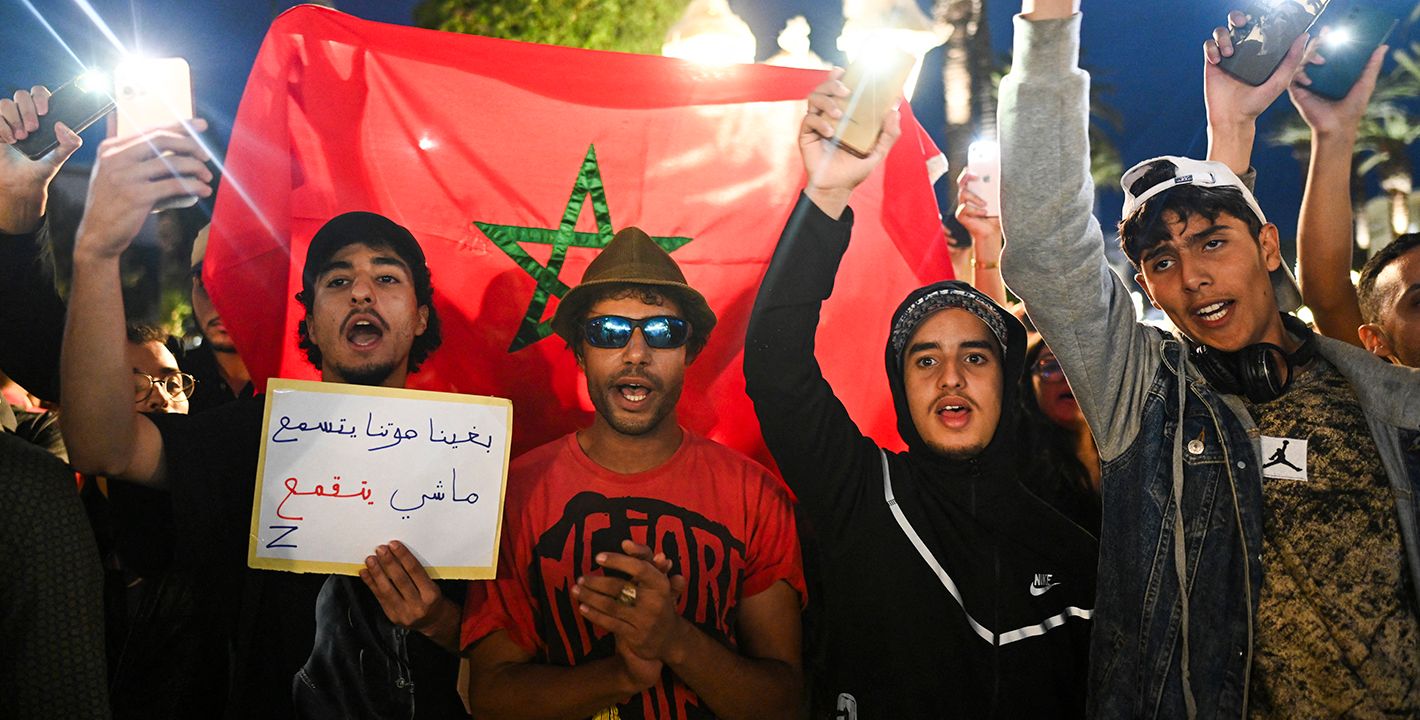
The country’s youthful protest movement is seeking economic improvement, social justice, and just a little hope.
Yasmine Zarhloule