

Commentary
There is a disturbing structural parallel between the old global energy economy and the new green transition.
Angie Omar
{
  "authors": [
    "Sherif Mohyeldeen"
  ],
  "type": "commentary",
  "blog": "Diwan",
  "centerAffiliationAll": "dc",
  "centers": [
    "Carnegie Endowment for International Peace",
    "Malcolm H. Kerr Carnegie Middle East Center"
  ],
  "collections": [],
  "englishNewsletterAll": "menaTransitions",
  "nonEnglishNewsletterAll": "",
  "primaryCenter": "Malcolm H. Kerr Carnegie Middle East Center",
  "programAffiliation": "MEP",
  "programs": [
    "Middle East"
  ],
  "projects": [
    "X-Border Local Research Network"
  ],
  "regions": [
    "Egypt",
    "North Africa"
  ],
  "topics": [
    "Political Reform"
  ]
}
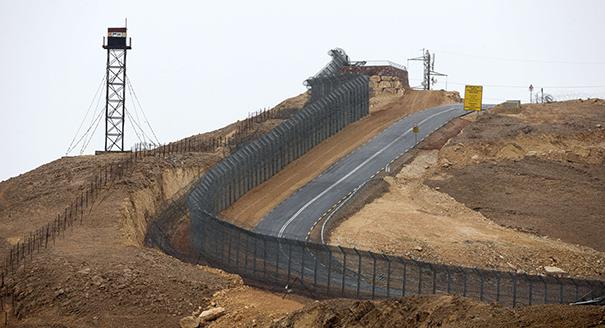
Source: Getty
By impeding research, Egypt curtails knowledge that can help resolve crises, especially in border areas.
“Military Zone: No trespassing … No photos allowed!”
While such warnings are visible around military zones in Cairo and cities of the Nile Valley, all Egyptian border areas have also been declared military zones according to presidential decree No. 444—2014. For researchers working in Egypt, especially on border issues, this designation greatly hinders movement and makes research, particularly of a political or cultural nature, nearly impossible.
The restrictions also reflect a wider tendency of the Egyptian state to control all information. Egypt has an abundance of material, including legislation, that could assist decisionmakers to adopt policies benefiting the public. Yet the state has had a tendency to block access to such information by the public and researchers.
The state has also introduced measures that severely hinder the ability of researchers to function on the ground. This is especially true in Egypt’s border areas, which are regarded by the authorities as particularly sensitive. Such restrictions show an inability to understand the advantages of research in the first place. That is surprising, as Egypt has long-established reputable research institutions, such as the Information and Decision Support Center, affiliated with the Egyptian cabinet, the Ahram Center for Political and Strategic Studies, affiliated with the national Ahram Regional Institute for Journalism, and the National Population Council, an institution that specializes in conducting research on Egypt’s population and presenting recommendations to executive bodies.
The nationalizations that swept across Egypt after the revolution in 1952 have left research, along with other fields such as the arts and journalism, under the sole authority of the state. While government-associated researchers face bureaucratic obstacles that limit the scope of their research, independent researchers face even greater impediments, including lack of accreditation from the government.
The inability of independent researchers to secure accreditation, as well as the absence of a basic understanding of the value of research, perpetuates suspicion toward researchers and their projects. Indeed, researchers are often treated like journalists by the authorities. This has led the police or security forces to arrest and imprison researchers or journalists gathering information. That is what happened to journalist Basma Mostafa, who was covering protests in Luxor in October 2020, when she was detained for several days.
Another journalist, Isma‘il al-Iskandarani, was similarly arrested for his research on the political situation in a key border area, namely the Sinai. He was detained for five years and subjected to a military trial in which he was accused of spreading false news. This is an accusation that many citizens face without much evidence to prove it. At the end, Iskandarani was sentenced to ten years in prison.
In other cases, suspicion directed at researchers has led to death. Giulio Regeni, an Italian student, was conducting research on the attempts of Cairo street vendors to unionize, when he was forcibly disappeared in January 2016 and, it appears, died under torture.
The state’s pervasive security proscriptions are quite loosely defined and cover a wide array of issues. The same restrictions apply to photographic documentation, which is often more democratic and accessible thanks to smart phones. This has become dangerous as well, and can expose a photographer to police questioning and sometimes more serious consequences.
There is an urgent need for researchers to gain accreditation, so that research can gain its rightful place as a tool to develop and improve knowledge of the country. This is particularly pressing when Egypt’s border areas in particular are struggling with various forms of instability—from armed conflict against terrorist groups in the Sinai to disagreements with Sudan over the Halaib Triangle and Shalateen. By continuing to obstruct research, the government impedes researchers’ ability to address underlying societal issues, thereby preventing the production of knowledge that could be used to help alleviate crises and conflicts in Egypt’s borderlands.
The state should go further and protect researchers in risky settings, particularly where they operate between the hammer of terrorist groups who think they work for the Egyptian Intelligence service and the anvil of the state. Doing so would represent acknowledgement of the benefits of research, which, ironically, the authorities have done at different times in the past. That is why improving research conditions in Egypt is also an integral part of addressing many of the socioeconomic challenges the country faces today.
Sherif Mohyeldeen
Sherif Mohyeldeen is a nonresident fellow at the Carnegie Middle East Center in Beirut.
Carnegie does not take institutional positions on public policy issues; the views represented herein are those of the author(s) and do not necessarily reflect the views of Carnegie, its staff, or its trustees.
There is a disturbing structural parallel between the old global energy economy and the new green transition.

Angie Omar
This will be the region’s most representative tournament, amid broad changes in its footballing landscape.

Issam Kayssi
Cairo’s efforts send a message to the United States and the region that it still has a place at the diplomatic table.
Angie Omar

The recent African Cup of Nations tournament in Morocco touched on issues that largely transcended the sport.

Issam Kayssi, Yasmine Zarhloule
Mustaqbal Misr has expanded its portfolio with remarkable speed, but a lack of transparency remains.

Yezid Sayigh