

Commentary
Michael Young
{
  "authors": [
    "Michael Young"
  ],
  "type": "commentary",
  "blog": "Diwan",
  "centerAffiliationAll": "dc",
  "centers": [
    "Carnegie Endowment for International Peace",
    "Malcolm H. Kerr Carnegie Middle East Center"
  ],
  "collections": [],
  "englishNewsletterAll": "menaTransitions",
  "nonEnglishNewsletterAll": "",
  "primaryCenter": "Malcolm H. Kerr Carnegie Middle East Center",
  "programAffiliation": "MEP",
  "programs": [
    "Middle East"
  ],
  "projects": [],
  "regions": [
    "Gulf",
    "Levant",
    "Saudi Arabia",
    "Lebanon",
    "Middle East"
  ],
  "topics": [
    "Political Reform"
  ]
}
Source: Getty
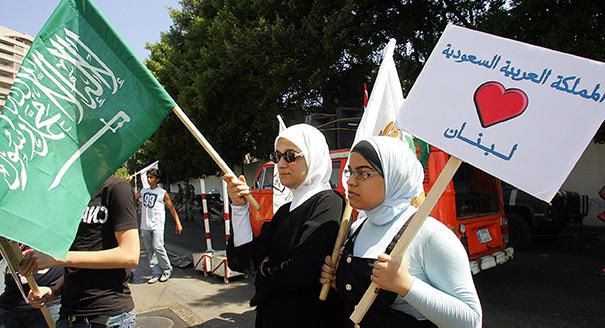
Renewed Saudi political activity in Lebanon may signal the emergence of an alignment that aims to preserve ties with the Arab states.
Intriguing developments are taking place in Lebanon, as the country prepares for two elections this year. They come amid reports that in late April a fifth round of Saudi-Iranian talks in Baghdad was “positive,” and that the two delegations may soon transfer their discussions from security figures to diplomats. This underlines that if Lebanon sees any changes in the coming months, they will be the result primarily of regional dynamics.
The Saudi position toward Lebanon appears to have undergone a significant transformation since the return of Gulf ambassadors to Beirut this month. On April 11, Saudi ambassador Walid Bukhari held an iftar for major Lebanese political figures—among them Prime Minister Najib Mikati, two former prime ministers, Fouad al-Sanioura and Tammam Salam, and two former presidents, Amin Gemayel and Michel Suleiman. Also present were several foreign envoys , including the U.S. and French ambassadors, who had worked hard in the past to reengage the kingdom in Lebanese affairs.
There were two messages in the iftar, and more generally in Bukhari’s arrival in Lebanon—one very public, the other more nuanced. Publicly, Bukhrari underlined that the Saudis were back and could still command significant political sway among the Lebanese. This coincided with the signature of a Franco-Saudi Protocol to provide Lebanon with humanitarian aid worth between $30 million and $70 million. Hezbollah must have received that message with considerable ambiguity. After Michel Aoun’s election as president in 2016, the party exploited the hands-off approach the Saudis adopted toward Lebanon to fill the void and become the dominant pole around which the country addressed the region and its affairs.
The more subtle message was directed at the Sunni community in particular. By inviting all the former Sunni prime ministers to his April 11 iftar, a day after hosting another iftar for Grand Mufti Abdel Latif Daryan, Bukhari was making the point that Saudi ties with the community remained strong, stronger than when former prime minister Saad al-Hariri positioned himself as the main Lebanese interlocutor with Riyadh. The fact that Bukhari later received the parliamentarian Fouad Makhzoumi, a Hariri opponent, only confirmed that the Saudi approach to the Sunni community now appears to be more ecumenical than before. The kingdom wants ties with all Sunnis, whatever their affiliation, which probably means that even Sunni allies of Syria and Hezbollah may find an outstretched hand from Riyadh if they ever look for one.
This would take the kingdom back to the years prior to Rafiq al-Hariri’s becoming prime minister in 1992, when the Saudis did not channel their Lebanese relationships through a single Lebanese politician or an understanding with Syria. After Hariri’s assassination in 2005, Saudi Arabia anointed his son Saad as its main representative in Lebanon. However, his contentious ties with Crown Prince Mohammed bin Salman led to a radical shift in Saudi thinking, in which Hariri’s presence effectively became an obstacle to any Saudi commitment. Hariri’s withdrawal from politics last January appears to have resolved that problem, reinvigorating the kingdom’s more expansive approach to Lebanon.
If so, then it is welcome, as it could mean that the Saudis, and with them the other Gulf Arab states, as well as Egypt and Jordan, are coming around to the idea that Lebanon should no longer be abandoned for being regarded as an Iranian outpost. By isolating the country because of its ties with Tehran, all these states did was create an opportunity for Iran to consolidate its sole authority there. The Americans and French also understood that deserting Lebanon at a time of economic collapse would lead to precisely such an outcome.
Paradoxically, Lebanon’s crisis was also the opening needed to loosen Iran’s and Hezbollah’s grip, as it invited outside involvement from many quarters. After the explosion at Beirut Port in August 2020, France intervened aggressively to try to find a solution for the country’s political paralysis. At the same time, as social and economic conditions deteriorated, with the political class unwilling to do anything to alleviate matters, the necessity of a deal with the International Monetary Fund became even more apparent, regardless of what Hezbollah said. The United States, France, Arab countries, as well as international financial organizations have all rushed in to help address an unfolding catastrophe, so that Iranian and Hezbollah’s geopolitical priorities could not stop this momentum.
It’s too early to determine what the effects might be on political life. Whether the Saudis are willing to fund the electoral lists of Hezbollah’s opponents in the May 15 elections remains unclear—even if many assume the Lebanese Forces will benefit from their largesse. However, at the very least the Saudis will act as a rallying point for Sunnis who want regional support from the Gulf states. The Saudi aim would not be to play on the old March 8-March 14 dividing line, but to rally a range of candidates around the idea of preserving Lebanon’s strong ties with the predominantly Sunni Arab world and prevent Hezbollah from undermining them.
This could bring various political actors into a wide grouping, including the Lebanese Forces leader Samir Geagea, the Druze leader Walid Joumblatt, all the former Sunni prime ministers and Future Movement bloc members, as well as, possibly, the likes of Faysal Karami, Hassan Mrad, Oussama Saad, Fouad al-Makhzoumi, Wiam Wahab, and others. That’s not to say that this very amorphous group would represent an alliance, but it could come together around an agreement to push back against Hezbollah’s efforts to divide Lebanon from its Arab hinterland. Hezbollah could be forced to accept that Arab states—including Syria, otherwise a Hezbollah ally—need to be given a say in what happens in Lebanon.
This alignment of forces could even emerge as a majority in the next parliament. That’s why, on many issues of regional relevance, it may make little sense to divide the parliament between pro-Hezbollah and anti-Hezbollah candidates. It’s conceivable that Sunnis who have good relations with Hezbollah will split with the party on certain matters of regional concern, and will oppose those decisions that risk alienating the Arab states or harming their interests. These political forces could also find common ground to ensure that future prime ministers are acceptable to Arab leaders and that cabinets have enough ministers close to Arab capitals, allowing the Arab countries to establish constituencies in state institutions.
How this might play out in the presidential election is uncertain. But if we apply the same logic, it could mean the Arab states’ local allies could try to build a consensus around certain candidates and veto those whom their Arab backers reject. This would be bad news for Gebran Bassil, who is widely disliked in Arab capitals for pushing Hezbollah’s agenda. Such veto power would encroach on what Hezbollah regards as a de facto monopoly it enjoys, namely barring the candidates it opposes. If Arab states and their local allies start doing the same as well, much in Lebanon could become an object of perpetual negotiation.
This effective “regional pluralization” of Lebanese politics has good and bad sides. Limiting Iranian hegemony and compelling Hezbollah to take into consideration the interests of the regional sponsors of its mainly Sunni political counterparts could make for a more balanced system. Iran cannot be kicked out of Lebanon, the Arab states appear to acknowledge, but nor can the country be dragged out of the Arab orbit, since a clear majority of the population opposes such a direction. The downside is that regional rivalries may paralyze the domestic political scene. But when was that ever not the case? If it can help produce a modus vivendi, Lebanon could find more stability than it has seen in a while.

Editor, Diwan, Senior Editor, Malcolm H. Kerr Carnegie Middle East Center
Michael Young is the editor of Diwan and a senior editor at the Malcolm H. Kerr Carnegie Middle East Center.
Recent Work
Michael Young
Michael Young
Carnegie does not take institutional positions on public policy issues; the views represented herein are those of the author(s) and do not necessarily reflect the views of Carnegie, its staff, or its trustees.
In an interview, Sergei Melkonian discusses Armenia’s and Azerbaijan’s careful balancing act among the United States, Israel, and Iran.

Armenak Tokmajyan
In an interview, Kheder Khaddour explains that Damascus is trying to stabilize its borders, but avoiding war isn’t guaranteed.
Michael Young
The country’s strategy is no longer focused on deterrence and diplomacy, it’s about dominance and degradation.

Nathan J. Brown
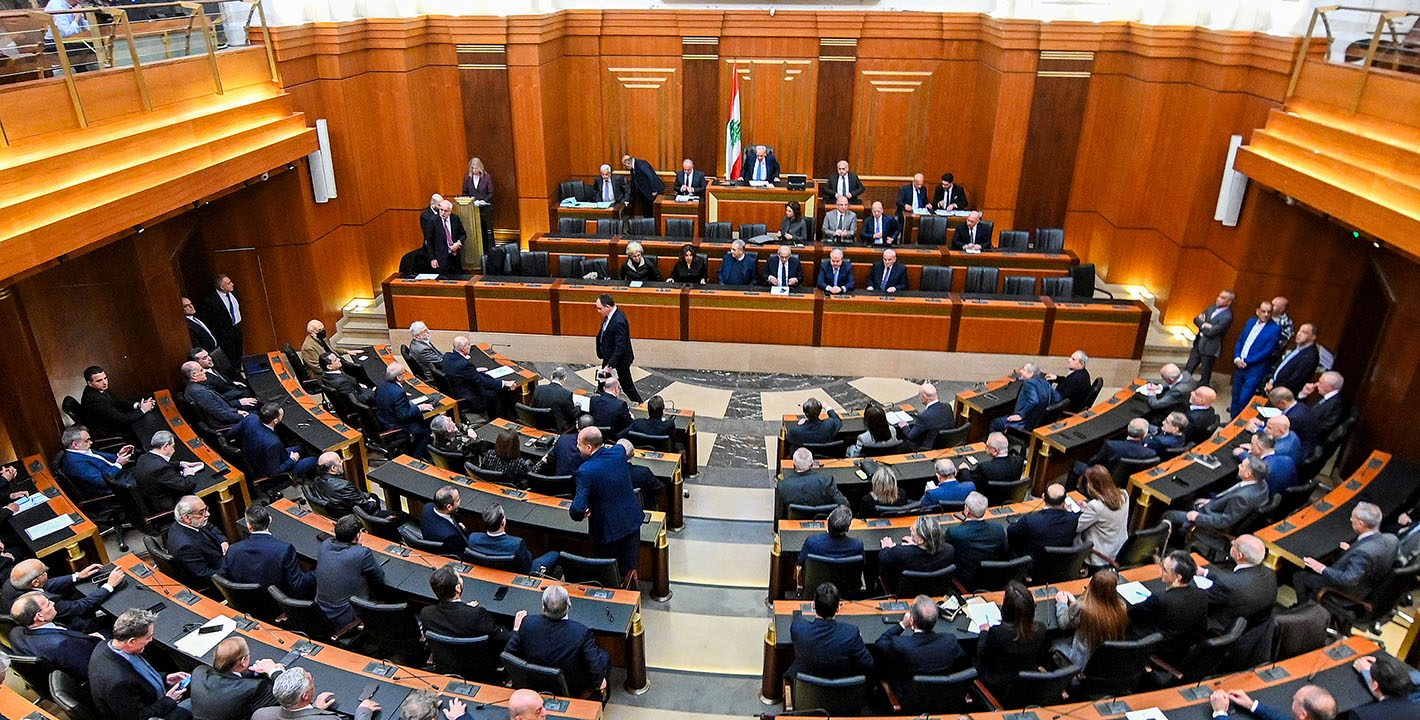
The decision of Lebanon’s parliament may look exceptional, but in reality it is not.

Issam Kayssi
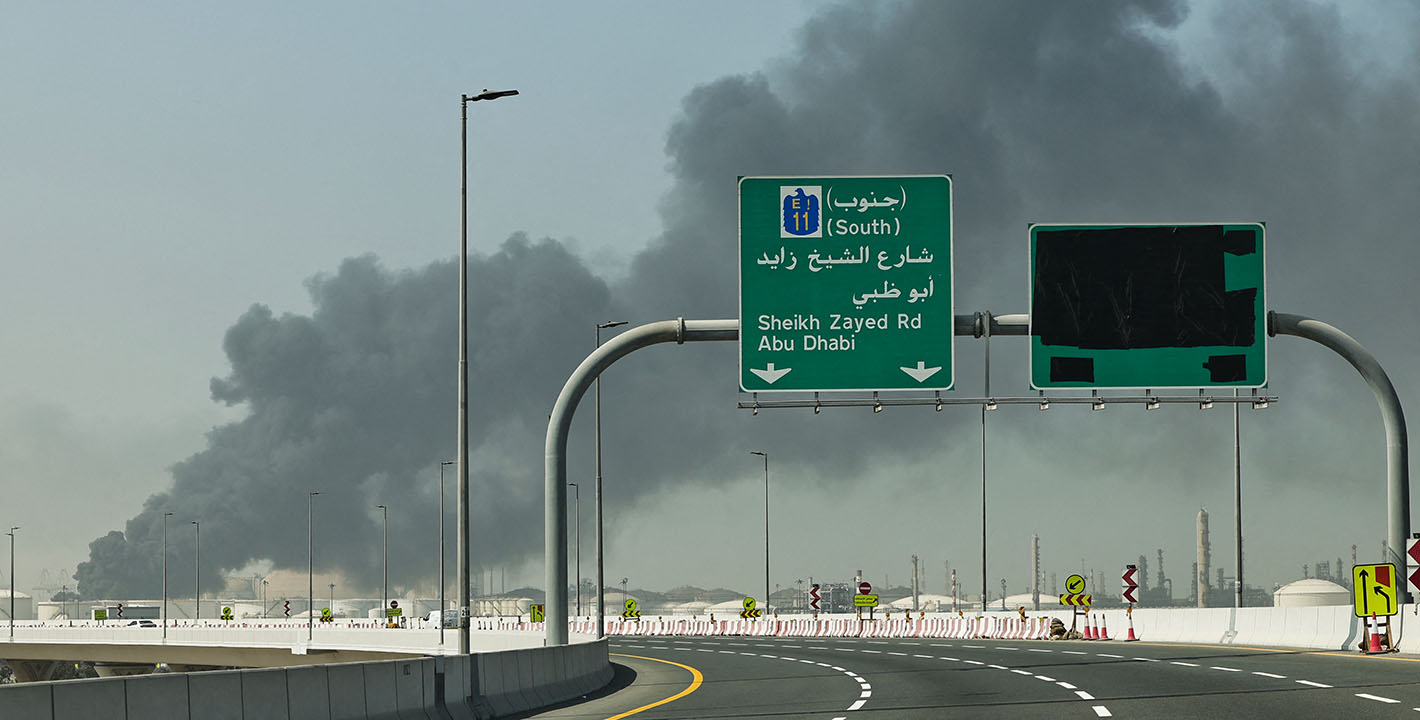
The countries in the region are managing the fallout from Iranian strikes in a paradoxical way.

Angie Omar