

Commentary
Issam Kayssi
{
  "authors": [
    "Issam Kayssi"
  ],
  "type": "commentary",
  "blog": "Diwan",
  "centerAffiliationAll": "",
  "centers": [
    "Carnegie Endowment for International Peace",
    "Malcolm H. Kerr Carnegie Middle East Center"
  ],
  "collections": [
    "Decoding Lebanon"
  ],
  "englishNewsletterAll": "",
  "nonEnglishNewsletterAll": "",
  "primaryCenter": "Malcolm H. Kerr Carnegie Middle East Center",
  "programAffiliation": "",
  "programs": [],
  "projects": [],
  "regions": [
    "Lebanon"
  ],
  "topics": [
    "Domestic Politics"
  ]
}
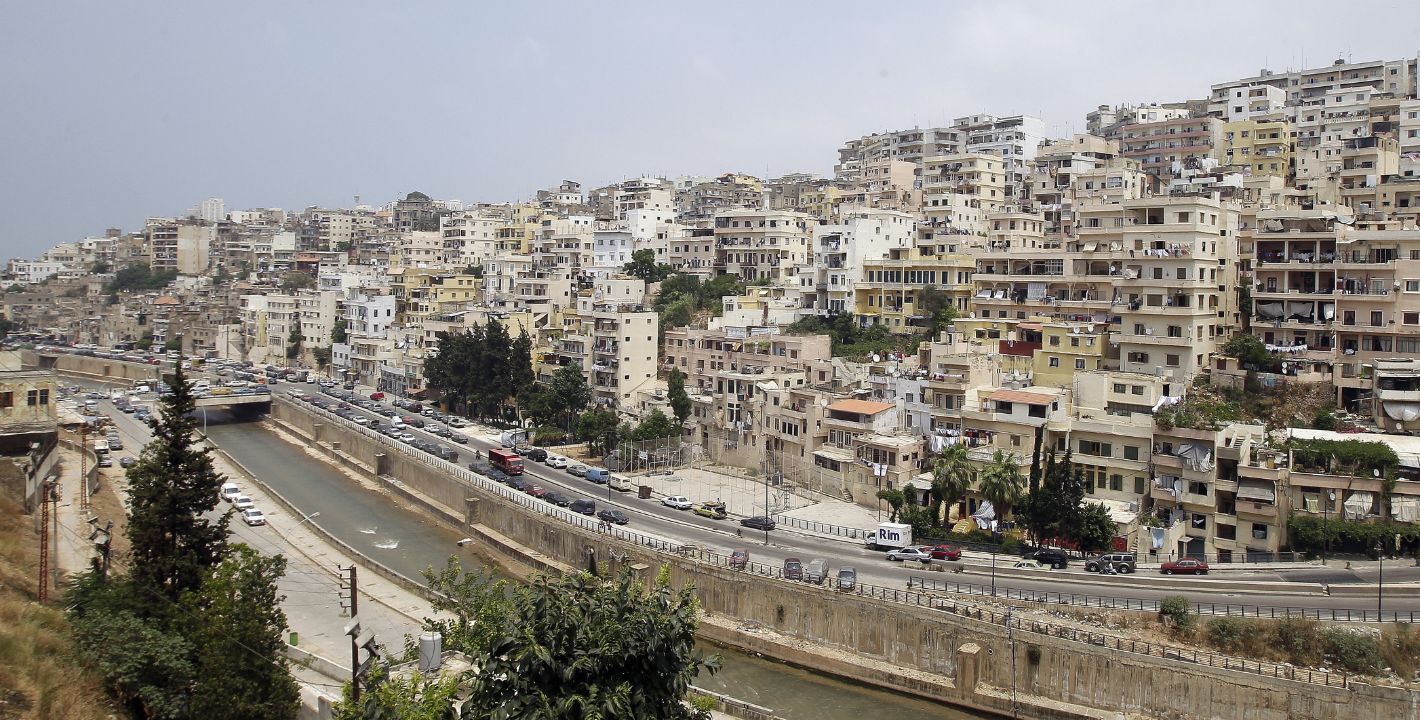
Source: Getty
Municipal elections in the city may be a harbinger of developments in the Sunni community.
In a Lebanon teetering between old patterns and new possibilities, a local election in one of the country’s most marginalized cities might seem like a footnote. It isn’t. The May 11, 2025, municipal elections in Tripoli offered a window into the state of Lebanese politics, reflecting a quiet but mounting protest against its exhausted ruling order.
Since Lebanon’s 2019 financial implosion, the country has spiraled into economic and institutional freefall. The recent war between Israel and Hezbollah only compounded the paralysis, further exposing the state’s inability to govern or respond. In that vacuum, Lebanon’s municipalities, had they been functional and well resourced, could have served as lifelines. Most didn’t. But today, municipalities such as Tripoli’s have also become places of political experimentation.
Municipal councils are supposed to manage the everyday affairs of citizens, therefore their responsibilities lie at the heart of governance—things such as improving roads and sanitation, ameliorating public spaces, and engaging in local economic development. In practice, however, most lack the funding to fulfill such roles, especially amid deep state dysfunction. Unlike parliamentary elections, municipal contests are, technically speaking, nonsectarian. No quotas divide seats among religious sects. Council members are elected for six-year terms.
Lebanon has over 1,000 municipalities, but few carry the symbolic and political weight of Tripoli. That’s in part because Tripoli is the country’s second-largest city and a Sunni stronghold, with more than 80 percent of its population identifying with the community. The city also leads Lebanon in poverty, unemployment, and infrastructural decay. Yet Tripoli also remains a place of great potential. It is home to a rich Ottoman, Mamluk, and Frankish heritage, enjoys an attractive Mediterranean coastline, and has a population that has displayed political energy, as during Lebanon’s 2019 uprising. But for decades, Tripoli has also been treated as expendable, left to languish not because of misfortune but by political design.
This makes the 2025 municipal elections instructive. For the first time in nine years, and after three postponements, Tripolitans voted in local polls. The result was tight and contentious, hinting at a possible shift in Sunni political dynamics and reopening the question of whether real political alternatives remain viable in the community.
The last municipal elections, in 2016, had already exposed cracks in the establishment’s hold. In 2016, the list backed by former justice minister Ashraf Rifi swept sixteen of 24 seats in the municipal council, routing a broad coalition of establishment forces, including candidates backed by former Lebanese prime ministers Saad al-Hariri and Najib Mikati and political families such as the Karami family. That outcome reflected a telling shift: the establishment list lost enough of the share of the vote that it created an opening for Rifi to exploit by consolidating a previously scattered protest vote. That council ultimately descended into dysfunction, however, with legal disputes over leadership.
In 2025, the landscape changed again. This time, Rifi, now elected to parliament, joined the very forces he had previously opposed. In a post-Hariri vacuum, the Sunni establishment regrouped under the Tripoli Vision list, backed by Rifi and Faysal Karami, Taha Naji, and Karim Kabbara, parliamentarians who represent the city’s entrenched political currents, from Islamic organizations to traditional Tripolitan Sunni political families.
With over 180 candidates running for the 24 seats, their principal challenger was Naseej Tripoli (Fabric of Tripoli), a diverse list with a Muslim social core. It was backed by Omran, a local civil society organization made up of businessmen and professionals, and later endorsed by newcomer parliamentarian Ihab Matar. During the past four years, Omran had cultivated credibility not through slogans, but by delivering services. Chief among these was the operation of a non-profit public bus line connecting the city center to peripheral neighborhoods—no small feat in a context in which state services have collapsed.
Naseej Tripoli emphasized environmental livability, inclusive development, and social solidarity. Its discourse was non-partisan and pragmatic. Notably, the list imposed a unique “clean slate” rule: none of its candidates had previously served on the municipal council. The name “Naseej” reflected its broader vision: reweaving the city’s fragmented civic tapestry into a coherent whole.
The results were announced after a murky 75-hour delay, raising serious doubts. Observers reported that the vote was marred by administrative obstruction, counting irregularities, and violations of transparency. Public criticism focused in part on the governor of the North Governorate, Ramzi Nohra. The fallout was swift: Lebanon’s government suspended Nohra following serious allegations, including favoritism in accrediting election observers. Despite the controversy, the government decided the results would stand. Tripoli Vision won twelve seats, Naseej secured eleven, while a third list, City Guards, won one seat. This meant that no single bloc had obtained a majority.
Turnout was about 27 percent, which is low but consistent with the percentages in the 2010 and 2016 elections. In absolute terms, tens of thousands still voted. Perhaps most symbolically, the top vote-getter was not an establishment figure but Naseej’s Wael Zmerly, who received around 11,500 votes. The head of the establishment list, Abdel Hamid Karimeh, placed seventh with about 9,900 votes.
Despite Tripoli’s diversity, only one Alawite was elected, and no Christians won seats, even though both leading lists included Alawite and Christian candidates. Similarly, although both lists fielded several women, none were elected. This outcome resulted from the majoritarian voting system in place, and the absence of proportionality. While the results reflected the preferences of a Sunni plurality among the different voting blocs, they failed to represent the city’s sectarian and gender diversity. That imbalance may alarm Christian parties nationally, who had been used to a guaranteed share of municipal seats in Tripoli, but have twice seen that informal understanding ignored. The next phase is critical: electing the council president, or mayor, from among the members. With no list holding a majority, the outcome will be decided by negotiations.
Though different in scale and structure from parliamentary races, Tripoli’s municipal elections are a weathervane for broader shifts. If traditional Sunni forces are fatigued and civil society lists can build credibility through service delivery, 2025 could preview the tensions looming before the 2026 parliamentary elections. Unless a major Sunni force emerges (or returns), perhaps propelled by regional winds of change and backed by support from Gulf states, parliamentary politics may witness similar contests between fading establishment figures and fragmented challengers.
The Tripoli vote will invite comparisons with Beirut’s municipal elections, where energetic civil society lists face entrenched forces in a more complex political environment. Unlike Beirut, Tripoli’s contest was largely an intra-Sunni struggle (with, among other factors, no overt Hezbollah presence). Tripoli’s elections do not herald a revolution. But they offer a glimpse of how Sunni politics might develop in Lebanon moving forward. The post-Hariri Sunni political arena is wide open for more initiatives that are local, grounded, and focused on services over slogans. The margin was razor-thin in Tripoli, but even a credible challenge in which ideas push back against inertia is worth paying attention to.
In 2026, more reformists and newcomers may feel emboldened to challenge the establishment, while establishment figures are likely to regroup and anxiously attempt to push back more forcefully against the reformists. Whether this evolving tension tips the balance remains to be seen, but the contest has already begun.

Research Analyst, Malcolm H. Kerr Carnegie Middle East Center
Issam Kayssi is a research analyst at the Malcolm H. Kerr Carnegie Middle East Center.
Recent Work
Issam Kayssi
Issam Kayssi
Carnegie does not take institutional positions on public policy issues; the views represented herein are those of the author(s) and do not necessarily reflect the views of Carnegie, its staff, or its trustees.
Lying at the heart of Lebanon’s dysfunction is an inability to secure accountability and institutional legitimacy.

Maha Yahya
In an interview, Sohaib Jawhar analyzes the profound changes in the ties between the neighboring countries.

Michael Young
Any move by the United States to make good on Trump’s suggestion that Washington persuade Damascus to confront Hezbollah militarily would have catastrophic consequences.
Kheder Khaddour
As talks begin between Washington and Tehran, Beirut has an opening to advance a regional plan for the party’s disarmament.
Michael Young
In an interview, Elizabeth Thompson recalls how the country formulated a liberal constitution in 1920, before being denied by France and Britain.
Michael Young