

Commentary
Yezid Sayigh
{
  "authors": [
    "Yezid Sayigh"
  ],
  "type": "commentary",
  "blog": "Diwan",
  "centerAffiliationAll": "",
  "centers": [
    "Carnegie Endowment for International Peace",
    "Malcolm H. Kerr Carnegie Middle East Center"
  ],
  "englishNewsletterAll": "",
  "nonEnglishNewsletterAll": "",
  "primaryCenter": "Malcolm H. Kerr Carnegie Middle East Center",
  "programAffiliation": "",
  "programs": [],
  "projects": [],
  "regions": [
    "Egypt",
    "North Africa"
  ],
  "topics": [
    "Economy"
  ]
}
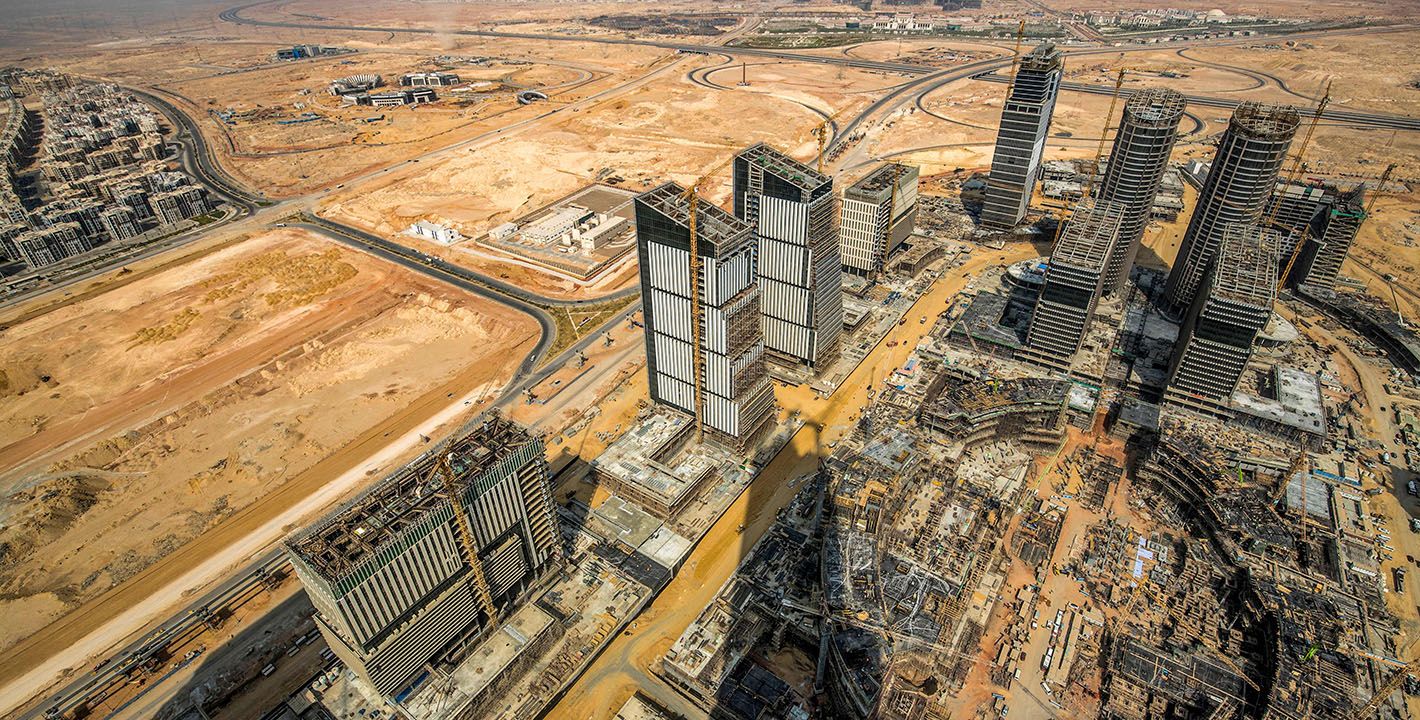
Source: Getty
Mustaqbal Misr has expanded its portfolio with remarkable speed, but a lack of transparency remains.
Egyptian President Abdel-Fattah al-Sisi’s expansive national projects have a new poster child: the Future of Egypt Authority for Sustainable Development, commonly known as Mustaqbal Misr. The agency, which belongs to the Egyptian Air Force, was established in 2022 by presidential decree. The official State Information Service described it a mere two years later as “one of the largest development entities in the world,” while a media outlet affiliated with the General Intelligence Service credited it with “leading and supervising half of Egypt’s cultivated land.”
Mustaqbal Misr has expanded its portfolio with remarkable speed since then, establishing agro-industries, foraying into animal breeding, fish-farming, and poultry production, reactivating and controlling the food commodities exchange, taking over wheat imports and constructing massive storage facilities, commercially exploiting inland lakes, setting up solar energy farms, and is now even trying its hand at building and operating new cities. A deal with Chinese technology giant Huawei will moreover provide the agency’s projects with cloud computing, artificial intelligence applications, supply chain platforms, and Internet of Things capabilities.
Awarding major state-owned assets and resources to military agencies is far from unusual in Egypt, but Mustaqbal Misr stands out as one of the few examples in which healthy financial returns and economic benefits are unambiguous. Furthermore, it claims to have achieved these results in partnership with a large number of private-sector companies. All sources point to the executive director of Mustaqbal Misr, air force pilot Colonel Bahaa al-Ghannam, as the driver of the agency’s success. As investigative journalist Nada Arafat reports, Ghannam has empowered competent civilian directors over their military subordinates, which is a radical break with custom; other military agencies operating in the civilian economy invariably appoint officers lacking in relevant expertise as nominal supervisors. He clearly also learns from mistakes, especially the failed management by the New Rural Development Authority of the 1.5 million feddans (some 1.56 million acres) reclamation scheme launched by Sisi in 2015, which suffered from over-extraction from aquifers, salinity, inadequate infrastructure and electricity supply, poor marketing, and cost overruns, and which bankrupted small investors.
Does all this mean that Sisi has finally found a genuinely competent, business-minded military entrepreneur whose productive and commercial ventures are turning a profit and addressing food gaps, while also offering a successful model for public-private partnership that may be replicated in other sectors of the economy? That is what the president seems to believe. So much so, in fact, that for someone who routinely interrupts speakers with long, rambling interventions, Sisi uncharacteristically sat through a 37-minute presentation by Ghannam of Mustaqbal Misr’s achievements without intervening once—and even took notes. Mustaqbal Misr’s success in reclaiming the 200,000 feddans (207,600 acres) of desert land assigned to the air force for cultivation—where other military and state agencies failed—led to the air force being awarded overall management of the massive 2.2 million feddans (just under 2.3 million acres) New Delta scheme in 2021, half of which was assigned to be managed directly by Mustaqbal Misr.
Mustaqbal Misr has not looked back since then. Its signal achievements include attracting substantial private-sector participation in publicly funded projects, something that Sisi has long sought but failed to bring about, and reducing Egypt’s significant food gap, thereby easing demand on its foreign currency reserves. According to Ghannam, the agency not only contributed $4.3 billion in import substitution and exports of wheat, sugar beet, corn, and onions in the six years up to 2024, but did so “in cooperation with the private sector.” He moreover projected annual import substitution worth $3.7 billion and exports worth $2 billion by 2029. Ghannam also claimed creation of 40,000 direct and 2 million indirect jobs in 2024, with the aim of generating 80,000 direct and 3.5 million indirect jobs by 2027.
Finally, Mustaqbal Misr has attained a level of vertical integration among its food production and agro-industry, storage and packaging, and marketing activities that is typical of multinational companies—and one which exceeds that of its closest military competitor, the National Service Projects Organization, which operates in the same sectors. Indeed, Mustaqbal Misr has taken over the latter’s failed projects—in land reclamation and cultivation, inland lake management and fish farming, animal breeding, and building maintenance and cleaning.
But although Mustaqbal Misr’s declared results are impressive, a lack of transparency precludes assessing its true commercial viability, environmental sustainability, and social profitability. Complete opacity of financial and operational data is a familiar problem across the entirety of the military economy in Egypt, but Mustaqbal Misr is exceptional in that Presidential Decree 591 establishing it and defining its mission and powers has never been published in the Official Gazette, as mandated by law. On the face of it, Mustaqbal Misr has performed better than several governmental authorities and military agencies it displaced—for example in reclaiming land, importing wheat, approving livestock imports, and managing lakes and lagoons—but despite public statements declaring a “policy of transparency and disclosure,” the actual costs and benefits of its operations cannot be independently verified. Given the immense access to financial and natural resources that Mustaqbal Misr enjoys and its tightening control over key food chains “from land to table,” the impact of faulty design or practice will be amplified.
In some instances, Ghannam’s proactive approach may resolve flaws and failings. Mustaqbal Misr took over commodities procurement from the General Authority for Supply Commodities in 2024, becoming responsible especially for procuring wheat for Egypt, the world’s largest importer of the commodity. But, as Reuters has reported, the agency precipitated a sharp drop in wheat imports by abandoning formal tenders in favor of engaging in informal negotiations, delaying payments, withholding details of deals, and seeking repeatedly to renegotiate prices or cancel contracts, all of which strained relations with global suppliers. A bumper harvest and a change in leadership of Mustaqbal Misr’s international procurement department mitigated the damage, but this may be only temporary, as the projected shrinking of domestic yields and wheat stocks will reveal any inherent limits to the agency’s ability to increase local production or manage imports effectively.
These may be no more than teething problems, but bigger questions remain. For example, is Mustaqbal Misr’s business model for agricultural development and managing food supply sustainable? And can it be successfully replicated in other economic sectors, most notably in the industrial and services zones set up or managed by other military agencies? The answers depend on three elements.
First, what is the true balance of financial costs versus revenue? There are initial capital expenditures such as the reclamation and cultivation of desert land—200–250 billion Egyptian Pounds ($4.2–5.27 billion) for 1 million feddans (1.04 million acres), according to Sisi—and the construction of a 500-kilometer water transport network comprising underground canals and a 170-kilometer manmade river to irrigate Mustaqbal Misr’s New Delta scheme. Recurrent costs include operation and maintenance of transport canals and energy-intensive water treatment plants and lifting stations, as well as extensive use of fertilizer, to mention just the most obvious ones. Cost projections must also include upgrades that will become necessary in the longer term, especially for Mustaqbal Misr or other authorities to adapt to the growing threat posed by climate change disruptions.
Second, what are the true environmental impacts and social profitability costs of Mustaqbal Misr’s projects, and of current plans for their expansion? Most importantly, even after development, which takes from three to ten years, reclaimed desert land is less productive than “old” land in established farming areas. Egypt’s severe water scarcity necessitates drawing on aquifers that are already at risk of overextraction, diversion of River Nile water from the agricultural heartland in the Delta, and use of treated agricultural wastewater that has toxic residues and low nutrients. The New Delta scheme alone requires 17.5 million cubic meters daily—of which the newly built New Delta treatment station provides 7.5 million, leaving a shortfall of 10 million cubic meters daily that must come from the Nile and from aquifers. Crop productivity is therefore enhanced through heavy reliance on industrial fertilizers, which have their own drawbacks in that they degrade soil biome and root systems, and reduce future crop yields. With Mustaqbal Misr aiming to take its total cultivation of reclaimed land to 4.5 million feddans (4.67 million acres) by 2027, the potential costs and impact will increase. The agency is also monetizing the country’s main inland lakes, taking over subsidiary lakes and adjacent lands and fish farms, raising fees for fishing permits, and undertaking massive development works that have increased salinity, reduced fish stocks, and devastated livelihoods in local communities.
Third, is the relationship between Mustaqbal Misr and private investors as mutually beneficial as Ghannam suggests, and is it replicable in other sectors where public-private partnership has been notably sluggish? The lack of transparency in the agency’s dealings leaves the terms of business murky. What rates of rent and return does Mustaqbal Misr offer, how much autonomy do private investors have in choosing how to use leased land, and what are the costs of exiting? Military agencies are entirely exempt from civilian laws and courts, as well as from standard government regulations, and so how are contracts with private lessees formulated, and what recourse do the latter have to resolve or arbitrate disputes and complaints? The lack of a clear and enforceable legal framework is a particular deterrent to partaking in investment schemes lying in so-called “zones of strategic importance,” which is where many of the most important military-managed projects are to be found. And, given this background, is it the case that private investment in industrial zones has been less forthcoming because private investors in Mustaqbal Misr projects are attracted mainly by the opportunity for quick gain, but reluctant to invest for the long term?
Regardless of all these issues, Mustaqbal Misr is poised for further significant expansion and diversification. It has been acquiring shares in private companies and publicly listed government entities operating in the food, land reclamation, and tourism sectors, and has floated the idea of listing its own shares. Mustaqbal Misr also envisages a bold new direction through Modon Misr, a joint venture with the Ministry of Housing, that will “manage, maintain, and operate buildings, urban communities, and infrastructure […] alongside overseeing cleaning services” in the dozens of publicly constructed new cities nationwide. Mustaqbal Misr is already constructing an upmarket private city and special investment zone, Jiryan, through its new “property arm” Nations of Sky, at a price tag of 1.5 trillion Egyptian Pounds (approximately $31 billion).
Mustaqbal Misr’s ability to leverage this kind of funding testifies to exceptional presidential support. Stripping any military agency of its assets was previously unthinkable, but Sisi’s transfer to Mustaqbal Misr of failed projects previously run by the National Service Projects Organization offers a stark illustration of exactly this. Mustaqbal Misr is clearly set to grow, in the process marking a renewal of Sisi’s commitment to the state-led and debt-driven approach to economic growth and development that has been the hallmark of his presidency.

Senior Fellow, Malcolm H. Kerr Carnegie Middle East Center
Yezid Sayigh is a senior fellow at the Malcolm H. Kerr Carnegie Middle East Center in Beirut, where he leads the program on Civil-Military Relations in Arab States (CMRAS). His work focuses on the comparative political and economic roles of Arab armed forces, the impact of war on states and societies, the politics of postconflict reconstruction and security sector transformation in Arab transitions, and authoritarian resurgence.
Recent Work
Yezid Sayigh
Yezid Sayigh
Carnegie does not take institutional positions on public policy issues; the views represented herein are those of the author(s) and do not necessarily reflect the views of Carnegie, its staff, or its trustees.
The recent African Cup of Nations tournament in Morocco touched on issues that largely transcended the sport.

Issam Kayssi, Yasmine Zarhloule
In an interview, Ishac Diwan looks at the merits and flaws in the draft legislation distributing losses from the financial collapse.

Michael Young
The burden of environmental degradation is felt not only through physical labor but also emotional and social loss.
Yasmine Zarhloule, Ella Williams
The country’s youthful protest movement is seeking economic improvement, social justice, and just a little hope.
Yasmine Zarhloule
The Moroccan-Algerian rivalry is playing itself out in ties with Burkina Faso, Niger, and Mali.
Yasmine Zarhloule