

Commentary
Reconciliation councils are emerging throughout the country to mediate in intracommunal disputes, many from the war years.
Natacha Danon
{
  "authors": [
    "Wladimir van Wilgenburg"
  ],
  "type": "commentary",
  "blog": "Diwan",
  "centerAffiliationAll": "",
  "centers": [
    "Malcolm H. Kerr Carnegie Middle East Center",
    "Carnegie Endowment for International Peace"
  ],
  "englishNewsletterAll": "",
  "nonEnglishNewsletterAll": "",
  "primaryCenter": "Malcolm H. Kerr Carnegie Middle East Center",
  "programAffiliation": "",
  "regions": [
    "Syria",
    "Levant"
  ]
}
Source: Getty
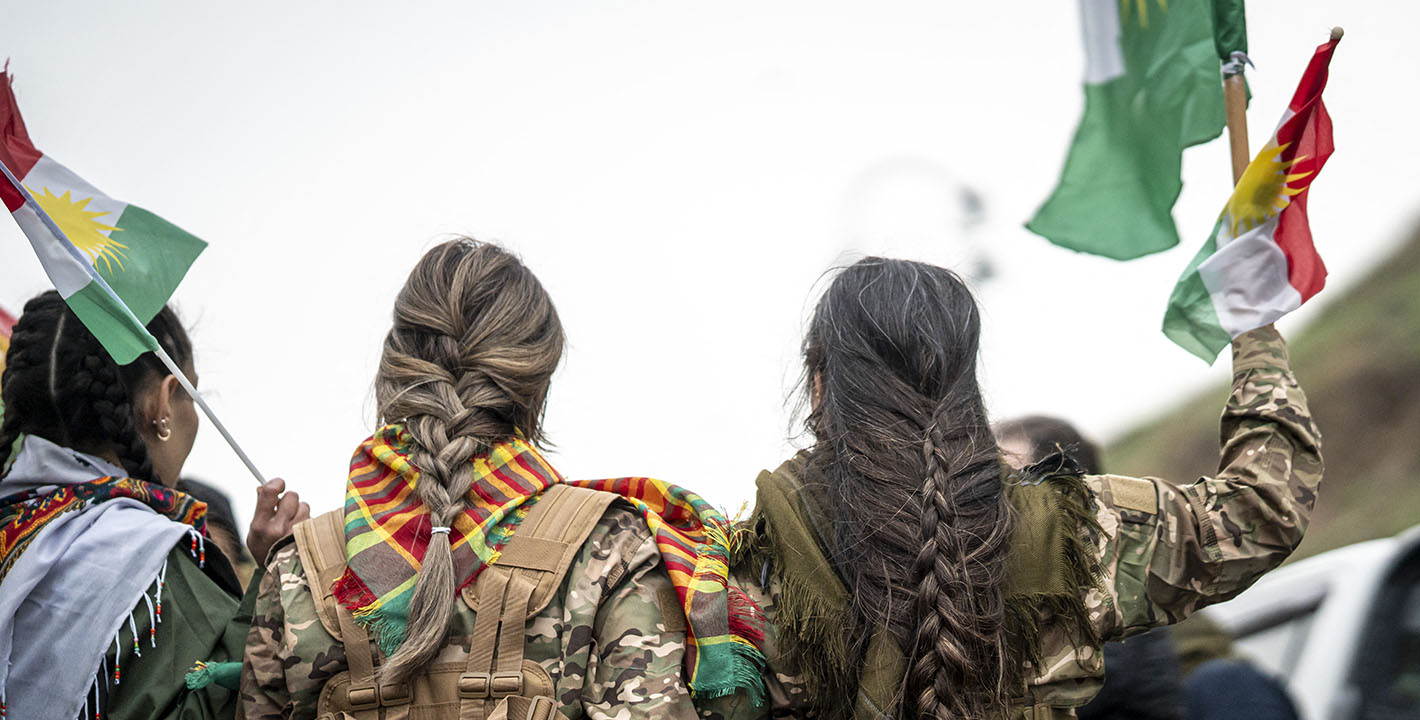
A recent offensive by Damascus and the Kurds’ abandonment by Arab allies have left a sense of betrayal.
Entering northeastern Syria by bus over the bridge from the Semalka border crossing from Iraqi Kurdistan recently, I saw the effect of the recent offensive by Syrian government forces into areas controlled by the Kurd-dominated Syrian Democratic Forces (SDF). Kurds call these areas Rojava, or western Kurdistan. As we drove deeper into Syria’s Kurdish heartland, we eventually saw a large number of civilians with Kurdish flags standing on the streets to welcome armed Kurdish volunteers—whether from inside Syria, Iraqi Kurdistan, or Iranian Kurdistan—who had arrived to participate in the defense against the government.
In Iraqi Kurdistan, there are daily protests in solidarity with the Kurds of Syria, including some in front of the U.S. Consulate General building in Erbil. While in recent years the Kurd-dominated Democratic Autonomous Administration of North and East Syria and the multiethnic SDF have often defended the “brotherhood of peoples” among Kurds, Arabs, and other ethnic groups, creating multiethnic councils and administrations on this basis, today many Kurdish civilians are talking, instead, of how they were “betrayed by the Arabs.”
The reason for this is that a number of Arab tribes that had been allied with the SDF abandoned it when government forces began advancing. For instance, the Shammar tribe, which had partnered with the Kurdish People’s Protection Units (YPG) since 2013 against Jabhat al-Nusra and other rebel groups, turned on the SDF and seized the border town of Yaarubiyah. The SDF leader, Mazloum Abdi, tried recently to contain Kurdish anger by underlining that many of the Arab SDF fighters from Raqqa and Deir al-Zor had died on the frontlines, but a former YPG spokesperson, Polat Can, accused the Arabs of treachery for having been behind the death of two of his cousins in Deir al-Zor, before calling for greater Kurdish solidarity.
As part of its “brotherhood of peoples” policy, in 2016 three Kurd-controlled regions removed the name Rojava from the federal system they were proposing, and adopted the term “northern Syria” instead. This has changed. Although the SDF still retains the same name, Kurdish media outlets are increasingly using the name Rojava in reports. In addition, at checkpoints between towns and villages there are more Kurdish fighters present, while before the government offensive there were many Arabs among them who could not speak a word of Kurdish. That said, one can still find some Arab members of the Kurdish Asayish (security police) deployed, even if they are small in number and most are Arabs from Hasakeh Governorate.
My Kurdish driver, whose daughters are still studying at a university in Damascus, asked, “Arabs turned out to be traitors. They betrayed the Prophet Mohammed, how would they not betray us?” Then he added, “But the biggest traitor for us is America, they sold us for money.” Asked if he thought the Syrian government would protect Kurds after having issued a decree on January 16 that recognized Kurdish national rights and Kurdish as a national language, the driver replied, “No they would betray us too. It’s a fake decree.”
Furthermore, there has also been criticism of the Autonomous Administration for not resolving an old land dispute resulting from the resettlement of 4,000 Arab families in the heart of Kurdish regions in 1975, as part of the Arabization policies of the Hafiz al-Assad regime. The [Democratic Union Party, or PYD] and the [autonomous] administration didn’t allow Kurds to legally regain the lands that were taken from them by force,” Abdulrahman Daoud, a 36-year-old translator living in Qamishli, told me, before adding that this process should be conducted peacefully. “The project of brotherhood between nations, doesn’t mean one ethnic group can take over the land of other ethnic groups, so delaying this matter will only complicate the issue more.”
Last September, Abdullah Oçalan, the jailed leader of the Kurdistan Workers’ Party (PKK), who has considerable influence over the SDF, called for Arab-Kurdish unity. However, on the streets Kurds are now thinking solely about Kurdish unity among what they consider to be the four parts of greater Kurdistan—in Syria, Türkiye, Iraq, and Iran. “The Kurdish people are one,” is a slogan often heard in Kurdish areas of Syria. In addition, television channels affiliated with the SDF are now publishing videos showing mobilized Syrian Kurdish fighters calling for support from the four parts of Kurdistan. The Iraqi Kurdish Barzani Charity Foundation has also increased its assistance to internally displaced persons in Hasakeh Governorate.
On January 20, Damascus and the SDF agreed to a four-day ceasefire, in which Syrian government forces agreed to remain on the outskirts of the cities of Hasakeh and Qamishli as negotiations continued. The ceasefire was extended for an additional fifteen days on January 24, but heavy fighting continued to take place on January 26 near Kobani and near Jawadiyah, or Çilaxa in Kurdish, which connects the strategic border town of Derik with Qamishli. The situation was calmer on January 27, but a day later there were reports of renewed drone strikes.
The Kurdish flag, which the SDF and the PKK in general do not accept as the national Kurdish flag, now flies everywhere in the Kurdish cities of Syria. In a new song, the singers call for Kurdish youths, male and female, to come to Syrian Kurdistan to defend Kurdish towns, and describe the Iraqi Kurdish Peshmerga as “brothers,” despite tensions in the past between the SDF and Iraqi Kurdish factions.
“There are many Kurdish fighters who helped Deir al-Zor and Raqqa rid their towns of the Islamic State, many Kurdish fighters who died there for helping the people, because the Arabs in Deir al-Zor and Raqqa, they said the Islamic State was killing them,” a young Kurd told me. Originally from Derbisiye, he was visiting his family from Germany where he lives when the government offensive began. “Now they [the Arabs] are coming back with the Syrian army. That’s why a lot of Kurdish people are angry. What the Syrian army did is the same as what the Islamic State did,” he added.
The SDF also has been engaging in diplomacy with Iraq’s Kurds. On January 16, Kurdistan Democratic Party (KDP) President Massoud Barzani met with Abdi in Pirmam, in Erbil Governorate. Erbil, the capital of the Kurdistan Region, has also become the center for negotiations between the Kurds and the Americans over Syria, and Barzani has also engaged in talks by telephone with the Syrian interim president, Ahmad al-Sharaa. On January 17, Barzani hosted a high-level meeting in Erbil with U.S. envoy to Syria Tom Barrack, General Kevin Lambert, the head of the anti-Islamic State taskforce, Abdi, and Kurdish National Council President Mohammad Ismail—with the Kurdish representatives on one side and Americans on the other, in a sign of Kurdish unity. On January 25, Abdi said his forces would now only protect Kurdish regions after having withdrawn from Raqqa and Deir al-Zor.
The situation reminds me of when I visited Hasakeh Governorate during the first Battle of Ras al-Ayn/Sere Kaniye in 2012–2013. The fighting was between the YPG and Syrian rebel groups, including Jabhat al-Nusra, the predecessor of Hayat Tahrir al-Sham, which Sharaa leads. At the time, the Kurds were only ruling over Kurdish enclaves in Afrin, Hasakeh, and Kobani. Although Afrin was lost in 2018 after a Turkish military offensive, the Kurds now hope to retain at least some form of special status for Kobani and Hasakeh, and the SDF is returning to its roots as the YPG. This may be difficult, however, with Washington increasingly supportive of Damascus’ position and rumors on January 27 that another deal had been reached in Damascus.
Wladimir van Wilgenburg
Wladimir van Wilgenburg is a Dutch journalist and author writing predominantly about Kurdistan.
Reconciliation councils are emerging throughout the country to mediate in intracommunal disputes, many from the war years.
Natacha Danon
As the U.S.-led Coalition withdraws, the Kurds’ reliance on Baghdad, and on themselves, will only increase.
Wladimir van Wilgenburg
The Zaidi government’s objective to collect weapons is constrained by regional conflict, but it can take certain measures at home.
Ali Al-Mawlawi
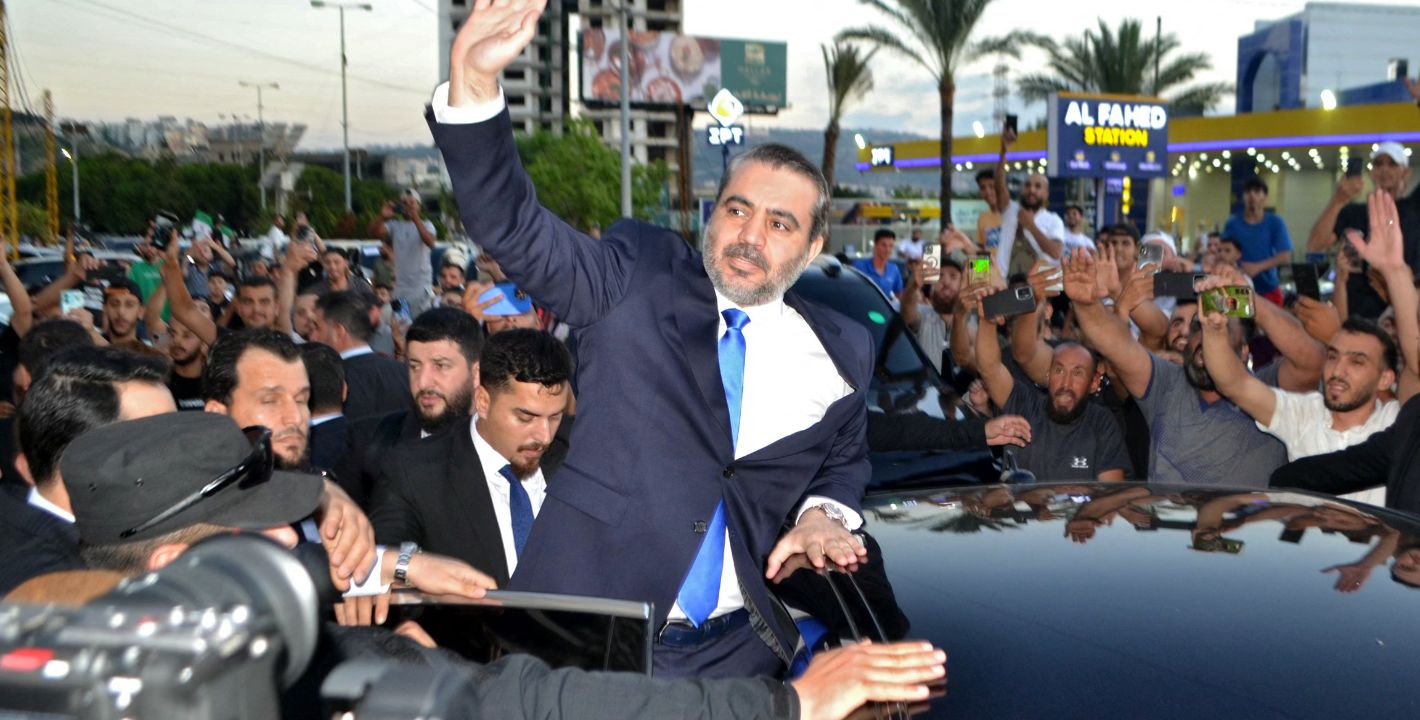
In an interview, Sohaib Jawhar analyzes the profound changes in the ties between the neighboring countries.

Michael Young
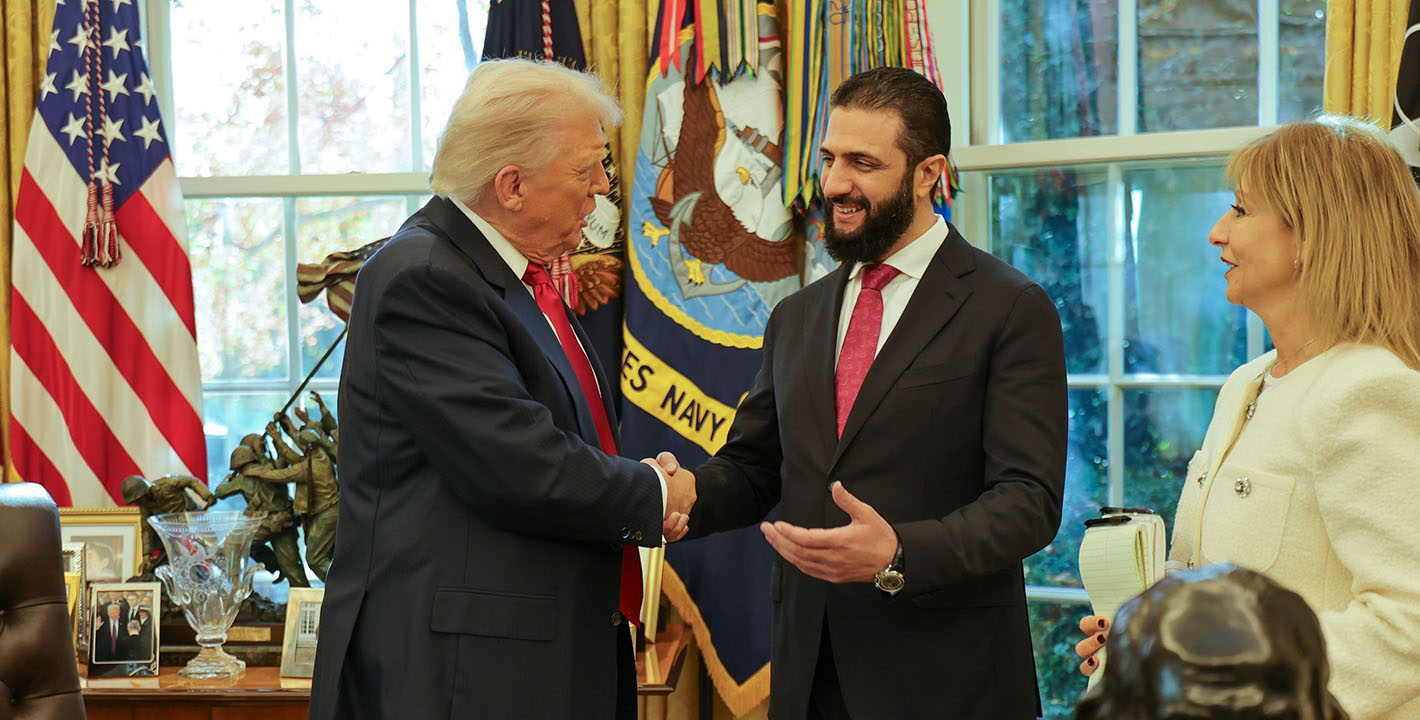
Any move by the United States to make good on Trump’s suggestion that Washington persuade Damascus to confront Hezbollah militarily would have catastrophic consequences.

Kheder Khaddour