

Q&A
Dara Massicot, Aaron David Miller, Andrew S. Weiss
{
  "authors": [
    "Aaron David Miller"
  ],
  "type": "commentary",
  "blog": "Diwan",
  "centerAffiliationAll": "",
  "centers": [
    "Carnegie Endowment for International Peace",
    "Malcolm H. Kerr Carnegie Middle East Center"
  ],
  "collections": [
    "Reaction Shot"
  ],
  "englishNewsletterAll": "",
  "nonEnglishNewsletterAll": "",
  "primaryCenter": "Malcolm H. Kerr Carnegie Middle East Center",
  "programAffiliation": "",
  "regions": [
    "Israel"
  ]
}
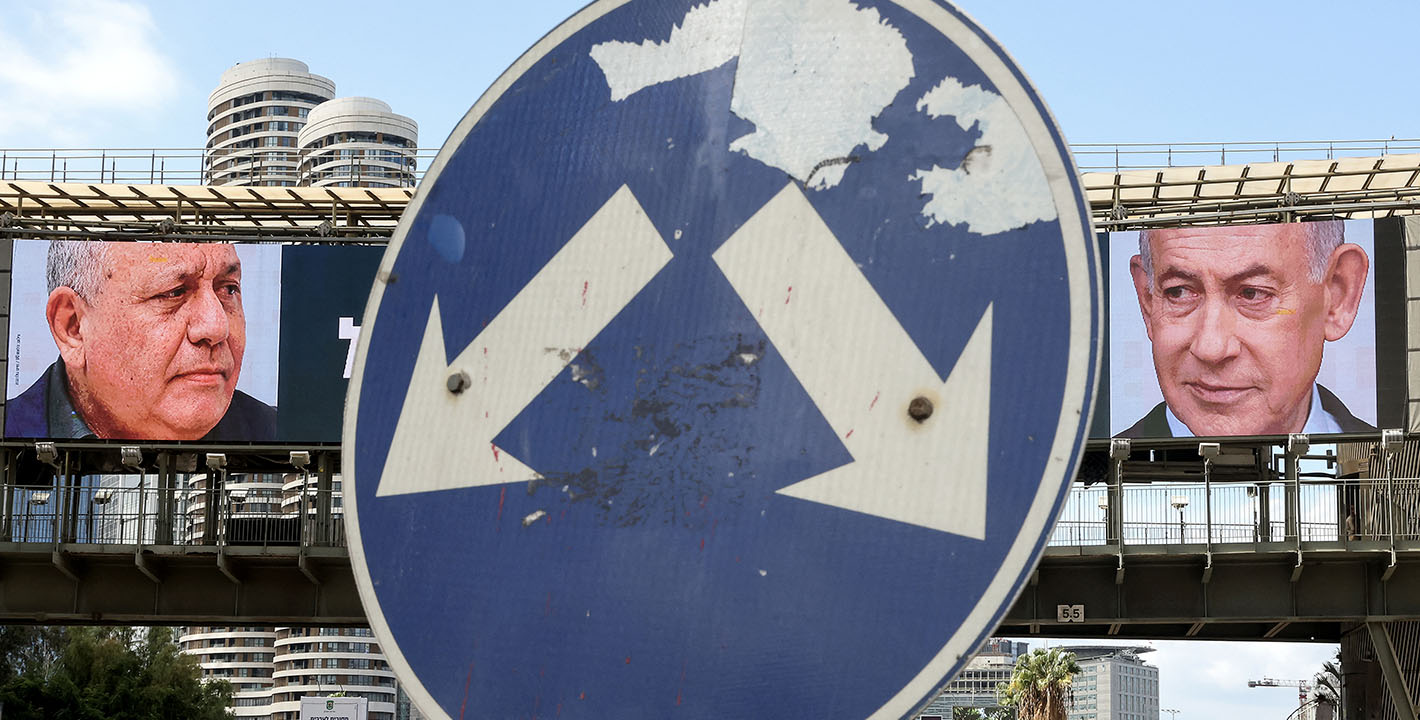
Source: Getty
Spot analysis from Carnegie scholars on events relating to the Middle East and North Africa.
On October 27, Israelis went to the polls in what has been deemed the most consequential election in the country’s history. The results confirmed what pollsters had predicted, but also surprised them. On the one hand the results—still not yet final—validated polls over the last two years that neither the current Netanyahu coalition nor the opposition would be able to cross the threshold required for governing of at least 60 seats plus one in the 120-member Knesset. At the same time, turnout was an unanticipated surprise. Of the 7.3 million eligible Israeli voters, nearly 80 percent cast ballots for 38 political parties.
In a stunning development, Arab turnout produced nineteen seats, surpassing all previous elections. Arab voters cast votes for both a joint list composed of two Arab parties and a third party, Mansour Abbas’s Ram Party, which in a historic first had formally joined the short-lived Naftali Bennet-Yair Lapid government in 2021. The Arab parties are potential kingmakers, but as of now it is not entirely clear if they will have kings to crown.
The Netanyahu bloc campaigned on demonizing and delegitimizing Arab voters, accusing them of stealing votes. And the opposition bloc, headed by former military chief of staff Gadi Eisenkot, has not made its intentions clear as to whether Eisenkot will agree to form a government with the support of Arab parties as part of a coalition, or whether he will rely on their backing from outside a coalition.
The election results have been described as inconclusive—understandably, because neither bloc has an easy road to a governing majority. And yet the results were consequential: Netanyahu lost his parliamentary majority and the opposition is claiming that, in theory, it has a pathway to forming a government while Netanyahu does not. At the same time, even if a majority of Israeli voters rejected Netanyahu, a majority of Jewish Israelis apparently did not. Netanyahu’s Likud Party emerged with 26 seats against 21 for Eisenkot’s Yashar, and his bloc trumped Eisenkot’s by 53 to 48. In one sense, Netanyahu has emerged as the winner. Stripped of his parliamentary majority, he nonetheless remains in power as a caretaker prime minister, with a legitimate claim as head of the largest party and bloc to be given the first opportunity by Israel’s president to form a government. Determined to maintain himself in power even as caretaker, Netanyahu is well prepared and positioned for the post-election politicking likely to unfold in the weeks, if not months, ahead.
Not even the famed Oracle at Delphi, reading goat entrails, could predict who or what is likely to emerge to govern Israel in the period ahead. The opacity of the political process about to unfold has few parallels in Israel’s political history. Once all the votes are tabulated, including the double ballots of soldiers, diplomats, prisoners, and those who are hospitalized or for legitimate reasons were unable to vote in designated polling places, and once all election challenges are heard, the new Knesset can be seated.
Even though neither Netanyahu as caretaker prime minister nor Eisenkot as head of the opposition can form a majority government, the options for how the competition between them might play out runs a gamut of highly speculative outcomes at the moment. President Isaac Herzog, who will initiate consultations with the parties beginning next week, clearly favors a national-unity government composed of the two largest parties without the Arabs or the ultra-Orthodox, in the interests of trying to heal the nation’s internal divides. And there is some reporting that President Donald Trump also favors such an outcome, minus two extremist ministers in Netanyahu’s current coalition—Itamar Ben Gvir and Bezalel Smotrich.
However, Netanyahu has indicated he’s not going to abandon his partners, but might be tempted if he were guaranteed to lead a unity government. But this won’t wash with Eisenkot or his partners, even if Eisenkot were guaranteed a turn as prime minister in a rotation. Quite simply, Netanyahu cannot be trusted in such an arrangement. And the members of the so-called change coalition opposed to the current prime minister all have refused to join a government with Netanyahu in it.
Another highly speculative possibility is that Netanyahu will try to tempt members of Eisenkot’s bloc to break with him and join Netanyahu’s bloc. The flip side of this is that Eisenkot might try to tempt the Likud discontented to break with Netanyahu and join him. One option, perhaps too clever by half, would be for Eisenkot to propose a national-unity government that he would head, assuming Netanyahu would say no. He might then use the rejection as cover to try constructing the one option he’s probably seriously considering, namely forming a minority government with Arab parties supporting him from the outside.
There is a precedent to this, though the circumstances were vastly different at the time. In July 1992, and again in September 1993, when Yitzhak Rabin lost the support of Shas and his coalition dropped to 56, the Arab parties backed him from the outside. However, problems with this approach abound, from opposition among Eisenkot’s bloc partners to relying on Mansour Abbas’s party, but also at least one other party whose policy positions may be at serious odds with Eisenkot’s own Zionist principles. Nonetheless, a variation of this approach cannot be ruled out.
When the new Knesset is seated, if Eisenkot can create a working parliamentary majority relying on Arab Knesset members voting in favor, or abstaining when necessary, he could move to replace the pro-Netanyahu speaker or press for a state commission of inquiry into the October 7, 2023 attacks by Hamas. However, in the end that is a government decision, not one that can be created through a Knesset vote.
To say the political siutuation in Israel is fraught would be an understatement. All of the options discussed earlier are problematic and none can substitute for an actual parliamentary majority. Israeli politics is traditionally uncertain, or may be best described as predictably unpredictable. Henry Kissinger quipped during the 1975 negotiations between Israel and Egypt that Israel had no foreign policy, only domestic politics. The average length of an Israeli government since 1948 has been one year and two months. Indeed, the current Netanyahu government, formed in 2022, was the first to go to term since 1988.
Many wise heads believe the only alternative may be another election. And if neither Netanyahu nor Eisenkot can form a government, that’s where Israel is headed. Clearly this is a calculation Netanyahu may be making. He knows that in the next election, the Arab vote won’t likely be as high, while fewer Israelis living abroad may return to vote again if elections were held in spring 2027. Indeed, Netanyahu’s focus now is making sure that no one forms a government if he cannot, continuing as caretaker prime minister, playing the security card, hopefully taking part in Trump’s putative campaign to strike Iran after the U.S. midterm elections, and preparing for the next Israeli election.
All this would be devastating for Israel and the Middle East. Yet Netanyahu seems to cling to a vision of Israel as a modern-day Sparta, driven by a fiery nationalist supremacy, thriving on conflict, with peace as an illusion. However, a majority of Israelis rejected that vision this week. Whether or not an Israeli leader will emerge who can lead them away from such a path to a different kind of future remains to be seen.
Senior Fellow, American Statecraft Program
Aaron David Miller is a senior fellow at the Carnegie Endowment for International Peace, focusing on U.S. foreign policy.
Recent Work

Dara Massicot, Aaron David Miller, Andrew S. Weiss
Sophia Besch, Eric Ciaramella, Steve Feldstein, …
Carnegie does not take institutional positions on public policy issues; the views represented herein are those of the author(s) and do not necessarily reflect the views of Carnegie, its staff, or its trustees.
Spot analysis from Carnegie scholars on events relating to the Middle East and North Africa.
Yezid Sayigh
In an interview, Ian Lustick and Eli Clifton discuss their new book on why a prominent ally has so much influence in America.
Michael Young
It is improbable that Israel’s forthcoming elections will alter much in terms of how the country thinks about security.
Nathan J. Brown
By failing to address Palestinian representation, the current process is bound to lead to just another temporary arrangement.
Nathan J. Brown
Any move by the United States to make good on Trump’s suggestion that Washington persuade Damascus to confront Hezbollah militarily would have catastrophic consequences.
Kheder Khaddour