

Report
Mr. Husain Haqqani, Ashley J. Tellis
{
  "authors": [
    "Husain Haqqani"
  ],
  "type": "legacyinthemedia",
  "centerAffiliationAll": "dc",
  "centers": [
    "Carnegie Endowment for International Peace"
  ],
  "collections": [],
  "englishNewsletterAll": "ctw",
  "nonEnglishNewsletterAll": "",
  "primaryCenter": "Carnegie Endowment for International Peace",
  "programAffiliation": "russia",
  "programs": [
    "Russia and Eurasia"
  ],
  "projects": [],
  "regions": [
    "South Asia",
    "India",
    "Afghanistan",
    "Pakistan"
  ],
  "topics": [
    "Political Reform"
  ]
}
REQUIRED IMAGE
Source: Carnegie
Originally appeared in the Asian Wall Street Journal, January 28, 2003
The outcome of recent legislative elections in India's western state of Gujarat could define the future of politics in South Asia in terms of religious polarization. The ruling Hindu nationalist Bharatiya Janata Party won last month's polls in Gujarat by a landslide. But that victory was achieved by whipping up sentiment against India's religious minorities, mainly Muslims. Gujarat was the scene last year of religious riots that caused the death of more than 1,000 people, most of them Muslims, and forced several thousands more to leave their homes. The Gujarat BJP leader, Narendra Modi, won the majority's support by creating the specter of "Hindus in danger." For this dubious achievement, he earned the title "The Master Divider," conferred by a leading Indian newsmagazine.
Mr. Modi's success has received little attention outside the region. But given the turbulent history of South Asia, a region that has witnessed two partitions and several violent insurgencies during the last five decades, the developments in Gujarat must not be ignored.
The 1947 partition of British India into Muslim-majority Pakistan and Hindu-majority India was the result of the two-nation theory that emphasized the separate religious identity of Hindus and Muslims. Pakistan underwent division in 1971 with the emergence of Bangladesh, indicating that ethnic and linguistic differences could overcome religious unity. But the rise of Hindu nationalism (termed "Hindutva") in India is reviving the religious confrontation of the 1940s. With Islamists defining Pakistani nationhood and Hindu ideologues in the driver's seat in India, there is little prospect of dialogue or peace in South Asia.
As is often the case, extremism on one side is encouraging extreme ideas on the other. Moderates are gradually being squeezed out of the political arena, leaving hardliners to set the terms of the discourse. And the fact that India and Pakistan possess nuclear weapons complicates this rivalry between religiously driven forms of nationalism.
The founders of modern India, Mahatma Gandhi and Jawaharlal Nehru, identified with a secular nationalism that was the basis of India's constitutional democracy. But the BJP and an assortment of Hindu political groups emphasize the communal identity. They speak of creating a Hindu Rashtra, or Hindu nation, and criticize what they believe is the privileged status of religious minorities in India. They saber rattle against Pakistan, which is itself witnessing a rise in Islamist sentiment. Polarization -- rather than reconciliation -- and the fear of "the enemy" -- rather than that of poverty, ignorance and disease -- drive Hindu nationalist politics in India and Islamist politics in Pakistan.
A global war currently is under way against extremist Islamists who feel that their historic grievances justify terrorism. But the seekers of Hindu Rashtra are not yet seen as a serious threat internationally because they are confined to India and their extremism is not seen as having international ramifications. This might prove to be a grave miscalculation.
The rise of Hindu extremism serves as a catalyst for recruitment by extremist Islamists in South Asia. For that reason alone, it is and should be a cause for concern, both in India and in the international community. Hindu-revivalist organizations have defined Hindutva and Hindu Rashtra in a manner that renders adherence to minority religions and loyalty to India incompatible. Their ideology has a lot in common with that of the extremists that are the object of U.S. President George W. Bush's war against terrorism.
Al Qaeda's supporters attribute the weakness and backwardness of the Islamic world to the rise of the West. They justify violence, including terrorism, as a means of overcoming the weakness imposed by the colonial and post-colonial experience. They refuse to recognize the virtues of democracy or tolerance. For them, eliminating the symbols of Western power and influence are means of Islamic revival. They define Islam in a particular context and do not accept the right of others to practice it differently. The Hindutva leadership that is emerging in India also demands uniformity of belief and conformity in narrative that is similar in essence to the extremist Islamist mindset.
Extreme beliefs end in the mindset that led to Taliban rule in Afghanistan and last year's mayhem in Gujarat. As a phenomenon, the politics of Hindutva should not be ignored merely as electoral expediency. Religious fever can in the long run only tear apart the various communities of India and harm the country's stability. It will inspire a Muslim reaction, which will undoubtedly engulf Pakistan and Bangladesh in addition to affecting India's own Muslim population.
Reprinted from The Asian Wall Street Journal © 2003 Dow Jones &
Company, Inc. All rights reserved.
Former Visiting Scholar
Recent Work
Mr. Husain Haqqani, Ashley J. Tellis
Mr. Husain Haqqani
Carnegie does not take institutional positions on public policy issues; the views represented herein are those of the author(s) and do not necessarily reflect the views of Carnegie, its staff, or its trustees.
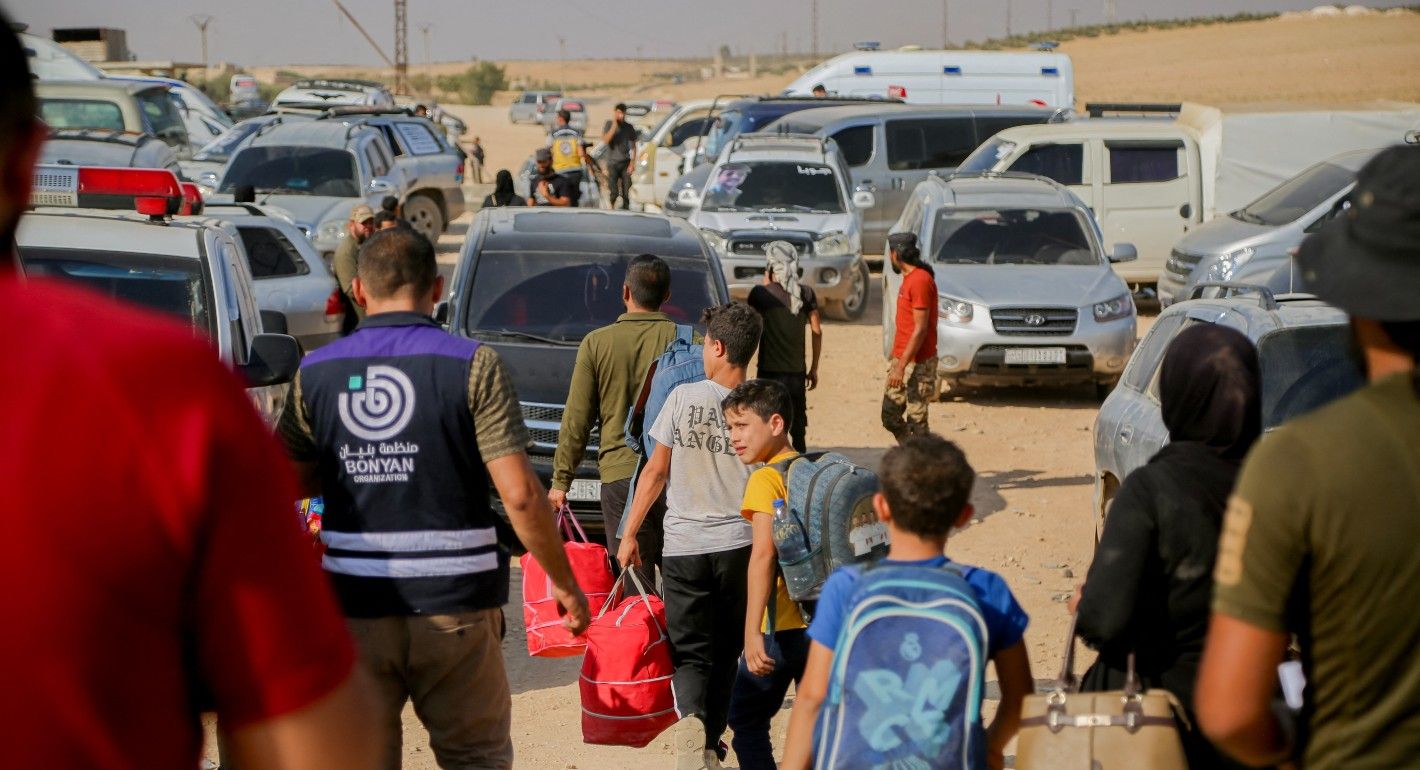
A humanitarian crisis in Lebanon deepens, and Syrian refugees face a perilous choice: remain in a war-torn environment or return to Syria where they risk encountering significant dangers and discrimination. There are significant challenges and risks to their search for safety in Syria.
Haid Haid
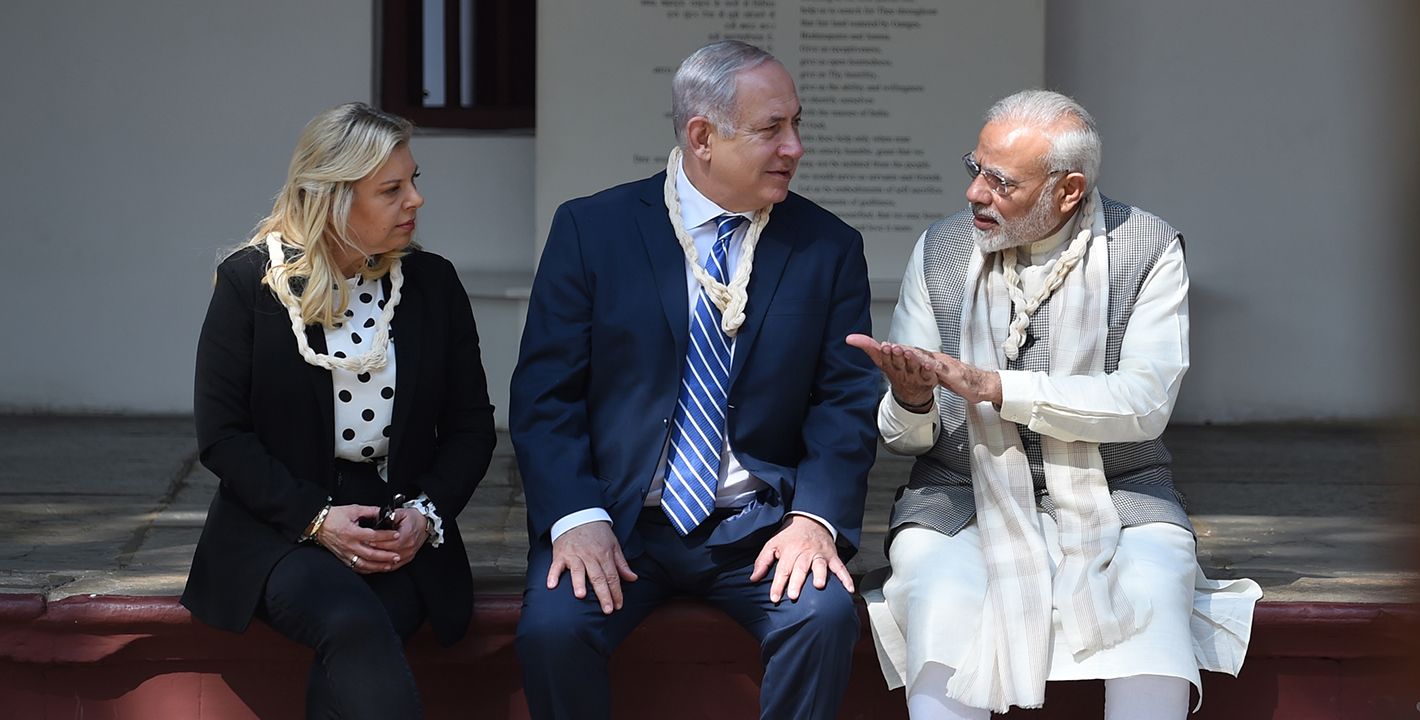
In an interview, Abhinav Pandya discusses the multiple facets of India’s ties with the Middle East.

Armenak Tokmajyan
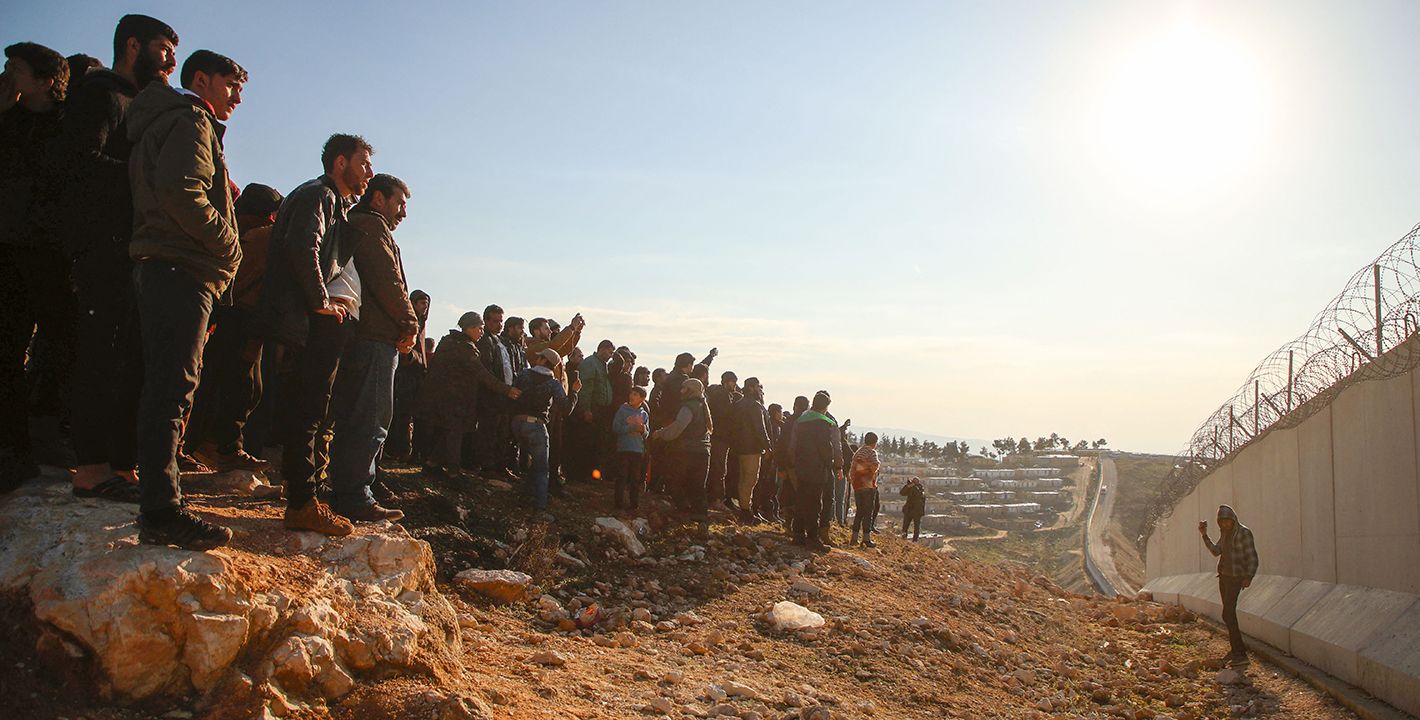
In Syria’s border regions, changes in demographics, economics, and security mean that an inter-Syrian peace process will require consensus among main regional powers that Syria must remain united, that no one side can be victorious, and that perennial instability threatens the region.
Kheder Khaddour, Armenak Tokmajyan
The interaction of national armed forces and private business sectors offers a useful lens for viewing the politics of numerous countries of the so-called Global South. A rising trend of military political activism—often accompanied by military commercial activity—underlines the importance of drivers and outcomes in these relationships.

Yezid Sayigh, Hamza Meddeb
For many in the society, the post-Ben Ali years were mainly about successive economic crises and political instability.
Jasmine Khelil