• Research
  • Diwan
  • About
  • Experts
Carnegie Middle East logoCarnegie lettermark logo
LebanonIran
{
  "authors": [
    "Jessica Tuchman Mathews"
  ],
  "type": "legacyinthemedia",
  "centerAffiliationAll": "dc",
  "centers": [
    "Carnegie Endowment for International Peace"
  ],
  "collections": [],
  "englishNewsletterAll": "menaTransitions",
  "nonEnglishNewsletterAll": "",
  "primaryCenter": "Carnegie Endowment for International Peace",
  "programAffiliation": "MEP",
  "programs": [
    "Middle East"
  ],
  "projects": [],
  "regions": [
    "North America",
    "United States",
    "Middle East",
    "Iran",
    "Iraq",
    "Syria"
  ],
  "topics": [
    "Political Reform",
    "Security",
    "Military",
    "Foreign Policy"
  ]
}
Source: Getty

In The Media

Death Toll in Iraq Suicide Bombings Reaches 250

As political instability continues to plague the Iraqi government, a more inclusive process that includes both groups outside the government inside Iraq and Syria and Iran is needed.

Link Copied
By Jessica Tuchman Mathews
Published on Aug 16, 2007

Source: NewsHour with Jim Lehrer

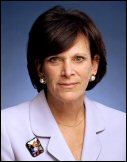
As political instability continues to plague the Iraqi government, and following the deadliest suicide attacks of the war, Carnegie President Jessica T. Mathews and other regional experts discuss the country's political and security struggles on the NewsHour with Jim Lehrer on August 15. Addressing the ongoing political stalemate in Bagdad, Mathews said, “What we need is a more inclusive process that includes both groups outside the government inside Iraq and Syria and Iran.“

Click here for video, audio, and transcript.

About the Author

Jessica Tuchman Mathews

Distinguished Fellow

Mathews is a distinguished fellow at the Carnegie Endowment for International Peace. She served as Carnegie’s president for 18 years.

    Recent Work

  • In The Media
    Washington Already Knows How to Deal with North Korea

      Jessica Tuchman Mathews

  • Commentary
    Trump Wins—and Now?

      Jessica Tuchman Mathews

Jessica Tuchman Mathews
Distinguished Fellow
Jessica Tuchman Mathews
Political ReformSecurityMilitaryForeign PolicyNorth AmericaUnited StatesMiddle EastIranIraqSyria

Carnegie does not take institutional positions on public policy issues; the views represented herein are those of the author(s) and do not necessarily reflect the views of Carnegie, its staff, or its trustees.

More Work from Malcolm H. Kerr Carnegie Middle East Center

  • Commentary
    Diwan
    Hezbollah’s Wartime Strategy

    The party’s objectives involve tying together the Lebanese and Iranian fronts, while surviving militarily and politically at home. 

      Mohamad Fawaz

  • Commentary
    Diwan
    Iran Rewrites Its War Strategy

    In an interview, Hamidreza Azizi discusses how Tehran has adapted in real time to the conflict with the United States and Israel.

      Michael Young

  • Commentary
    Diwan
    Trump’s Plan for Gaza Is Not Irrelevant. It’s Worse.

    The simple conclusion is that the scheme will bring neither peace nor prosperity, but will institutionalize devastation.

      Nathan J. Brown

  • Commentary
    Diwan
    What Does the Strait of Hormuz’s Closure Mean?

    In an interview, Roger Diwan discusses where the global economy may be going in the third week of the U.S.-Israeli war with Iran.

      Nur Arafeh

  • Commentary
    Diwan
    Tehran’s Easy Targets

    In an interview, Andrew Leber discusses the impact the U.S. and Israeli war against Iran is having on Arab Gulf states.

      Michael Young

Get more news and analysis from
Malcolm H. Kerr Carnegie Middle East Center
Carnegie Middle East logo, white
  • Research
  • Diwan
  • About
  • Experts
  • Projects
  • Events
  • Contact
  • Careers
  • Privacy
  • For Media
Get more news and analysis from
Malcolm H. Kerr Carnegie Middle East Center
© 2026 Carnegie Endowment for International Peace. All rights reserved.