

Paper
Ashley J. Tellis
{
  "authors": [
    "Ashley J. Tellis"
  ],
  "type": "testimony",
  "centerAffiliationAll": "dc",
  "centers": [
    "Carnegie Endowment for International Peace"
  ],
  "collections": [],
  "englishNewsletterAll": "ctw",
  "nonEnglishNewsletterAll": "",
  "primaryCenter": "Carnegie Endowment for International Peace",
  "programAffiliation": "SAP",
  "programs": [
    "South Asia"
  ],
  "projects": [],
  "regions": [
    "North America",
    "United States",
    "Pakistan"
  ],
  "topics": [
    "Security",
    "Foreign Policy"
  ]
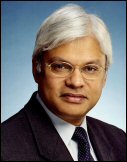
}
Source: Getty
In testimony before the House Subcommittee on the Middle East and South Asia, Ashley J. Tellis emphasized that the United States should focus its efforts in Pakistan on ensuring a credible and legitimate electoral process whose outcome is acceptable to the Pakistani people, and not on securing political outcomes that favor Musharraf.
Source: Testimony before the House Congressional Subcommittee on the Middle East and South Asia

Click on the PDF icons above to read Tellis' written testimony and transcript.

To view this video, you will need Windows Media Player, or QuickTime.
Download Windows Media Player
Download QuickTime
Click on one of the options below to listen to video or audio of the testimony:
 |
Testimony by Carnegie Senior Associate Ashley J. Tellis |
 | Question and Answer Session    |
Former Senior Fellow
Ashley J. Tellis was a senior fellow at the Carnegie Endowment for International Peace.
Recent Work
Ashley J. Tellis
Ashley J. Tellis
Carnegie does not take institutional positions on public policy issues; the views represented herein are those of the author(s) and do not necessarily reflect the views of Carnegie, its staff, or its trustees.

As the U.S. stumbles in its war with Iran, we are likely to see an acceleration of its disengagement from the region.

Michael Young

Huawei pushed hard to enter the Egyptian data centers market, until the Americans made a better offer.

Angie Omar

Middle Eastern states should welcome an accelerated U.S. disengagement from their region.
Michael Young

In an interview, former ambassador Charles Freeman assesses the Trump administration’s war against Iran.
Michael Young

By failing to address Palestinian representation, the current process is bound to lead to just another temporary arrangement.

Nathan J. Brown